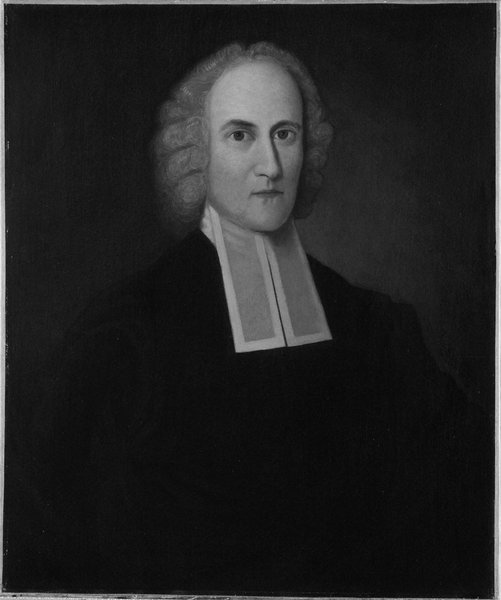
Jonathan Edwards — in their own words
50 quotations, each traced to the exact paragraph it comes from. Follow any of them into the full text — free, and without an account.
A Treatise Concerning Religious Affections 28
If we be not in good earnest in religion, and our wills and inclinations be not strongly exercised, we are nothing.
Nothing is more manifest in fact, than that the things of religion take hold of men's souls, no further than they affect them.
If we would learn what true religion is, we must go where there is true religion, and nothing but true religion, and in its highest perfection, without any defect or mixture.
Love is an affection, but will any Christian say, men ought not to love God and Jesus Christ in a high degree?
Persons may seem to have love to God and Christ, yea, to have very strong and violent affections of this nature, and yet have no grace.
God has revealed no certain connection between salvation, and any qualifications in men, but only grace and its fruits.
Fear is cast out by the Spirit of God, no other way than by the prevailing of love; nor is it ever maintained by his Spirit but when love is asleep.
The true saints have not such a spirit of discerning that they can certainly determine who are godly, and who are not.
What chiefly makes a man, or any creature lovely, is his excellency; and so what chiefly renders God lovely, and must undoubtedly be the chief ground of true love, is his excellency.
A natural principle of self-love may be the foundation of great affections towards God and Christ, without seeing anything of the beauty and glory of the divine nature.
The saint's affections begin with God; and self-love has a hand in these affections consequentially, and secondarily only.
The saints' love to God is the fruit of God's love to them, as it is the gift of that love.
The former rejoices in himself; self is the first foundation of his joy: the latter rejoices in God.
The true beauty and loveliness of all intelligent beings does primarily and most essentially consist in their moral excellency or holiness.
Herein consists the beauty of the saints, that they are saints, or holy ones; it is the moral image of God in them, which is their beauty; and that is their holiness.
Holy affections are not heat without light; but evermore arise from the information of the understanding, some spiritual instruction that the mind receives, some light or actual knowledge.
A spirit of pride of man's own righteousness, morality, holiness, affection, experience, faith, humiliation, or any goodness whatsoever, is a legal spirit.
The subtlety of Satan appears in its height, in his managing of persons with respect to this sin.
The deceitfulness of the heart of man appears in no one thing so much as this of spiritual pride and self-righteousness.
The soul of a saint, by having something of God opened to sight, is convinced of much more than is seen.
Conversion is a great and universal change of the man, turning him from sin to God.
Nothing can be invented that is a greater absurdity, than a morose, hard, close, high-spirited, spiteful, true Christian.
Holy fear is so much the nature of true godliness, that it is called in Scripture by no other name more frequently, than the fear of God.
The saints desire the sincere milk of the word, not so much to testify God's love to them, as that they may grow thereby in holiness.
The kingdom of heaven is not to be taken but by violence.
A proud spirit is a rebellious spirit, but a humble spirit is a yieldable, subject, obediential spirit.
Every dog hath his kennel, every swine hath his swill; and every wicked man his lust.
Godliness consists not in a heart to intend to do the will of God, but in a heart to do it.
Freedom of the Will 1
The reason why it is not dishonorable to be necessarily most holy, is, because holiness in itself is an excellent and honourable thing.
Selected Sermons of Jonathan Edwards 15
Wisdom was a thing that the Greeks admired; but Christ is the true light of the world, it is through him alone that true wisdom is imparted to the mind.
It is God that gives us faith whereby we close with Christ.
Man hath now a greater dependence on the grace of God than he had before the fall.
We are dependent on the power of God to convert us, and give faith in Jesus Christ, and the new nature.
Holiness and happiness are in the fruit, here and hereafter, because God dwells in them, and they in God.
Faith abases men and exalts God, it gives all the glory of redemption to God alone.
The Spirit of God may act upon a creature, and yet not in acting communicate himself.
There is not only a rational belief that God is holy and that holiness is a good thing, but there is a sense of the loveliness of God’s holiness.
He does not merely rationally believe that God is glorious, but he has a sense of the gloriousness of God in his heart.
We may often observe it, that the Holy Spirit who indited the Scriptures, often takes notice of little things, minute occurrences, that do but remotely relate to Jesus Christ.
Many that others worship and serve as gods are cruel beings, spirits that seek the ruin of souls; but this is a God that delighteth in mercy; his grace is infinite and endures forever.
None that will come to Christ, let his condition be what it will, need to fear but that Christ will provide a place suitable for him in heaven.
How great is their glory and honor that are admitted to be of the household of God!
The sword of divine justice is every moment brandished over their heads, and ’tis nothing but the hand of arbitrary mercy, and God’s mere will, that holds it back.
All the kings of the earth before God are as grasshoppers; they are nothing, and less than nothing: both their love and their hatred is to be despised.
Sermons 6
We are dependent on Christ the Son of God, as he is our wisdom, righteousness, sanctification, and redemption.
The saint hath spiritual joy and pleasure by a kind of effusion of God on the soul.
The soul of every man craves a happiness that is equal to the capacity of his nature.
Our understandings, if we stretch them never so far, cannot reach up to his divine glory.
None are so low or inferior, but Christ's condescension is sufficient to take a gracious notice of them.
Christ never so eminently appeared for divine justice, and yet never suffered so much from divine Justice, as when he offered up himself a sacrifice for our sins.