- 11 chapters
- 1 hr 50 min read
- Accessible Reading difficulty
Free to read·No account needed
Preface
Taking books where there’s no signal? See Ochorus for missionaries or chaplains
Reader’s guide
About this book
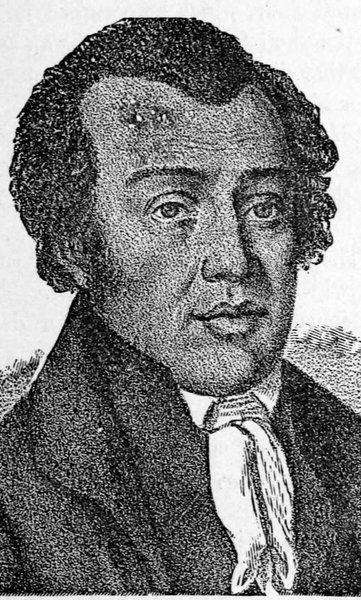
Richard Allen's own account of his life — born a slave in Philadelphia, converted under Methodist preaching, buying his freedom, and founding the African Methodist Episcopal Church — with the 1793 yellow-fever narrative and his addresses to those who kept slaves and to the free people of colour.
I was born in the year of our Lord 1760, on February 14th, a slave to Benjamin Chew, of Philadelphia. My mother and father and four children of us were sold into Delaware State, near Dover, and I was a child and lived with him until I was upwards of twenty years of age, during which time I was awakened and brought to see myself…
Contents
- 1 Preface 1 min
- 2 The Life of Richard Allen 35 min
- 3 African Supplement 6 min
- 4 Acts of Faith 3 min
- 5 Acts of Hope 2 min
- 6 Acts of Love 1 min
- 7 A Narrative of the Proceedings of the Coloured People 28 min
- 8 To Matthew Clarkson, Esq. Mayor of the City of Philadelphia 3 min
- 9 An Address to Those Who Keep Slaves 4 min
- 10 To the People of Colour 3 min
- 11 A Short Address to the Friends of Him Who Hath No Helper 23 min
Questions and Answers
What is The Life, Experience, and Gospel Labours about?
It is Richard Allen's own account of his life — born a slave in Philadelphia, converted under Methodist preaching, buying his freedom, and founding the African Methodist Episcopal Church. It includes his narrative of the 1793 yellow-fever epidemic and his addresses to slaveholders and to the free people of colour, making it both a spiritual autobiography and a landmark document of early Black American Christianity.
Who was Richard Allen?
Born a slave in 1760, Richard Allen bought his own freedom, became a pioneering preacher, and in 1816 founded the African Methodist Episcopal Church — the first fully independent Black denomination in America — becoming its first bishop. His life bridged slavery and freedom, and he became one of the most important religious leaders in early American history.
How did Allen come to found the AME Church?
After he and other Black worshippers were pulled from their knees during prayer and directed to segregated seating at St George's Methodist Church in Philadelphia, Allen led a withdrawal to form their own place of worship. Out of that grew Bethel Church and eventually, in 1816, the independent African Methodist Episcopal Church — a response to the indignity of segregation within the church itself.
What does the book say about the 1793 yellow-fever epidemic?
Allen recounts how, during the deadly Philadelphia epidemic, he and Absalom Jones organized the Black community to nurse the sick and bury the dead when much of the city had fled. When their service was later slandered in print, Allen answered the charges, and his narrative both records the community's sacrifice and defends its honour.
What are Allen's 'addresses' in the book?
Allen includes direct appeals: an address to those who keep slaves, pressing the wrong of slavery on the Christian conscience, and an address to the free people of colour, urging them to live in a way that would honour God and answer their detractors. They show him as both a prophet against slavery and a pastor to his own people.
Why is this book historically important?
Because it is a first-hand testimony from a formerly enslaved man who became a founder of independent Black Christianity in America. Allen's account preserves the voice of one who lived through slavery, the founding of a denomination, and the epidemic of 1793, making it a rare and valuable record of faith, dignity, and leadership in the early American republic.
What kind of faith does Allen's story reveal?
A faith forged in hardship and expressed in action — personal conversion joined to a lifelong labour for his people and against slavery. Allen's Christianity is inseparable from his fight for dignity and freedom, and his narrative shows a man who took the gospel he received and spent it in gospel labours, as the title says, for others.
Where should a reader begin?
At the beginning, with Allen's account of his early life in slavery and his conversion, which grounds everything that follows. The autobiography, the yellow-fever narrative, and the addresses each add a facet; read together they give the whole measure of a man who rose from slavery to found a church and speak for a people.
Read in your language
More like this




Public domain. Source text from the original edition.
Robert S. Duncanson, “Vale of Kashmir” (1867). The Cleveland Museum of Art, CC0.
Cite this book
Copy a citation in the style you need.
- MLA
- Allen, Richard. The Life, Experience, and Gospel Labours. 1833. Ochorus, https://ochorus.com/books/life-experience-gospel-labours/.
- Chicago
- Allen, Richard. The Life, Experience, and Gospel Labours. 1833. Reprint, Ochorus. https://ochorus.com/books/life-experience-gospel-labours/.
- Chicago footnote
- Richard Allen, The Life, Experience, and Gospel Labours (1833; repr., Ochorus), https://ochorus.com/books/life-experience-gospel-labours/.
- BibTeX
- @book{allen1833life, author = {Allen, Richard}, title = {{The Life, Experience, and Gospel Labours}}, year = {1833}, publisher = {Ochorus}, url = {https://ochorus.com/books/life-experience-gospel-labours/} }