New to Richard Allen? Start with
The Life, Experience, and Gospel Labours
All works · 1 hr 50 min read
Biography
- 1760 Born
- 1783 Freed
- 1831 Died
I had it often impressed upon my mind that I should one day enjoy my freedom; for slavery is a bitter pill, notwithstanding we had a good master.
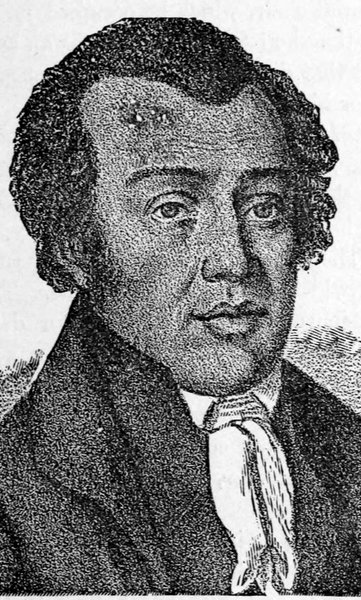
Richard Allen was born a slave on the fourteenth of February, 1760, in the city of Philadelphia. His first owner was Benjamin Chew, a prominent Quaker lawyer; and while Allen was still a boy his whole family — mother, father, and children — was sold away to a farmer named Stokeley Sturgis, near Dover in the Delaware country. There, on a modest plantation among the fields and marshes, the future founder of the first independent Black church in America grew up under the plainest and hardest of schools. He learned early what it was to belong to another man, to be counted as property, to watch a family divided at a stranger's convenience. Yet Allen would remember Sturgis, in the end, as a kind master. The bitterness he never forgot was not the man but the thing itself.
I had it often impressed upon my mind that I should one day enjoy my freedom; for slavery is a bitter pill, notwithstanding we had a good master.
— Richard Allen
Awakened in the Fields
When Allen was about seventeen, a Methodist preacher came into the neighbourhood, and the young slave went to hear him. The Methodists in those years were a fervent, unpolished, wandering people who preached to anyone who would listen — the poor, the enslaved, the outcast — and their message went straight to Allen's heart. He came under deep conviction of sin. He describes himself in his memoir as brought low and desperate, certain that unless God had mercy on him he was lost.
I was awakened and brought to see myself, poor, wretched and undone, and without the mercy of God must be lost.
— Richard Allen
For weeks he cried to God day and night, working the fields by day and wrestling in prayer by night, until one evening, alone, the burden broke. The language he chose to describe that moment is the language of a man who had worn literal chains — and now felt spiritual ones fall.
The deliverance, when it came, was total and joyful. He never forgot it, and he set it down plainly in his own account of his life: all of a sudden my dungeon shook, my chains flew off, and glory to God, I cried. My soul was filled. I cried, enough for me — the Saviour died. From that hour Richard Allen was, by his own reckoning, a free man in the deepest sense long before he was free in the eyes of the law.
Praying His Master Into the Kingdom
The new convert did not keep his joy to himself. He and his brother reasoned that the surest way to honour Christ — and to disarm the slander that religion made slaves lazy — was to work harder and more faithfully than ever, so that no one could say Methodism had ruined a good servant. Allen even worried aloud that his master might think faith had spoiled him, and so he laboured all the more diligently. In time he won Sturgis's permission to hold Methodist meetings in the farmhouse itself.
Preachers came and prayed under that roof, among them the great Methodist itinerant Freeborn Garrettson. One day Garrettson preached from the book of Daniel on the words, weighed in the balances, and found wanting — and applied them without flinching to men who held their fellow creatures in bondage. The word went home. Stokeley Sturgis became convinced that slaveholding was a sin against God, and that he could not meet his Maker with slaves in his fields. He offered Allen and his brother the chance to purchase themselves.
The terms were set: the brothers were to pay sixty pounds in gold and silver — two thousand dollars in the depreciated continental currency of the Revolution — buying back their own time by their own sweat. Allen agreed, and through years of hired-out labour, sawing wood, hauling bricks, and driving a wagon of salt for the army, he made the payments. By 1783 the debt was cleared and Richard Allen was, at last, legally free. He was twenty-three years old.
The Wandering Preacher
Freedom for Allen meant not ease but errand. He took to the roads as an itinerant preacher, walking and working his way through Delaware, New Jersey, Pennsylvania, and Maryland, supporting himself with day-labour and preaching wherever a door opened — to white congregations and Black, in barns, in forests, at camp meetings. He attended the historic 1784 Christmas Conference in Baltimore, where American Methodism organized itself as a church, and there he came to know Bishop Francis Asbury, who recognized the young man's gift and once invited him to travel with him through the slave states. Allen declined that particular journey, unwilling to be silenced about slavery, but the two men's paths would remain entwined for life.
In 1786 Allen came to Philadelphia, the city of his birth, and was invited to preach to the Black members of St. George's Methodist Episcopal Church. He preached at five in the morning so as not to disturb the regular services, and under his labours the number of Black worshippers grew quickly. That growth, meant to be a joy, became the occasion of a wound.
"They Were No More Plagued With Us"
As the Black congregation swelled, the white leadership of St. George's grew uneasy. They moved the Black worshippers from their accustomed seats to places along the wall, and then up into the gallery. One Sunday morning Allen, Absalom Jones, and others knelt to pray in the gallery — and a trustee seized Jones by the shoulders, trying to haul him up off his knees in the middle of prayer, hissing that he must not kneel there. Jones begged him to wait until the prayer was finished. He would not. When the prayer ended, the Black members rose together and walked out of the building for good. Allen recorded the moment with a dignity sharper than any protest.
By this time prayer was over, and we all went out of the church in a body, and they were no more plagued with us in the church.
— Richard Allen
They did not walk out of the faith — only out of a house that had shamed them at their prayers. Already, in 1787, Allen and Jones had formed the Free African Society, a mutual-aid and religious fellowship that cared for the widow, buried the dead, and disciplined its members toward sober and godly living. It was one of the first independent Black organizations in the nation, and out of it, and out of the walkout, would come churches.
The Fever of 1793
Before Allen could build his church, the city was visited by terror. In the summer of 1793 yellow fever swept Philadelphia; thousands died, and those who could afford to fled. Physicians, led by Dr. Benjamin Rush, appealed to the Black community to nurse the sick and bury the dead, under the mistaken belief that people of African descent were immune. They were not — many died — but Allen and Jones answered the call anyway, organizing Black Philadelphians to go house to house among the dying, to lift the sick, to carry away the corpses that no one else would touch.
When the epidemic passed, a pamphleteer accused the Black nurses of extortion and theft. Allen and Jones answered with their own published Narrative, defending their people and turning the pen against the whole system that despised them. Allen appended an address to slaveholders that has never lost its force, grounding the cause of the enslaved not in politics but in the character of God Himself.
God himself was the first pleader of the cause of slaves.
— Richard Allen
Mother Bethel and a Church of Their Own
In 1794 Allen bought an old blacksmith's shop, had it hauled to a lot he owned on Sixth Street, and made it into a house of worship. Francis Asbury preached at its dedication, and it was named Bethel — "house of God." The people called it Mother Bethel, and it stands to this day on the oldest parcel of land continuously owned by Black Americans in the United States. That same year Allen was formally recognized in ministry, and in 1799 Bishop Asbury ordained him a deacon — the first Black man so ordained in the Methodist Episcopal Church.
But independence had to be fought for. The white conference tried again and again to bring Bethel back under its control and its property under its power. Allen and his congregation resisted through years of legal struggle, until in 1816 the Pennsylvania Supreme Court affirmed Bethel's right to govern itself. That same year Allen gathered Black Methodist congregations from Philadelphia, Baltimore, and beyond, and together they organized a wholly new denomination: the African Methodist Episcopal Church — the first fully independent Black denomination in America. On the eleventh of April, 1816, Richard Allen was consecrated its first bishop.
The Long Labour and the Rest
As bishop, Allen gave the rest of his life to a people forming themselves in freedom. He built congregations, licensed preachers, opposed the schemes to ship free Black Americans off to Africa through the Colonization Society, championed education, sheltered fugitives from slavery, and in 1830 helped convene the first National Negro Convention in the very rooms of Mother Bethel. His home was a station on the road to freedom; his pulpit was a school of self-respect for a people told daily that they had none.
Richard Allen died on the twenty-sixth of March, 1831, at seventy-one, and was buried at Mother Bethel, where his tomb remains. He had come into the world as another man's property and left it the shepherd of a church that would carry the gospel and the cause of freedom across a continent and beyond. The chains that flew off in a Delaware field had, in the end, loosed a whole people's tongue to pray and to sing in a house that no one could take from them.
He is remembered as bishop, founder, abolitionist, and statesman. But he first knew himself as a slave who had found mercy on his knees — and everything else grew from that. The man who once feared his faith would be mistaken for laziness gave the enslaved and the free alike a place to stand before God as sons and daughters, and not as anyone's property at all.
Books by Richard Allen (1)
Also appears in

Articles about Richard Allen (1)
Questions and Answers
Where and into what was Richard Allen born?
He was born a slave on 14 February 1760 in the city of Philadelphia; his first owner was Benjamin Chew, a prominent Quaker lawyer. While Allen was still a boy his whole family — mother, father and children — was sold away to a farmer named Stokeley Sturgis, near Dover in the Delaware country. There the future founder of the first independent Black church in America grew up under the plainest and hardest of schools, learning early what it was to belong to another man; he remembered Sturgis as a kind master, but wrote that "slavery is a bitter pill, notwithstanding we had a good master."
How was he converted?
When Allen was about seventeen a Methodist preacher came into the neighbourhood, and the young slave went to hear him. The Methodists of those years were a fervent, wandering people who preached to anyone who would listen — the poor, the enslaved, the outcast — and their message went straight to his heart. Under deep conviction of sin he cried to God day and night, working the fields by day and wrestling in prayer by night, until one evening the burden broke: "all of a sudden my dungeon shook, my chains flew off, and glory to God, I cried. My soul was filled."
How did his master come to free him?
Allen won permission to hold Methodist meetings in the farmhouse itself, and one day the itinerant Freeborn Garrettson preached from the book of Daniel on the words "weighed in the balances, and found wanting," applying them without flinching to men who held their fellow creatures in bondage. The word went home: Stokeley Sturgis became convinced that slaveholding was a sin against God and offered Allen and his brother the chance to purchase themselves. The one who had prayed for his master's soul would walk out a free man because his prayers had reached his master first.
How did he win his freedom?
The terms were sixty pounds in gold and silver — two thousand dollars in the depreciated continental currency of the Revolution — buying back their own time by their own sweat. Through years of hired-out labour, sawing wood, hauling bricks and driving a wagon of salt for the army, Allen made the payments. By 1783 the debt was cleared and Richard Allen was, at last, legally free, at twenty-three years old. He had reckoned himself a free man in the deepest sense long before the law agreed, from the hour his chains flew off in a Delaware field.
What was his life as an itinerant preacher?
Freedom meant not ease but errand. He took to the roads, walking and working his way through Delaware, New Jersey, Pennsylvania and Maryland, supporting himself with day-labour and preaching wherever a door opened — in barns, in forests, at camp meetings. He attended the historic 1784 Christmas Conference in Baltimore, where American Methodism organized itself as a church, and came to know Bishop Francis Asbury, who once invited him to travel through the slave states — an invitation Allen declined, unwilling to be silenced about slavery.
What happened at St. George's Methodist Church?
In 1786 Allen was invited to preach to the Black members of St. George's in Philadelphia, and under his labours their number grew quickly. As the Black congregation swelled, the white leadership grew uneasy and moved them from their accustomed seats to the wall, then up into the gallery. One Sunday, as Allen, Absalom Jones and others knelt to pray in the gallery, a trustee seized Jones and tried to haul him up off his knees mid-prayer. When the prayer ended the Black members rose together and walked out for good — "they were no more plagued with us in the church."
What did he and Absalom Jones do in the yellow fever of 1793?
In the summer of 1793 yellow fever swept Philadelphia; thousands died and those who could afford to fled. Physicians appealed to the Black community to nurse the sick and bury the dead under the mistaken belief that people of African descent were immune. They were not, and many died, but Allen and Jones answered the call anyway, organizing Black Philadelphians to go house to house among the dying. When a pamphleteer later accused them of profiteering, they answered in print with their own "Narrative," and Allen appended an address grounding the slave's cause in the character of God: "God himself was the first pleader of the cause of slaves."
How did Mother Bethel begin?
In 1794 Allen bought an old blacksmith's shop, had it hauled to a lot he owned on Sixth Street and made it into a house of worship; Francis Asbury preached at its dedication, and it was named Bethel — "house of God." The people called it Mother Bethel, and it stands to this day on the oldest parcel of land continuously owned by Black Americans in the United States. In 1799 Asbury ordained Allen a deacon, the first Black man so ordained in the Methodist Episcopal Church, though independence for the congregation had still to be fought for in the courts.
How was the AME Church founded?
The white conference tried again and again to bring Bethel back under its control, and Allen and his congregation resisted through years of legal struggle until, in 1816, the Pennsylvania Supreme Court affirmed Bethel's right to govern itself. That same year Allen gathered Black Methodist congregations from Philadelphia, Baltimore and beyond, and together they organized a wholly new denomination — the African Methodist Episcopal Church, the first fully independent Black denomination in America. On 11 April 1816 Richard Allen was consecrated its first bishop.
How is he remembered?
As bishop, Allen gave the rest of his life to a people forming themselves in freedom: he built congregations, licensed preachers, opposed schemes to ship free Black Americans off to Africa, championed education, sheltered fugitives from slavery, and in 1830 helped convene the first National Negro Convention in the rooms of Mother Bethel. He died on 26 March 1831, at seventy-one, and was buried at Mother Bethel. He is remembered as bishop, founder, abolitionist and statesman — but he first knew himself as a slave who had found mercy on his knees, and everything else grew from that.