
Book
The Letter to the Ephesians
Pros Ephesious, “To the Ephesians”
Part of The Bible·Next in the series: The Letter to the Philippians
8 chapters · 33 min read · Accessible
Free to read · No account needed
Listen to the whole book 43 min listenAbout this book
One new people in Christ, saved by grace and called to walk in love.
- Author
- Paul
- Date
- c. AD 60
For it is by this grace that you have been saved, through faith. None of this comes from you; it is God’s gift. It is not the result of what anyone has done, so there is no room for anyone to boast.Paul’s letter of the church, written in chains and probably carried from one congregation of Asia to the next. It opens in a long outpouring of praise for every blessing in Christ, prays for eyes to see it, and tells Gentile readers who were once dead in their trespasses that God, rich in mercy, has made them alive: “it is by this grace that you have been saved, through faith.” Christ has broken down the wall between Jew and Gentile and made one new humanity, a body, a household, a temple; and so the letter turns to how such a people lives, in unity and truth, as children of light filled by the Spirit, in marriage and household, and armoured in God’s strength. In the Open Word Bible, a new translation from the Greek given freely to the public domain, with an introduction to the letter’s shape and meaning and a conclusion on where to read next.
From Paul, an apostle of Christ Jesus by the will of God, to God’s holy people in Ephesus, who are faithful in Christ Jesus. Grace and peace to you from God our Father and the Lord Jesus Christ. Blessed be the God and Father of our Lord Jesus Christ.
Contents
Sermons on this book
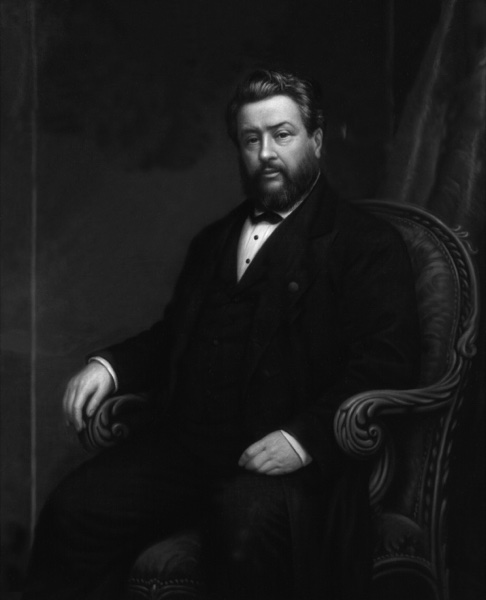
The Treasure of Grace
Spurgeon sets out to measure “the riches of his grace” the way one measures a king’s wealth: by its bottomless mine, the treasury of the covenant, its trophies, its table, its robes, and above all by the cross. Forgiveness is measured by that treasure — full, free and once for all, so that God chastens his children but never punishes them. He closes with the fruits of pardon: peace, joy, access to God, no fear of hell, and a dying girl’s calm hope.
Faith
Preaching from Ephesians 1:15 on the trio of faith, hope, and love, Evans works through what faith is not — belief, presumption, hope, positive thinking — before tracing three biblical aspects of it: the gift that saves, the fruit the Spirit grows, and the gift that moves a person or a church to act. He lands on a single definition: faith as an attribute of the heart, evidenced in obedience, pictured as holding the Father's hand through both sweet shop and dentist's shop alike. The Glory of His Inheritance
Preaching from Paul's prayer in Ephesians 1, Evans traces the riches of the glory of God's inheritance in the saints by first asking what Christ himself inherited from the Father — a name, the keys of death and hell, a throne, a book, and a bride. He closes by turning that inheritance toward the listener: a joint heir with Christ, called to walk now in its foretaste.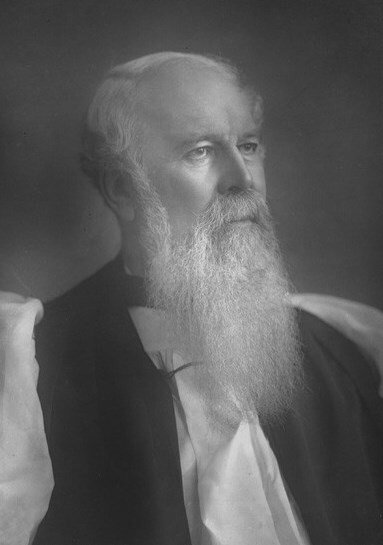
Living or Dead?
“You hath he quickened who were dead.” Ryle insists that “dead” is the Bible’s word for every soul without Christ, and that nothing short of new birth will do: not mending, but a resurrection. Only the Spirit gives that life, and since he made Paul, Luther, Bunyan and Newton new, Ryle never despairs of anyone.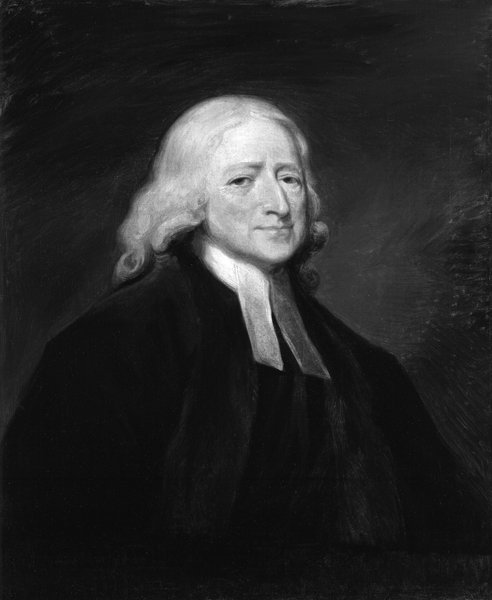
Salvation by Faith
Not the faith of a heathen, nor of a devil, nor even what the apostles held while Christ was still on earth — Wesley clears each away in turn before saying what saving faith is: not a cold assent, a train of ideas in the head, but a disposition of the heart. Preached before the University at Oxford three weeks after Aldersgate. The Scripture Way of Salvation
“Ye are saved through faith.” Wesley calls salvation a present thing: it begins in justification and carries on through sanctification toward perfect love. Faith is the only condition of both, so the believer may look for full salvation by faith alone: “expect it as you are; and expect it now!”Questions and Answers
What is the Letter to the Ephesians?
The tenth book of the New Testament, a letter of the apostle Paul to the Christians of Ephesus and probably of other churches in the Roman province of Asia. Its first three chapters praise God for what he has done in Christ: choosing and redeeming his people, raising the spiritually dead to life by grace, and making Jews and Gentiles into one body. Its last three chapters show how that people is to live, beginning with the call to “live in a way that is worthy of God’s call” (4:1).
Who wrote Ephesians, and when?
The letter names the apostle Paul as its author and speaks of him as a prisoner (3:1; 4:1; 6:20). The church has always received it as his, usually dated to his imprisonment in Rome around AD 60–62, when Tychicus carried it together with Colossians (6:21–22). Many modern scholars think it was written after Paul’s death by a disciple who knew his letters well, pointing to its style and its close dependence on Colossians; many others defend Paul’s authorship. Either way it gathers up his gospel as a whole.
Was Ephesians written to the church in Ephesus?
Probably to Ephesus and beyond. Paul spent about three years in Ephesus (Acts 20:31), yet the letter sends no personal greetings and speaks of the readers’ faith as something he has heard about (1:15). Some of the oldest manuscripts lack the words “in Ephesus” in 1:1, and in the second century Marcion called it the letter to the Laodiceans. Many readers think it was a circular letter for the churches of Asia, with Ephesus as the chief among them.
What does Ephesians 2:8–9 mean by being saved by grace through faith?
That salvation is God’s free gift and not a reward for anything we have done: “None of this comes from you; it is God’s gift,” and so “there is no room for anyone to boast.” Paul has just described his readers as dead in their trespasses and made alive by a God rich in mercy. But he goes straight on to say that God created us in Christ Jesus “for good works” (2:10), so that grace is the root of a changed life, not a substitute for one.
What does Ephesians teach about wives and husbands?
Ephesians 5:21–33 calls believers to submit to one another in the reverent fear of Christ, asks wives to submit to their husbands as to the Lord, and asks husbands to love their wives the way Christ loved the church and handed himself over for her. Paul says marriage points to “Christ and the church” (5:32). Christians differ over how to apply it: some see the husband’s self-giving headship as a lasting pattern, others see mutual submission as the governing idea, transforming the household customs of Paul’s day from within.
Which translation of the Bible is this?
The Open Word Bible, a new translation made directly from the Greek and dedicated to the public domain, printed here at its Balanced level, which aims to be accurate and to read naturally aloud. The reasoning behind each of its sentences, with the Greek beside it, is published at openwordbible.org. The introduction and conclusion were written for this edition.
More like this


Taking books where there’s no signal? See Ochorus for missionaries or chaplains
About this text
- Source
- Scripture from the Open Word Bible (https://openwordbible.org), English, Balanced level, commit 64b913d623d6: dedicated to the public domain under CC0 1.0. The introduction and conclusion are by Ochorus. openwordbible.org
- Last updated
- November 13, 2026
- Rights
- Terms of Use
Cite this book
Copy a citation in the style you need.
- MLA
- Open Word Bible. The Letter to the Ephesians. Ochorus, https://ochorus.com/books/ephesians/.
- Chicago
- Open Word Bible. The Letter to the Ephesians. Ochorus. https://ochorus.com/books/ephesians/.
- Chicago footnote
- Open Word Bible, The Letter to the Ephesians (Ochorus), https://ochorus.com/books/ephesians/.
- BibTeX
- @book{openwordbibleletter, author = {{Open Word Bible}}, title = {{The Letter to the Ephesians}}, publisher = {Ochorus}, url = {https://ochorus.com/books/ephesians/} }