
New to Amanda Berry Smith? Start with
The Story of Amanda Smith (For Children)
All works · 17 hr 41 min read
Biography
- 1837 Born
- 1854 Married
- 1868 Sanctified
- 1878 To England
- 1915 Died
I often say to people that I have a right to shout more than some folks; I have been bought twice, and set free twice, and so I feel I have a good right to shout.
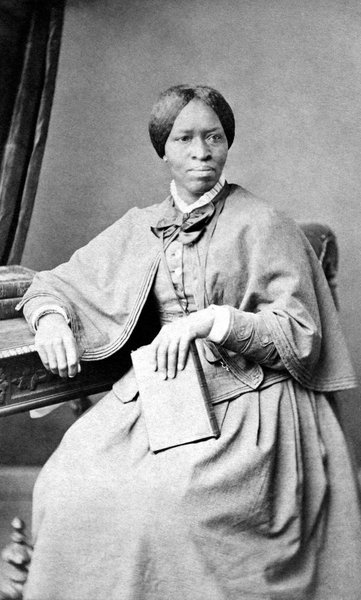
Amanda Berry Smith liked to say that she had been set free twice. The first freedom was bought with a father's sweat; the second was given at the foot of the cross. She was born into slavery on 23 January 1837, in Long Green, a farming settlement in Baltimore County, Maryland, one of thirteen children of Samuel Berry and Miriam Matthews. Her father was an enterprising, tireless man who, after his own long day's labour, worked deep into the nights making brooms and husk mats to earn the price of his family's liberty. One by one he bought them out of bondage. Amanda grew up knowing, in her own flesh, what a costly thing freedom is, and how it can be won by a love that refuses to sleep.
Her schooling amounted to only a few scattered months. What she learned of letters she largely taught herself, spelling out words by lamplight after the housework was done. At thirteen she went into domestic service, and for much of her life she supported herself as a washerwoman, cook, and cleaner in white households across Maryland and Pennsylvania. The world would later call her "the Singing Pilgrim" and print her name in mission reports from three continents; but she never lost the plain speech and worn hands of the laundry tub. It gave her preaching a particular authority. She spoke to the poor as one of them.
Grief, and a heart made clean
Sorrow came early and stayed long. In 1854 she married Calvin Devine; her conversion followed about two years later, during a grave illness in which, near despair, she cried out to God and found herself lifted into peace. Devine went to fight in the Civil War and did not return. In 1863 she married James Smith, a deacon in the African Methodist Episcopal Church, hoping for a settled home and a partner in the work she felt stirring within her. That hope was disappointed; the marriage was hard and often lonely, and he died in 1869. Of the five children born to her across both marriages, four died young. Only her daughter Mazie lived to grow up. By the age of thirty-two, Amanda Berry Smith had buried two husbands and four children. She knew, as few do, the particular silence of a house emptied by death.
It was into this grief that the deepest experience of her life came. In September 1868, at Green Street Methodist Episcopal Church in New York City, she sat under the preaching of John S. Inskip and felt God offering her what the holiness people called "a clean heart" — entire sanctification, the love of God filling every dark corner as sunlight fills a room. She longed to shout for joy, and three times the impulse rose in her; but she was the only Black woman in the crowded church, and fear held her back. A voice whispered that the white worshippers would put her out. At last the fear broke. She rose and shouted "Glory to Jesus!" and from the front Brother Inskip answered, "Amen, Glory to God." Something settled in her that never afterward moved. Out of that night came the sentence she would repeat all her life:
I often say to people that I have a right to shout more than some folks; I have been bought twice, and set free twice, and so I feel I have a good right to shout.
— Amanda Berry Smith
The washerwoman evangelist
The year after her sanctification, Amanda became convinced that God was calling her to preach. It was an audacious thing. Women preachers were scarcely tolerated in that generation, and a Black woman preaching to mixed and often white congregations was, to many, unthinkable. She had no ordination, no salary, no denomination behind her, and no formal training. What she had was a clear call and an unusual voice. Dressed in a plain Quaker-style gown and poke bonnet — partly from conviction, partly because it was all she could afford — she began to speak and sing at African Methodist Episcopal churches and at the great holiness camp meetings that were sweeping the country.
Her singing disarmed crowds before her preaching convicted them. Camp meetings that might have turned a Black woman away found themselves weeping and shouting under her ministry. She supported herself by taking in washing between engagements, folding the gospel and the laundry into the same long days. She never pretended that the prejudice she met did not wound her; she named it plainly. But she refused to let it define her, and one of the most quietly defiant passages she ever wrote turns the whole question inside out:
Now, to say that being black did not make it inconvenient for us often, would not be true; but belonging to royal stock, as we do, we propose braving this inconvenience for the present, and pass on into the great big future where all these little things will be lost because of their absolute smallness! May the Lord send the future to meet us!
— Amanda Berry Smith
There is no self-pity in that. There is a woman who knows exactly who she is because she knows whose she is. The insults of a segregated church become, in her telling, "little things" measured against the vast inheritance of a child of God.
Across the sea
In 1878 she sailed for England, and what began as a visit stretched into twelve years of travel that carried her farther than almost any American evangelist of her day. She preached across Britain, Ireland, and Scotland, and arranged for Mazie to study in England. From there she went on to India for some eighteen months, at the encouragement of Bishop James M. Thoburn, whose respect for her would later be printed in the introduction to her autobiography. Then came the longest chapter of her overseas work: eight years in West Africa, mainly in Liberia and Sierra Leone, where she preached, championed temperance against the ruinous liquor trade, and took needy African children into her care as her own.
She went as an "independent missionary" — which is a dignified way of saying she went without a society to pay her way or promise her a passage home. She simply prayed, and trusted God to provide the fare and the bread. Again and again in her story, provision arrives at the last hour: a gift pressed into her hand, a sum sent by a stranger, exactly the amount needed and not a day early. Long before, when one of her free-born sisters was seized and sold back into slavery while visiting relatives in Maryland, Amanda had scraped and borrowed the fifty dollars to buy her out. She had learned young that God answers the prayers of those who have run clean out of options.
Obedience, for Amanda Berry Smith, was never abstract. It cost her comfort, safety, and the settled home she had always wanted. But she reckoned the cost of disobedience higher still. Of the pull between staying safe and going where God sent her, she left a line as blunt as her faith:
To stay here and disobey God — I can't afford to take the consequence.
— Amanda Berry Smith
The orphanage, and the long fire of trial
She returned to the United States about 1890, worn down in health, and friends urged her to write her life story. She prayed much over it, unsure whether it was God's will, and at last set to work. An Autobiography: The Story of the Lord's Dealings with Mrs. Amanda Smith, the Colored Evangelist appeared in 1893 — a plain, vivid, five-hundred-page account of privation, hunger, faith, and travel that became a classic of American religious testimony. She wrote it not for fame but for children. The proceeds, together with her savings and a small newspaper she published, went toward a dream she had carried for years.
On 28 June 1899, in Harvey, Illinois, just south of Chicago, she opened the Amanda Smith Orphanage and Industrial Home for Abandoned and Destitute Colored Children — one of the first institutions of its kind for Black children in the state. It was the work of her old age and the object of her deepest anxieties. Money was always short. There were quarrels with staff, complaints from neighbours, failed inspections, and at least one fire. She poured into it the last of her strength and much of her peace. It is honest to say that the orphanage brought her as much heartache as joy; the woman who had trusted God for passage across oceans found the daily grind of feeding and housing destitute children a heavier and less romantic burden. Yet she would not abandon them. She had been a child that the world counted worthless, and she could not bear to let another be.
Sebring, and a long-awaited rest
In 1912, aged seventy-five and unable to carry the work any longer, she handed the home over and retired to Sebring, Florida, where a benefactor had provided a house for her. The institution passed to the state and was later chartered as the Amanda Smith Industrial School for Girls; it burned down in 1918, three years after her death. She did not live to see that loss, and perhaps it was mercy that she did not.
Amanda Berry Smith died in Sebring on 24 February 1915. She had been born a slave in a Maryland cabin and had preached the gospel on four continents; she had lost nearly everyone she loved and had gathered up the abandoned children of strangers; she had been paid in insults and had answered with joy. The holiness movement remembered her as one of its brightest lights, and later generations rediscovered her as a pioneer of Black women's preaching and social reform. But she would have wanted a simpler epitaph — the one her whole life kept spelling out, that a poor washerwoman with a clean heart and an obedient will is richer than she looks, and that the God who set her free the first time by a father's love had set her free forever by His own.
She had spent her life on the road, singing. It seems right to imagine her, at the last, laying down the burden she had carried so far, and finding that the future she prayed for had at last come out to meet her.
Books by Amanda Berry Smith (3)

Books about Amanda Berry Smith (1)

Articles about Amanda Berry Smith (1)
Questions and Answers
Where did Amanda Berry Smith come from?
She was born into slavery on 23 January 1837 in Long Green, a farming settlement in Baltimore County, Maryland, one of thirteen children of Samuel Berry and Miriam Matthews. Her father was an enterprising, tireless man who, after his own long day's labour, worked deep into the nights making brooms and husk mats to earn the price of his family's liberty, buying them out of bondage one by one. Amanda grew up knowing in her own flesh what a costly thing freedom is, and how it can be won by a love that refuses to sleep.
How did she support herself?
Her schooling amounted to only a few scattered months; what she learned of letters she largely taught herself, spelling out words by lamplight after the housework was done. At thirteen she went into domestic service, and for much of her life she supported herself as a washerwoman, cook and cleaner in white households across Maryland and Pennsylvania. The world would later call her "the Singing Pilgrim" and print her name in mission reports from three continents, but she never lost the plain speech and worn hands of the laundry tub — and it gave her preaching a particular authority among the poor.
What sorrows marked her early life?
Sorrow came early and stayed long. In 1854 she married Calvin Devine, who went to fight in the Civil War and did not return; in 1863 she married James Smith, a deacon in the African Methodist Episcopal Church, but the marriage was hard and often lonely, and he died in 1869. Of the five children born to her across both marriages, four died young, and only her daughter Mazie lived to grow up. By the age of thirty-two she had buried two husbands and four children, and knew, as few do, the particular silence of a house emptied by death.
What was her experience of sanctification?
In September 1868, at Green Street Methodist Episcopal Church in New York City, she sat under the preaching of John S. Inskip and felt God offering her what the holiness people called "a clean heart" — the love of God filling every dark corner as sunlight fills a room. She longed to shout, but as the only Black woman in the crowded church, fear held her back three times, a voice whispering that the white worshippers would put her out. At last the fear broke; she rose and shouted "Glory to Jesus!" and something settled in her that never afterward moved.
What did she mean by being "bought twice"?
Out of that night came the sentence she repeated all her life: "I often say to people that I have a right to shout more than some folks; I have been bought twice, and set free twice, and so I feel I have a good right to shout." The first freedom had been bought with her father's sweat, the second given at the foot of the cross. Her whole ministry was born in the small, hidden act of yielding in that Green Street pew — the private battle in a crowded room where no one else could see what it cost her to obey.
How did she begin to preach?
The year after her sanctification she became convinced God was calling her to preach — an audacious thing, for a Black woman preaching to mixed and often white congregations was, to many, unthinkable. She had no ordination, no salary, no denomination and no formal training; what she had was a clear call and an unusual voice. Dressed in a plain Quaker-style gown and poke bonnet, partly from conviction and partly because it was all she could afford, she began to sing and preach at AME churches and the great holiness camp meetings, supporting herself by taking in washing between engagements.
How did she face the prejudice she met?
She never pretended the prejudice did not wound her, and named it plainly, but refused to let it define her. In one quietly defiant passage she turned the whole question inside out: "to say that being black did not make it inconvenient for us often, would not be true; but belonging to royal stock, as we do, we propose braving this inconvenience for the present, and pass on into the great big future where all these little things will be lost because of their absolute smallness!" The insults of a segregated church became "little things" measured against her inheritance as a child of God.
What was her overseas ministry?
In 1878 she sailed for England, and what began as a visit stretched into twelve years of travel that carried her farther than almost any American evangelist of her day. She preached across Britain, Ireland and Scotland, then went on to India for some eighteen months at the encouragement of Bishop James M. Thoburn, and finally spent eight years in West Africa, mainly in Liberia and Sierra Leone, preaching, championing temperance against the ruinous liquor trade, and taking needy African children into her care. She went as an "independent missionary" — without a society to pay her way or promise her a passage home.
How did she trust God for provision?
Facing a task that terrified her, she carried a single verse like a coin in her pocket: "Fear thou not, I will help thee." She had no missionary board, no guaranteed income and no ticket home, only that promise, and the record of her voyages is a record of it being kept — on more than one occasion the exact money for her passage arrived just as it was needed, from hands she had never asked. She had learned young that God answers the prayers of those who have run clean out of options, and of the pull between safety and obedience she said, "To stay here and disobey God — I can't afford to take the consequence."
What did she build in her old age, and how is she remembered?
She returned to the United States about 1890, and her "Autobiography: The Story of the Lord's Dealings with Mrs. Amanda Smith" appeared in 1893, becoming a classic of American religious testimony. On 28 June 1899, in Harvey, Illinois, she opened the Amanda Smith Orphanage and Industrial Home for Abandoned and Destitute Colored Children, one of the first of its kind in the state, pouring into it the last of her strength. She retired to Sebring, Florida, and died there on 24 February 1915 — remembered as one of the holiness movement's brightest lights and a pioneer of Black women's preaching.