New to Hudson Taylor? Start with
Union and Communion
All works · 8 hr 30 min read
Biography
- 1832 Born
- 1854 To China
- 1865 Founds CIM
- 1905 Died
God's work done in God's way will never lack God's supply.
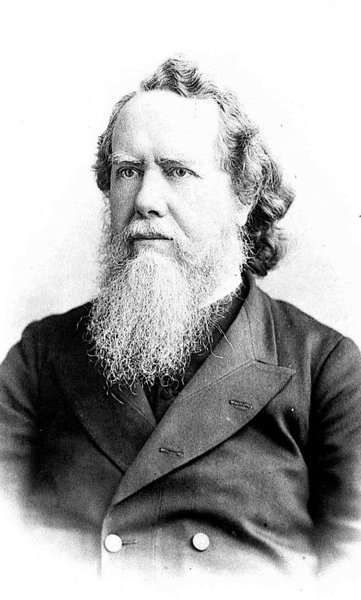
Before James Hudson Taylor was born, he had already been given to God. His father, a Methodist chemist in the Yorkshire town of Barnsley, had a burning interest in China and its uncounted millions who had never heard the name of Christ. Kneeling together, James and Amelia Taylor prayed over their expected child a prayer they scarcely dared speak aloud: "Grant that he may work for Thee in China." The boy, born on 21 May 1832, would not learn of that petition until he was a grown man. But heaven had heard it, and the whole of his long life would read like its slow, astonishing answer.
Childhood in a devout home did not make faith automatic. As a teenager Hudson drifted into doubt and a certain worldly coolness, troubled by his own unbelief. Then came a June afternoon in 1849. Seventeen years old and left to himself with a free half-day, he wandered into his father's library, pulled a gospel tract from a basket of pamphlets, and settled down expecting a good story and intending to skip the sermon at the end. The phrase that arrested him was simple: the finished work of Christ. Why finished? Because, as the cry from the cross declared, "It is finished" — a full and perfect atonement, the debt of sin already paid. There was nothing to add, only to receive. Alone in that quiet room, Hudson Taylor knelt and gave himself to the Saviour.
The certainty of that shared answer marked Taylor for life. He had learned, before he owned any theology of missions, that prayer moves the hand that moves the world. The old childhood dream of China now returned as a settled call. He began, quite deliberately, to prepare his soul for a country where he would have no salary, no society behind him, and no friend at hand but God.
Learning to Move Men Through God
His training was as much spiritual as medical. Moving to the grim, ditch-side district of Drainside in Hull to work under a doctor and study medicine, he set himself a severe discipline: to live simply, give generously, and depend on God for everything. "When I get to China," he reasoned, "I shall have no claim on any one for anything. My only claim will be on God. How important, therefore, to learn, before leaving England, to move man, through God, by prayer alone." He tested the promise like a man testing ice before he trusts his weight to it.
One incident he never forgot. His employer was chronically forgetful about wages, and one evening Taylor found himself with a single half-crown to his name — no dinner in prospect for the next day. Called out to pray beside a dying woman in a wretched tenement, he was pierced by the poverty of the starving family around her bed. Something told him to give what he had. He struggled; it was his all. At last he pressed the coin into the poor man's hand, telling him that God was indeed a Father who could be trusted. He walked home with an empty pocket and a strangely full heart.
In 1853, aged twenty-one, Taylor sailed for China with the Chinese Evangelization Society, tossed for months in a storm-battered sailing ship, arriving in a Shanghai convulsed by rebellion and war. The early years were hard and often lonely. Yet he did something that scandalised many fellow missionaries: he adopted Chinese dress, shaved his forehead and wore the queue, so as to remove every needless barrier between himself and the people he loved. To reach the Chinese, he was willing to become, as far as conscience allowed, Chinese. In 1858 he married Maria Dyer, a missionary's daughter of rare good sense and deep faith, who became the strong companion of his labours.
The China Inland Mission
Ill health forced the Taylors back to England in 1860, but rest gave Hudson no peace. Spread before him was a map of China's vast inland provinces, where whole populations — a million a month, he reckoned, dying without Christ — had no missionary at all. The burden grew unbearable. He longed for God to send workers, yet shrank from the crushing responsibility of asking men to go where he could guarantee them nothing but hardship. The struggle nearly broke his health.
The crisis broke on a Sunday, 25 June 1865. Unable to bear the pretence of worship, he walked out alone along the sands at Brighton. There, as the tide came in, he surrendered the whole weight to God: if God was calling the workers and God would keep them, then the responsibility was God's, not his. On the flyleaf of his Bible he wrote the words that founded a mission: "Prayed for 24 willing, skilful labourers at Brighton, June 25, 1865." Two for each of the eleven unreached inland provinces, and two for Mongolia. The China Inland Mission was born not in a committee room but in a prayer on a beach.
God's work done in God's way will never lack God's supply.
— Hudson Taylor
That principle was tested a thousand times over the following forty years, and it held. Money arrived, often unsolicited and often to the day, from people who could not have known the need. The mission's ledgers became a long, quiet argument for the faithfulness of God. Taylor was no dreamer about it; he counted every penny and kept scrupulous accounts. But he had settled it once for all that the God who calls also provides, and that a work begun and carried on in dependence on prayer would not be allowed to fail for want of funds.
Great Fruit and Great Sorrow
The fruit was immense — and so was the cost. The mission grew, stations opened across province after province, and hundreds of Chinese came to faith. But the same years were soaked in grief. Several of the Taylors' little children were laid in Chinese graves. In 1870, after burying yet another infant son, Maria herself died at the age of thirty-three, her strength spent in the work she had shared so gladly. Taylor, worn and often ill, wrestled with loneliness and with seasons of depression that he did not hide. His secret in those years was not an iron constitution but a discovered rest — the realisation, which transformed him, that the branch has only to abide in the vine, that Christ Himself would supply the strength the servant lacked.
I have not got to make myself a branch. The Lord Jesus tells me I am a branch. I am part of Him and have just to believe it and act upon it.
— Hudson Taylor
Out of that rest came his boldest ventures in prayer. In 1881, with the workers barely numbering a hundred, Taylor and his colleagues knelt and asked God for seventy new missionaries within three years. By the close of 1884, seventy-three had sailed. Emboldened, in 1886 they asked for a hundred new workers in a single year. By November 1887 the mission had accepted a hundred and two. He did not treat prayer as a formula for getting; he treated it as the natural commerce between a child and a Father who delights to give, and he was not afraid to name a number and let God answer it.
I have found that there are three stages in every great work of God: first, it is impossible, then it is difficult, then it is done.
— Hudson Taylor
The Long Shadow and the Homecoming
The deepest sorrow of Taylor's life came near its end. In the summer of 1900 the Boxer Uprising swept north China with fire and slaughter, and the China Inland Mission suffered more than any other society: fifty-eight of its missionaries and twenty-one of their children were killed. Taylor, aged and frail, was in Switzerland when the reports came, and the weight of it nearly crushed him — these were his own people, sent out by his own hand. "I cannot read; I cannot think; I cannot even pray," he confessed in the darkness of it, "but I can trust." When peace returned and the Chinese authorities offered compensation for the mission's losses, Taylor refused every penny, that the meekness of Christ might be shown to a watching nation.
His second wife, Jennie, who had married him in 1871 and stood beside him for over thirty years, died of cancer in 1904. The old missionary, now failing, set his face for one last journey to the land he had given his life to. He reached China in the spring of 1905, was carried through provinces once closed and now dotted with churches, and came at last to Changsha, the capital of Hunan — a city that had long resisted the gospel and now welcomed him. There, on the evening of 3 June 1905, quietly and without a struggle, he slipped away to be with the Christ he had served for more than half a century. He was buried in Chinese soil, among the people for whom his father and mother had prayed before he was born.
He left behind a mission that would grow to more than eight hundred missionaries in his lifetime and, through its successor the Overseas Missionary Fellowship (OMF International), continues to this day. But his truest legacy is not an organisation. It is a demonstration, worked out over seventy-three years and written across a whole continent, that God can be trusted absolutely — that His work, done in His way, will never lack His supply. The praying boy of Barnsley had become the answer to his parents' prayer, and a living proof that heaven still hears.
Books by Hudson Taylor (5)

Sermons by Hudson Taylor (9)
Books about Hudson Taylor (1)

Also appears in

Articles about Hudson Taylor (4)
Questions and Answers
How did Hudson Taylor come to faith, and what part did his mother play?
On a free June afternoon in 1849, the seventeen-year-old wandered into his father's library, picked up a gospel tract, and was arrested by the phrase “the finished work of Christ” — kneeling there, he gave himself to the Saviour. Miles away that same afternoon, his mother had locked herself in a room, resolved not to leave until she had prayed her son into the kingdom, and rose at last with the settled assurance that the work was done. When she came home she could tell Hudson the very day and hour of his conversion, and the shared answer marked him for life.
What drew Taylor specifically to China?
Before he was born, his parents had knelt and prayed over their expected child, “Grant that he may work for Thee in China,” a petition he did not learn of until he was grown. His father, a Methodist chemist in Barnsley, carried a lifelong burden for China's uncounted millions who had never heard of Christ, and after his conversion the old family dream returned to Hudson as a settled call. He sailed for China in 1853, aged twenty-one, with the Chinese Evangelization Society.
Did Hudson Taylor really wear Chinese dress, and why was it so controversial?
Yes — in his early years in China he adopted Chinese clothing, shaved his forehead and wore the queue, so as to remove every needless barrier between himself and the people he had come to reach. Many fellow missionaries were scandalised, seeing it as beneath a European's dignity, but Taylor was willing to become as far as conscience allowed Chinese in order to win the Chinese. It became a hallmark of the mission he would later found.
How was the China Inland Mission founded in 1865?
Spread before Taylor was a map of China's inland provinces where whole populations were dying without any missionary at all, yet he shrank from the responsibility of asking men to go where he could promise them only hardship. The crisis broke on Sunday, 25 June 1865, as he walked alone on the sands at Brighton and surrendered the whole weight to God, reasoning that if God called and kept the workers, the responsibility was God's. On his Bible's flyleaf he wrote, “Prayed for 24 willing, skilful labourers at Brighton, June 25, 1865” — two for each unreached province and two for Mongolia — and opened the mission's bank account with ten pounds.
Why did the mission never ask anyone for money?
Taylor fixed it as a founding principle that the China Inland Mission would never go into debt and would never appeal for funds or solicit money from any human being; every need was to be told to God alone. He had rehearsed this dependence for years in England, once giving away his last half-crown to a starving family and receiving four times as much by the next morning's post. “God's work done in God's way will never lack God's supply,” he said, and over forty years the money arrived, often unsolicited and often to the day.
What was the Lammermuir party?
On 26 May 1866, Taylor, his wife Maria, their four children, and a band of new recruits set sail from London aboard the tea clipper Lammermuir, the largest group of Protestant missionaries to reach China at one time. The four-month voyage was twice nearly wrecked by typhoons, yet the whole company arrived safely at Shanghai that September. It is often regarded as a turning point in nineteenth-century missionary work, carrying the young mission's first pioneers to the field.
Who were Hudson Taylor's wives, and what sorrows did he bear?
In 1858 he married Maria Dyer, a missionary's daughter of rare good sense and deep faith who became the strong companion of his labours; several of their little children were laid in Chinese graves, and in 1870 Maria herself died at thirty-three. In 1871 he married Jane Elizabeth “Jennie” Faulding, one of the original Lammermuir party, who stood beside him for more than thirty years until her death from cancer in 1904. Taylor, worn and often ill, did not hide the loneliness and depression these losses brought.
What did Taylor mean by the “exchanged life”?
In 1869, worn down by struggle and failure, Taylor was transformed by a letter from his colleague John McCarthy pointing him to abiding in Christ, the vine, rather than striving after holiness. He discovered a settled rest in union and communion with Christ, realising that the branch has only to remain in the vine and Christ himself will supply the strength the servant lacks. As he put it, “I have not got to make myself a branch … I am part of Him and have just to believe it and act upon it.”
What books did Hudson Taylor write?
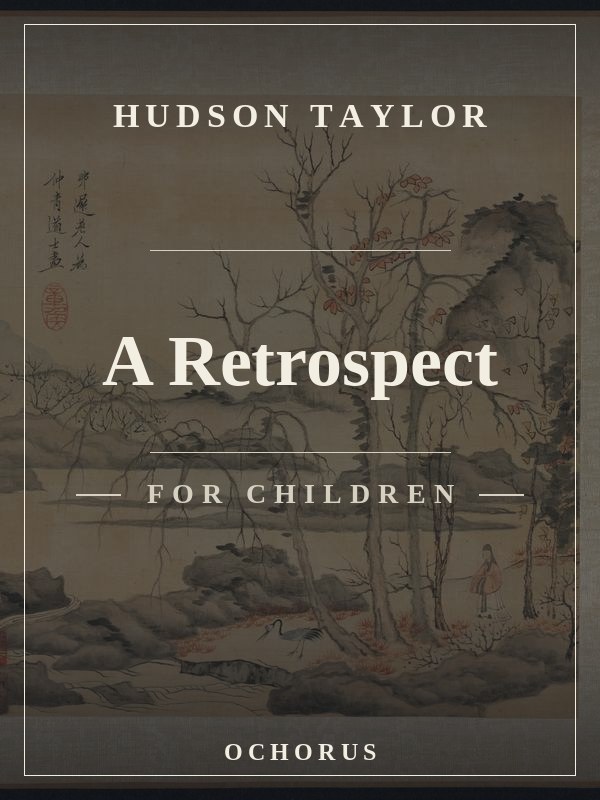
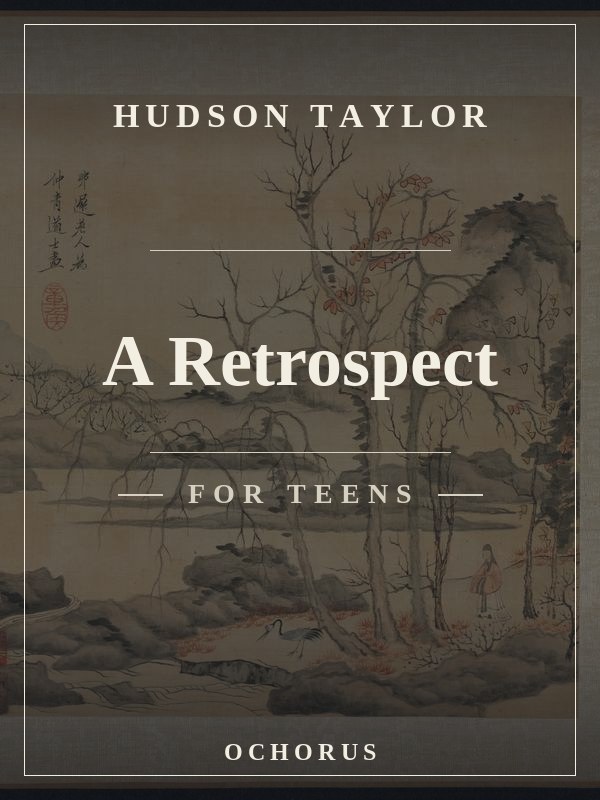
He wrote A Retrospect, a modest account of his own conversion and early years and God's dealings with him, which has drawn many readers into missionary devotion. He also left Union and Communion, meditations on the Song of Solomon flowing from his deepened inner life, and Separation and Service, reflections drawn from the book of Numbers. All bear the same theme: the sufficiency of Christ for the one who wholly trusts him.
How and where did Hudson Taylor die?
Frail and aged, he set out for one last journey to the land he had given his life to, reaching China in the spring of 1905 and being carried through provinces once closed and now dotted with churches. On the evening of 3 June 1905 he died quietly, without a struggle, at Changsha, the capital of Hunan — a city that had long resisted the gospel and now welcomed him. He was buried in Chinese soil among the people for whom his parents had prayed before he was born, leaving a mission that would live on through its successor, today's OMF International.