- 12 chapters
- 2 hr 25 min read
- Moderate Reading difficulty
Free to read·No account needed
Introduction
Taking books where there’s no signal? See Ochorus for missionaries or chaplains
Grow with the story

About this book
Tozer's classic of the inner life, written for the Christian who is hungry for God Himself and will not be put off with words. Convinced that sound doctrine alone cannot feed the soul, he calls readers past correct opinions into a personal, conscious experience of God — following hard after Him, surrendering every possession to Him, removing the veil of self, learning to see Him by faith, hearing His speaking voice, and turning the whole of ordinary life into a sacrament. Each chapter ends in prayer. With an introduction by Samuel M. Zwemer.
Christian theology teaches the doctrine of prevenient grace, which briefly stated means this, that before a man can seek God, God must first have sought the man. Before a sinful man can think a right thought of God, there must have been a work of enlightenment done within him; imperfect it may be, but a true work nonetheless, and the secret cause of all desiring…
Contents
- 1 Introduction 2 min
- 2 Preface 4 min
- 3 Following Hard after God 12 min
- 4 The Blessedness of Possessing Nothing 13 min
- 5 Removing the Veil 19 min
- 6 Apprehending God 13 min
- 7 The Universal Presence 14 min
- 8 The Speaking Voice 13 min
- 9 The Gaze of the Soul 17 min
- 10 Restoring the Creator-creature Relation 13 min
- 11 Meekness and Rest 10 min
- 12 The Sacrament of Living 15 min
Questions and Answers
What is The Pursuit of God about?
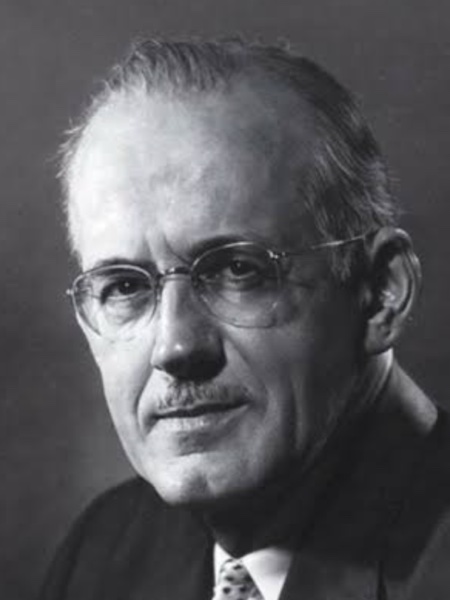
It is A. W. Tozer's call to know God Himself, not merely to hold right opinions about Him. Writing for believers who feel a hunger their Bible teaching has not satisfied, he argues that the Scriptures are a means to bring us into an intimate, satisfying knowledge of God, and he traces what it means to follow hard after Him.
Why did Tozer write it?
In his preface he says he saw a growing number of Christians who were athirst for God and would not be content with correct interpretations of truth. He thought the evangelicalism of his day had laid the altar but lacked the fire, and he offered the book as a modest attempt to help God's hungry children find Him.
What does Tozer mean by the veil?
In the chapter Removing the Veil he takes the torn curtain of the temple as a picture of the way into God's presence that Christ has opened. What still hides God's face from us, he argues, is the veil of our own fallen nature — the self-life with its self-love, self-pity and self-confidence — and it is removed only as we let it be crucified.
What is the blessedness of possessing nothing?
Tozer reads the Beatitude about the poor in spirit through the story of Abraham offering Isaac. God gave Isaac back, but Abraham no longer possessed him; everything was held in trust for God. Tozer urges the reader to surrender every treasured thing in the same way, so that God alone is the heart's possession.
How does Tozer describe faith?
In The Gaze of the Soul he defines faith as the gaze of a soul upon a saving God. Faith, he says, is not occupied with itself or with how it feels; it looks away to God, as the Israelites looked at the bronze serpent, and that steady inward look can become the habit of the whole day.
What is the sacrament of living?
The last chapter attacks the divide between sacred and secular that leaves many Christians feeling that only their religious acts please God. Tozer argues that eating, working and every lawful task can be done to the glory of God, so that the whole of ordinary life becomes an act of worship.
Who wrote the introduction?
Samuel M. Zwemer, the veteran missionary to the Muslim world, who knew Tozer from visits to his Chicago church. He describes the book as theology not of the head but of the heart, written by a busy pastor who seemed to burn the midnight oil in pursuit of God.
How should the book be read?
Slowly, and prayerfully. Each chapter closes with a prayer, and Tozer meant his chapters to lead the reader to seek God rather than simply to learn about seeking Him. Reading a chapter at a sitting and praying its closing prayer suits the way it was written.
Read in your language
More like this


Public domain. Source text from the original edition.
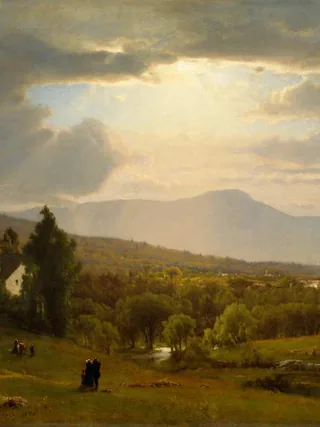
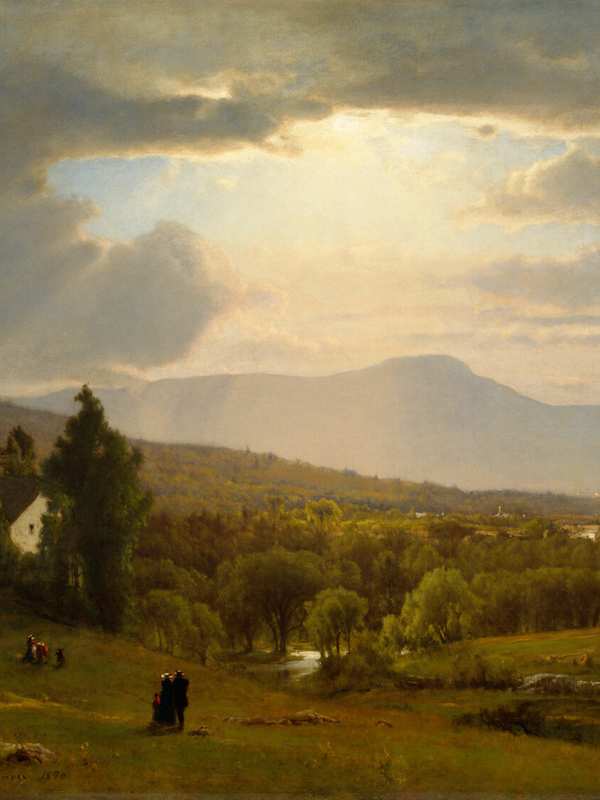
George Inness, “Catskill Mountains” (1870). The Art Institute of Chicago, CC0.
Cite this book
Copy a citation in the style you need.
- MLA
- Tozer, A. W. The Pursuit of God. 1948. Ochorus, https://ochorus.com/books/the-pursuit-of-god/.
- Chicago
- Tozer, A. W. The Pursuit of God. 1948. Reprint, Ochorus. https://ochorus.com/books/the-pursuit-of-god/.
- Chicago footnote
- A. W. Tozer, The Pursuit of God (1948; repr., Ochorus), https://ochorus.com/books/the-pursuit-of-god/.
- BibTeX
- @book{tozer1948pursuit, author = {Tozer, A. W.}, title = {{The Pursuit of God}}, year = {1948}, publisher = {Ochorus}, url = {https://ochorus.com/books/the-pursuit-of-god/} }