Book
A Serious Call to a Devout and Holy Life
Adapted to the State and Condition of All Orders of Christians
William Law · 1686–1761
- 24 chapters
- 10 hr 24 min read
- Moderate Reading difficulty
Free to read·No account needed
Concerning the nature and extent of Christian devotion
Taking books where there’s no signal? See Ochorus for missionaries or chaplains
Reader’s guide
About this book
William Law's 1728 masterpiece, one of the most influential devotional books in the English language — it turned the hearts of John Wesley, George Whitefield, and Samuel Johnson. Law's question is disarmingly simple: if we call ourselves Christians, why do we not live as though we believe it? With wit, unforgettable character sketches, and relentless warmth, he calls every reader — of every rank and calling — to a whole life devoted to God, ordered by prayer at the appointed hours and by the pursuit of humility, intercession, and resignation to the will of God.
DEVOTION is neither private nor public prayer; but prayers, whether private or public, are particular parts or instances of devotion. Devotion signifies a life given, or devoted, to
Contents
- 1 Concerning the nature and extent of Christian devotion 19 min
- 2 An inquiry into the reason, why the generality of Christians fall so far short of the holiness and devotion of Christianity 15 min
- 3 Of the great danger and folly, of not intending to be as eminent and exemplary as we can, in the practice of all Christian virtues 22 min
- 4 We can please God in no state or employment of life, but by intending and devoting it all to His honour and glory 29 min
- 5 Persons that are free from the necessity of labour and employments, are to consider themselves as devoted to God in a higher degree 14 min
- 6 Containing the great obligations, and the great advantages of making a wise and religious use of our estates and fortunes 18 min
- 7 How the imprudent use of an estate corrupts all the tempers of the mind, and fills the heart with poor and ridiculous passions, through the whole course of life; represented in the character of Flavia 13 min
- 8 How the wise and pious use of an estate naturally carrieth us to great perfection in all the virtues of the Christian life; represented in the character of Miranda 21 min
- 9 Containing some reflections upon the life of Miranda, and showing how it may, and ought to be imitated by all her sex 25 min
- 10 Showing how all orders and ranks of men and women, of all ages, are obliged to devote themselves unto God 30 min
- 11 Showing how great devotion fills our lives with the greatest peace and happiness that can be enjoyed in this world 31 min
- 12 The happiness of a life wholly devoted to God farther proved, from the vanity, the sensuality, and the ridiculous poor enjoyments, which they are forced to take up with who live according to their own humours. This represented in various characters 25 min
- 13 That not only a life of vanity, or sensuality, but even the most regular kind of life, that is not governed by great devotion, sufficiently shows its miseries, its wants and emptiness, to the eyes of all the world. This represented in various characters 26 min
- 14 Concerning that part of devotion which relates to times and hours of prayer. Of daily early prayer in the morning. How we are to improve our forms of prayer, and how to increase the spirit of devotion 42 min
- 15 Of chanting, or singing of psalms in our private devotions. Of the excellency and benefit of this kind of devotion. Of the great effects it hath upon our hearts. Of the means of performing it in the best manner 34 min
- 16 Recommending devotions at nine o'clock in the morning, called in Scripture the third hour of the day. The subject of these prayers is humility 22 min
- 17 Showing how difficult the practice of humility is made, by the general spirit and temper of the world. How Christianity requireth us to live contrary to the world 23 min
- 18 Showing how the education which men generally receive in their youth makes the doctrines of humility difficult to be practised. The spirit of a better education represented in the character of Paternus 27 min
- 19 Showing how the method of educating daughters makes it difficult for them to enter into the spirit of Christian humility. How miserably they are injured and abused by such an education. The spirit of a better education, represented in the character of Eusebia 37 min
- 20 Recommending devotion at twelve o'clock, called in Scripture the sixth hour of the day. This frequency of devotion equally desirable by all orders of people. Universal love is here recommended to be the subject of prayer at this hour. Of intercession, as an act of universal love 42 min
- 21 Of the necessity and benefit of intercession, considered as an exercise of universal love. How all orders of men are to pray and intercede with God for one another. How naturally such intercession amends and reforms the hearts of those that use it 33 min
- 22 Recommending devotion at three o'clock, called in Scripture the ninth hour of the day. The subject of prayer at this hour is resignation to the Divine pleasure. The nature and duty of conformity to the will of God, in all our actions and designs 25 min
- 23 Of evening prayer. Of the nature and necessity of examination. How we are to be particular in the confession of all our sins. How we are to fill our minds with a just horror and dread of all sin 26 min
- 24 The conclusion. Of the excellency and greatness of a devout spirit 23 min
Questions and Answers
What is A Serious Call to a Devout and Holy Life about?
It is William Law's 1728 masterpiece, an earnest summons to make the whole of one's life — not just times of worship — an offering to God. Law's question is disarmingly simple: if we call ourselves Christians, why do our ordinary lives look so little different from those who are not? He presses the reader toward a devotion that governs how they spend their time, money, and every common hour.
Who was William Law?
William Law was an English clergyman and devotional writer of the eighteenth century, a non-juror who forfeited advancement rather than swear an oath against his conscience. A Serious Call is his most famous book, and it became one of the most influential devotional works in the English language, admired long after his death.
Whom did the book influence?
Remarkably many. A Serious Call turned or deeply shaped the hearts of John Wesley, George Whitefield, and Samuel Johnson, among others; Wesley acknowledged its power in awakening him to seek a holy life. Through such readers its influence ran into the whole eighteenth-century revival, making it one of the seed-books of the evangelical awakening.
What is Law's central argument?
That true religion is not confined to church or to devout feelings but must govern the whole of ordinary life. Law argues that a Christian's use of time, money, work, and leisure should all be ordered to God's glory, and that a life not so ordered is not really Christian, however correct its beliefs. Devotion, for Law, means a life wholly intended for God.
Why is the book famous for its character sketches?
Because Law illustrates his argument with vivid portraits of imagined people — such as Miranda, who orders her whole life and fortune to God, and others who waste theirs on trifles. These memorable characters bring his call down to earth, showing concretely what a devout life and a worldly one each look like, and they have delighted readers for centuries.
Is A Serious Call a comfortable book to read?
No — and it is not meant to be. Law writes to disturb the half-hearted Christian out of complacency, pressing uncomfortable questions about how one actually lives. Yet it is not harsh for its own sake; the severity serves a loving end, to wake the reader to the seriousness and the joy of a life wholly given to God.
Is the book still relevant today?
Yes — its central challenge is timeless: whether our everyday lives match our profession of faith. Law's specific eighteenth-century examples are dated, but his searching question about the use of time and money, and his call to make all of life devout, speak as directly to a modern reader as they did to Wesley and Johnson.
Where should a reader begin?
At the beginning, and slowly — the book is meant to search the conscience, not to be rushed. Law builds his case chapter by chapter, and the famous character sketches help the argument land. A reader willing to be questioned will find it one of the most bracing and clarifying devotional books ever written.
Read in your language
About the author
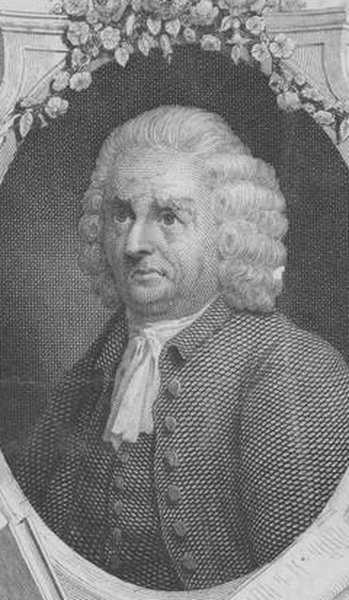
William Law
A Serious Call to a Devout and Holy Life · 1729
More like this


Public domain. Source text from the original edition.
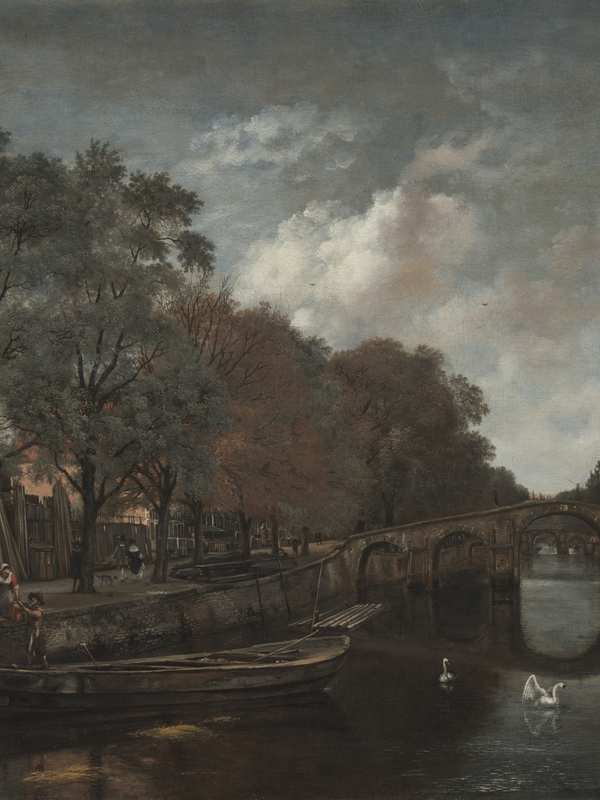
Jan Wijnants, “Herengracht, Amsterdam” (c. 1661). The Cleveland Museum of Art, CC0.
Cite this book
Copy a citation in the style you need.
- MLA
- Law, William. A Serious Call to a Devout and Holy Life. 1729. Ochorus, https://ochorus.com/books/a-serious-call/.
- Chicago
- Law, William. A Serious Call to a Devout and Holy Life. 1729. Reprint, Ochorus. https://ochorus.com/books/a-serious-call/.
- Chicago footnote
- William Law, A Serious Call to a Devout and Holy Life (1729; repr., Ochorus), https://ochorus.com/books/a-serious-call/.
- BibTeX
- @book{law1729serious, author = {Law, William}, title = {{A Serious Call to a Devout and Holy Life}}, year = {1729}, publisher = {Ochorus}, url = {https://ochorus.com/books/a-serious-call/} }