

- 11 chapters
- 39 min read
- Accessible Reading difficulty
Free to read·No account needed
A Fire Not Large, but Real
Taking books where there’s no signal? See Ochorus for missionaries or chaplains
Grow with the story

About this book
A. W. Tozer never went to high school, yet he spent hours lying face-down on his study floor in Chicago, simply gazing at God. Out of that hunger came The Pursuit of God (1948), a short book that has been read by Christians ever since. Its ten chapters call believers beyond knowing about God to actually knowing him, and each one ends with a prayer: “I want to want Thee.” This teen edition follows Tozer chapter by chapter, keeps his prayers in his own words, and asks what pursuing God looks like in a life full of noise, comparison and screens.
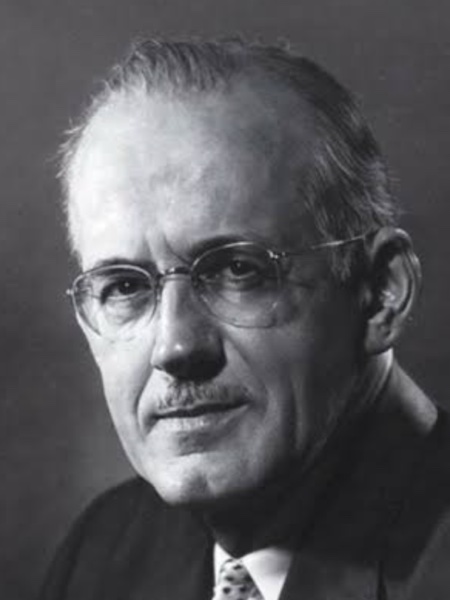
In 1948 a Chicago pastor named A. W. Tozer published a short book with a huge hunger inside it. He was born on 21 April 1897 near La Jose, in rural western Pennsylvania. He never sat in a high school classroom or a seminary. He taught himself from libraries and second-hand bookshops.
Contents
- 1 A Fire Not Large, but Real 4 min
- 2 I Want to Want Thee 4 min
- 3 My Coward Heart 4 min
- 4 The Opaque Veil 4 min
- 5 Taste and See 4 min
- 6 And I Knew It Not 4 min
- 7 Lord, Teach Me to Listen 4 min
- 8 The Gaze of a Soul 4 min
- 9 Be Thou Exalted 3 min
- 10 Pretty Small Stuff 4 min
- 11 The Whole World a Sanctuary 4 min
Questions and Answers
Who was A. W. Tozer?
Aiden Wilson Tozer (1897–1963) was an American pastor, born near La Jose in western Pennsylvania. He never went to high school, college or seminary and taught himself from libraries and second-hand bookshops. He became a Christian at about seventeen in Akron, Ohio, was ordained in the Christian and Missionary Alliance in 1920, and pastored Southside Alliance Church in Chicago for thirty-one years before moving to Toronto, where he died in 1963.
What does “the pursuit of God” mean?
It means going on to know God himself, as a person, not just believing the right things about him. Tozer taught that becoming a Christian is “not an end but an inception”: the start of a lifelong friendship. God starts the pursuit by drawing us, and we respond by seeking him, the way a psalm says, “My soul followeth hard after thee.”
What is the original book, and when and why was it written?
The Pursuit of God is a short book of ten chapters, each ending with a prayer, published in 1948 while Tozer was a pastor in Chicago. He wrote it because he saw many Christians with correct beliefs but little real experience of God, and a growing number who were hungry for “God Himself.” He called it “a modest attempt to aid God's hungry children so to find Him.”
Is this edition honest about the hard parts?
Yes. It keeps Tozer's blunt criticism of the churches of his day, his use of the disturbing story of Abraham and Isaac, and his insistence that letting God deal with our selfishness hurts. It also says plainly that, according to his biographers, his absorption in God made him distant from his wife and seven children.
What does “I want to want Thee” mean?
It comes from the prayer at the end of Tozer's first chapter. He admits he is “ashamed of my lack of desire” for God, and instead of pretending, he asks God to make him want more. It means you don't have to feel on fire for God to begin: you can start by asking God to give you the desire.
Did Tozer really write the book in one night on a train?
His biographers report that he drafted much of it in a single night on a train journey to Texas. Its introduction, by Samuel M. Zwemer, says it was the result of long meditation and much prayer. Both can be true: the writing may have come quickly because the thinking and praying had gone on for years.
How does Tozer speak about other Christians?
He can be sharp about shallow faith, entertainment in church and self-promoting leaders. But he says “I trust I speak in charity,” includes himself in the blame (“We have all contributed”), and admits when an idea is only his opinion: “you can be a good Christian and not accept my thesis.”
What can a teenager take from it?
That being hungry for God is a good sign, not a problem; that God is always present, even when we don't notice; that faith is simply looking to Jesus, even when your mind wanders; that you can stop pretending and comparing; and that ordinary things like homework, chores and time with family can be done as worship.
Read in your language
More like this





Cite this book
Copy a citation in the style you need.
- MLA
- Tozer, A. W. The Pursuit of God (For Teens). Ochorus, https://ochorus.com/books/the-pursuit-of-god-teens/.
- Chicago
- Tozer, A. W. The Pursuit of God (For Teens). Ochorus. https://ochorus.com/books/the-pursuit-of-god-teens/.
- Chicago footnote
- A. W. Tozer, The Pursuit of God (For Teens) (Ochorus), https://ochorus.com/books/the-pursuit-of-god-teens/.
- BibTeX
- @book{tozerpursuit, author = {Tozer, A. W.}, title = {{The Pursuit of God (For Teens)}}, publisher = {Ochorus}, url = {https://ochorus.com/books/the-pursuit-of-god-teens/} }