Book
Hosea
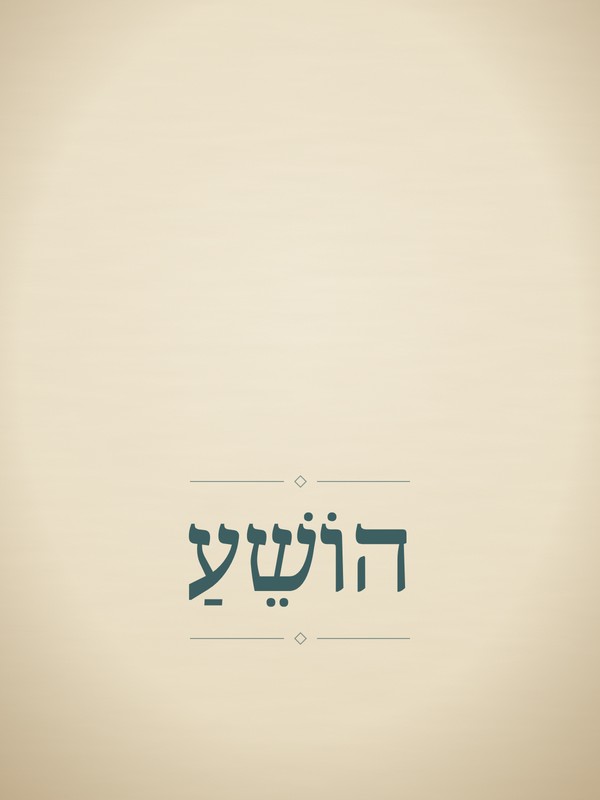
Hoshea, “Salvation”
Part of The Bible·Next in the series: Joel
16 chapters · 47 min read · Accessible
Free to read · No account needed
Listen to the whole book 1 hr 1 min listenAbout this book
God’s unfailing love for unfaithful Israel, pictured in Hosea’s marriage.
- Author
- Hosea
- Date
- 8th century BC
For I want loyal love, not sacrifice, and knowledge of God more than burnt offerings.The prophet who preached through his own broken marriage, sent to the northern kingdom of Israel in its last prosperous, faithless decades before it fell to Assyria. Hosea marries Gomer, names their children No Compassion and Not My People, and buys back a wife who has left him, because God loves a people who have run after other gods. Between the judgments come some of the tenderest words in the Bible: the LORD leading his bride into the wilderness to speak tenderly to her, teaching Ephraim to walk, crying “How can I give you up?”, and asking for loyal love, not sacrifice. Set out line by line as the poetry it is, in the Open Word Bible, a new translation from the Hebrew given freely to the public domain, with an introduction to the book’s shape and meaning and a conclusion on where to read next.
The LORD’s word came to Hosea son of Beeri during the reigns of Uzziah, Jotham, Ahaz, and Hezekiah over Judah, and during the reign of Jeroboam son of Joash over Israel. When the LORD first spoke through Hosea, the LORD said to him, “Go, marry a promiscuous wife and have children born of promiscuity, for the land is wholly given to prostitution; it has turned…
Contents
Sermons on this book
Christ for Us
From Hosea's words "So will I also be for thee," Havergal shows how Christ answers every detail of our consecration with His own self-giving. She moves through twelve gifts, His life, eternity, hands, feet, voice, lips, wealth, wisdom, will, heart and love, each "for thee," and lands on the greatest: Christ Himself, all His Godhead and manhood, for ever. The chapter ends in the whole-hearted cry to be "Ever, ONLY, ALL for Thee!"
The Impressions of Natural Men
“Your goodness is as a morning cloud, and as the early dew it goeth away.” The impressions of natural men are fading, M'Cheyne warns — real, and gone by noon. A tender, searching sermon on the difference between being moved and being changed, for every hearer who has felt much and kept little.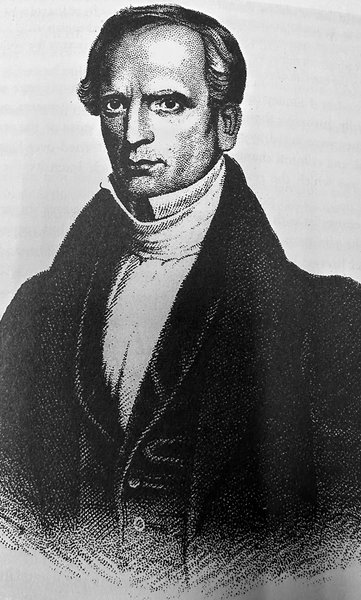
Breaking Up the Fallow Ground
“Break up your fallow ground.” Feelings cannot be forced, Finney says, but they follow where attention goes. So he sets the church to work with pen and paper, listing its sins one by one, from ingratitude and neglect of the Bible to pride and slander, confessing them and setting right every wrong: “drive the plow right through them, beam deep.”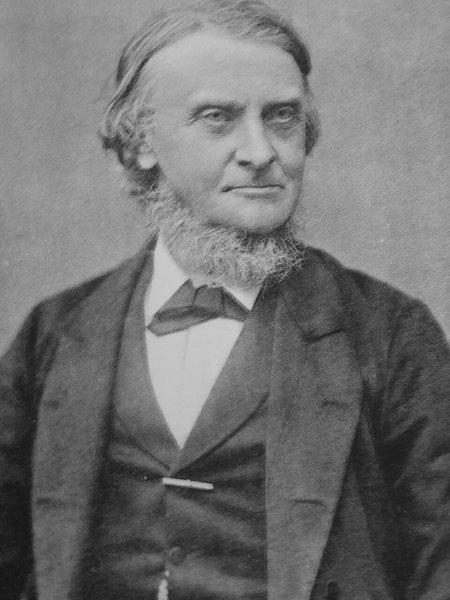
The Dew and the Plants
Reading Hosea’s promise of the dew as a picture of all spiritual growth, Maclaren draws four lessons. Every soul needs the bedewing of God’s Spirit; the bedewed soul grows into the lily’s purity and beauty; it strikes roots like Lebanon’s cedars, joining strength to beauty by abiding in Christ; and, like the humble olive, it bears fruit. He ends praying that we open our hearts to the dew and grow fruitful. What Have I to Do Any More with Idols?
Preached at the close of a communion Sabbath, 28 October 1840: everyone who has that day confessed Christ before men should take up Ephraim's words and mean them. M'Cheyne walks through the idols a believer is done with, and the Christ who is worth more than all of them.Questions and Answers
What is the book of Hosea?
The first of the twelve shorter prophetic books at the end of the Old Testament, often called the Minor Prophets because they are short, not because they matter less. Its fourteen chapters were spoken to the northern kingdom of Israel, which Hosea often calls Ephraim. Chapters 1–3 tell the story of the prophet’s marriage as a picture of God’s love for an unfaithful people; chapters 4–14 are poems that move between accusation and appeal, and the book ends with a call to return to the LORD and a promise that he will heal his people and love them freely (14:4).
Who wrote the book of Hosea, and when?
The book presents itself as the word of the LORD that came to Hosea son of Beeri during the reigns of Jeroboam II of Israel and of Uzziah, Jotham, Ahaz and Hezekiah of Judah (1:1). That puts his ministry roughly between 755 and 715 BC, the last decades of the northern kingdom before Samaria fell to Assyria in 722 BC. Most readers take Hosea himself to be the source of its oracles; many scholars think they were gathered and edited in Judah after the fall of the north, which would explain the lines addressed to Judah.
Why did God tell Hosea to marry an unfaithful wife?
So that his marriage would preach. “Go, marry a promiscuous wife,” the LORD says, “for the land is wholly given to prostitution” (1:2): Hosea’s life with Gomer was to show Israel how its worship of Baal and other gods looked to the God who had made a covenant with it, and how he still loved it. Christians have understood the command in different ways. Some read it as literal, others think Gomer became unfaithful only after the marriage and the story is told from its end, and some interpreters, Jewish and Christian, have read it as a vision or acted parable. In chapter 3 Hosea buys back an adulterous wife, “just as the LORD loves the people of Israel”.
What do the names of Hosea’s children mean?
Each is a message. Jezreel recalls the valley where King Jehu had seized the throne by slaughter, and announces judgment on his dynasty. Lo-ruhamah means “No Compassion” and Lo-ammi “Not My People”, the undoing of the covenant by which the LORD had made Israel his own. Then the names are reversed: “I will have compassion on No Compassion, and I will say to Not My People, ‘You are my people’” (2:23). Paul in Romans 9 and Peter in his first letter apply that reversal to Gentiles who come to belong to God.
What does Hosea 6:6, “I want loyal love, not sacrifice”, mean?
That God wants faithfulness of heart and life more than religious ritual, “and knowledge of God more than burnt offerings”. The Hebrew word for loyal love, hesed, is the love that keeps covenant. Hosea did not reject sacrifice, but he said that worship without that love was worthless, like a ring worn by someone who has gone off with another. Jesus quoted the verse twice in Matthew’s Gospel, when he ate with sinners (9:13) and when his disciples were accused of breaking the Sabbath (12:7).
Which translation of the Bible is this?
The Open Word Bible, a new translation made directly from the Hebrew and dedicated to the public domain, printed here at its Balanced level, which aims to be accurate and to read naturally aloud. The reasoning behind each of its sentences, with the Hebrew beside it, is published at openwordbible.org. The introduction and conclusion were written for this edition.
More like this

Taking books where there’s no signal? See Ochorus for missionaries or chaplains
About this text
- Source
- Scripture from the Open Word Bible (https://openwordbible.org), English, Balanced level, commit 64b913d623d6: dedicated to the public domain under CC0 1.0. The introduction and conclusion are by Ochorus. openwordbible.org
- Last updated
- November 13, 2026
- Rights
- Terms of Use
Cite this book
Copy a citation in the style you need.
- MLA
- Open Word Bible. Hosea. Ochorus, https://ochorus.com/books/hosea/.
- Chicago
- Open Word Bible. Hosea. Ochorus. https://ochorus.com/books/hosea/.
- Chicago footnote
- Open Word Bible, Hosea (Ochorus), https://ochorus.com/books/hosea/.
- BibTeX
- @book{openwordbiblehosea, author = {{Open Word Bible}}, title = {{Hosea}}, publisher = {Ochorus}, url = {https://ochorus.com/books/hosea/} }