

Book
The Gospel of Mark
Kata Markon, “According to Mark”
Part of The Bible·Next in the series: The Gospel of Luke
18 chapters · 1 hr 35 min read · Accessible
Free to read · No account needed
Listen to the whole book 2 hr 2 min listenAbout this book
Jesus, the Son of God, came to serve and to give his life as a ransom.
- Author
- Traditionally Mark
- Date
- c. AD 60s
The Son of Man himself came, not so that others would serve him, but to serve them and to give his life as the ransom price for many.The shortest of the four Gospels, and probably the first to be written: “The beginning of the gospel about Jesus Christ.” Fast and vivid, it moves from the Jordan to Galilee at once, where Jesus heals, casts out unclean spirits, stills the storm and leaves his disciples asking, “Who is this?” Then the way to Jerusalem, three times foretelling his death, and the saying at the heart of the book, that the Son of Man came to serve and to give his life as the ransom price for many. The cross, where a Roman centurion is the first to call him God’s Son, and an empty tomb, where frightened women hear that he has gone ahead of them to Galilee. Traditionally the memories of Peter, written down by his interpreter Mark. In the Open Word Bible, a new translation from the Greek given freely to the public domain, with an introduction to the book’s shape and meaning and a conclusion on where to read next.
The beginning of the gospel about Jesus Christ. It happened just as it is written in the prophet Isaiah: “See, I am sending my messenger ahead of you; he will make your road ready.
Contents
Read alongside
Commentaries and expositions of this book in the library.

Sermons on this book
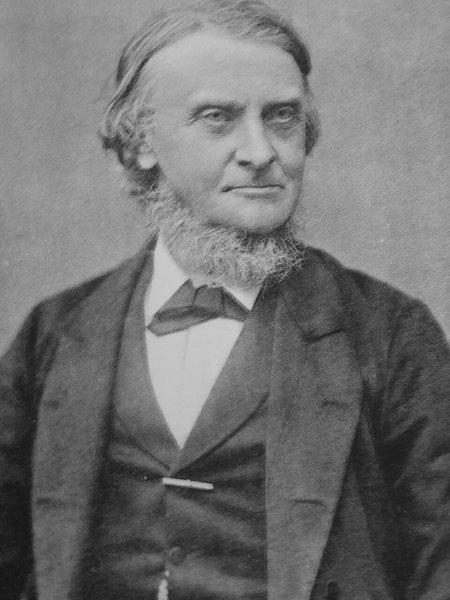
Christ's Touch
Maclaren notices how often Mark records the touch of Jesus, and reads it four ways: as the instinctive expression of a human compassion that overcomes disgust; as the medium of His miraculous power, like the outward means God still uses; as a symbol of the Incarnation, in which He lays hold of our corruption untainted; and as a pattern for Christians, who must take outcasts by the hand rather than help them from a height. The Secret of Gladness
From Christ’s reply about fasting, Maclaren draws the principle that outward forms are worth only what they express, then turns to the image of the wedding party. Christ takes the Old Testament name of Bridegroom; His presence remains real now and must be daily realised; and that presence gives a joy that outlasts sorrow. He ends by calling joy a Christian duty, found only in communion with Christ. The Toiling Christ
From the weary Christ asleep in the boat, Maclaren draws out a neglected trait of His ministry: hard physical toil, carried to the point of exhaustion. He traces it through Mark, the Gospel of the Servant, and finds its motives in obedience to the Father, the shortness of the day and compassion. He closes with what that toil means for us: proof of Christ's manhood, a pattern for daily work, and an appeal to gratitude. The Power of Feeble Faith
Maclaren takes the woman who crept through the crowd to touch the hem of Christ's garment and finds in her the encouragement of every weak believer: her faith was ignorant, half-superstitious, trembling and hidden — and it healed her all the same. The power, he shows, was never in the strength or the clearness of her faith but in the One she touched. A feeble hand laid on Christ draws from him as surely as a bold one, so no one need stay away for the poorness of his faith. The Looks of Jesus
Gathering the moments when Mark records how Jesus looked at people, Maclaren groups them by their objects: the welcoming look on the healed woman and the rich young ruler; the looks of love and warning on His disciples; the look of anger blended with pity on the Pharisees in the synagogue; and the silent, searching look round the Temple. He ends by inviting us to lay ourselves in the sunshine of that gaze and know that it is love.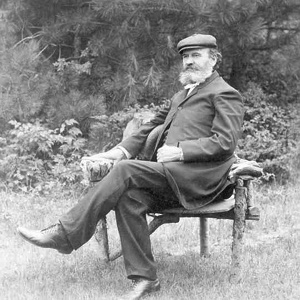
The Possibilities of Faith
An ascending survey of what 'all things are possible to him that believeth' actually covers: salvation for the worst of sinners, sanctification, the healing of the body, daily provision, and the evangelization of the world. Simpson presses the staggering parallel — what is possible with God is offered to faith — and calls the reader to claim it in believing prayer.Questions and Answers
What is the Gospel of Mark?
The second and shortest of the four Gospels, the accounts of the life, death and resurrection of Jesus in the New Testament. It tells the story quickly and vividly, from John the Baptist at the Jordan to the empty tomb, with about a third of the book given to the last week of Jesus’s life. Its centre is the question of who Jesus is, and its answer is that he is the Son of God who came “to give his life as the ransom price for many” (10:45).
Who wrote the Gospel of Mark, and when?
The Gospel does not name its author. From the earliest tradition it has been called Mark’s, identified with John Mark of Acts, a companion of Paul and Barnabas and later of Peter. Papias, early in the second century, said that Mark was Peter’s interpreter and wrote down accurately what Peter remembered of what Jesus said and did. Most scholars date it to the late 60s or around AD 70, and tradition places it in Rome.
Was Mark the first Gospel to be written?
Most scholars think so. Nearly all of Mark is found in Matthew and Luke, often in the same order and wording, and the usual explanation is that both of them used Mark. Others hold, as Augustine did, that Matthew came first and Mark abridged it. The question does not change what any of the Gospels says, but it helps explain why the first three are so alike.
What is the “messianic secret” in Mark?
A name scholars give to the way Jesus in Mark tells demons to be silent, tells people he has healed to tell no one, and orders his disciples not to say he is the Christ (8:30). Part of the reason may be that crowds would have taken him for the wrong kind of Messiah. Mark’s deeper point is that no one can understand who Jesus is until they have seen the cross, where a centurion at last says, “This man really was God’s Son!” (15:39).
How does the Gospel of Mark end?
In the two oldest complete manuscripts it ends at 16:8, with women running from the empty tomb, telling no one, “for they were afraid”. Whether Mark meant to end there or his ending was lost is an open question. Most later manuscripts add a longer ending (16:9–20), and a few have a short ending; neither is in Mark’s style. Like most Bibles, this edition prints both after 16:8, set apart and in brackets, with a note.
Which translation of the Bible is this?
The Open Word Bible, a new translation made directly from the Greek and dedicated to the public domain, printed here at its Balanced level, which aims to be accurate and to read naturally aloud. The reasoning behind each of its sentences, with the Greek beside it, is published at openwordbible.org. The introduction and conclusion were written for this edition.
More like this
Taking books where there’s no signal? See Ochorus for missionaries or chaplains
About this text
- Source
- Scripture from the Open Word Bible (https://openwordbible.org), English, Balanced level, commit 64b913d623d6: dedicated to the public domain under CC0 1.0. The introduction and conclusion are by Ochorus. openwordbible.org
- Last updated
- November 13, 2026
- Rights
- Terms of Use
Cite this book
Copy a citation in the style you need.
- MLA
- Open Word Bible. The Gospel of Mark. Ochorus, https://ochorus.com/books/gospel-of-mark/.
- Chicago
- Open Word Bible. The Gospel of Mark. Ochorus. https://ochorus.com/books/gospel-of-mark/.
- Chicago footnote
- Open Word Bible, The Gospel of Mark (Ochorus), https://ochorus.com/books/gospel-of-mark/.
- BibTeX
- @book{openwordbiblegospel, author = {{Open Word Bible}}, title = {{The Gospel of Mark}}, publisher = {Ochorus}, url = {https://ochorus.com/books/gospel-of-mark/} }