Book
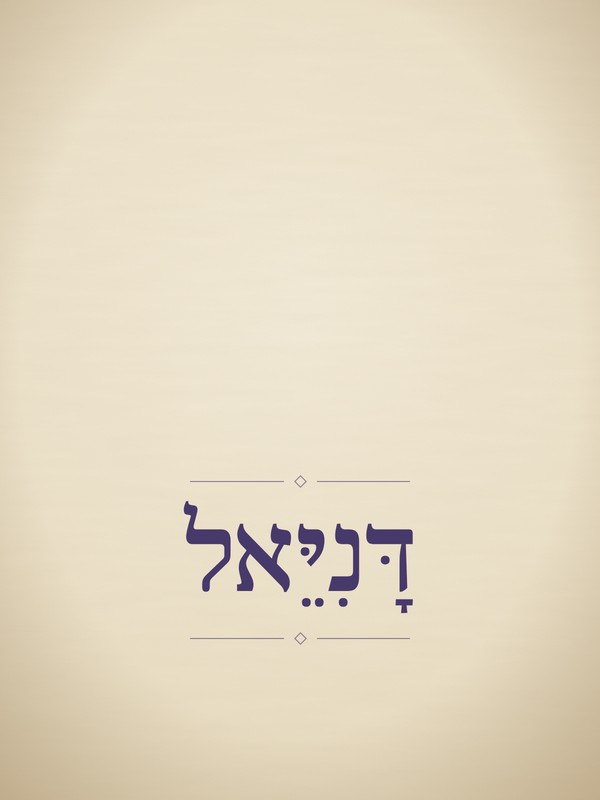
Daniel
Daniyyel, “God is my judge”
Part of The Bible·Next in the series: Hosea
14 chapters · 1 hr 14 min read · Moderate
Free to read · No account needed
Listen to the whole book 1 hr 36 min listenAbout this book
Faithfulness in exile, and the kingdom of God that outlasts empires.
- Author
- Traditionally Daniel
- Date
- 6th century BC setting
In the time of those kings the God of heaven will establish a kingdom that will never be destroyed. Its rule will never pass to another people. It will crush all these kingdoms and bring them to an end, but it will itself endure forever.The story of a young man of Judah carried off to Babylon, who served its kings for a lifetime without ever ceasing to serve his God, and the visions he was given of the kingdoms of the world and the kingdom that will never be destroyed. Four friends who will not eat the king’s food; a statue of gold, silver, bronze and iron struck down by a stone cut without hands; three men in the blazing furnace and a fourth walking with them; a proud king who eats grass like cattle; the writing on the wall; Daniel praying at his open window and thrown to the lions. Then beasts rising from the sea, the Ancient of Days on his throne, one like a son of man coming with the clouds of heaven, seventy sevens, and the promise that those who sleep in the dust will awake. In the Open Word Bible, a new translation from the Hebrew and Aramaic given freely to the public domain, with an introduction to the book’s shape and meaning and a conclusion on where to read next.
In the third year of Jehoiakim’s reign as king of Judah, Nebuchadnezzar king of Babylon came to Jerusalem and laid siege to it. The Lord handed Jehoiakim king of Judah over to him, along with some of the vessels from the house of
Contents
Sermons on this book
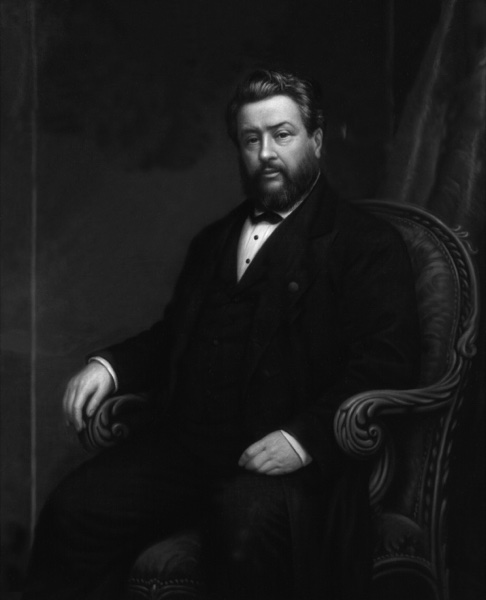
Consolation in the Furnace
The fourth figure walking in Nebuchadnezzar's furnace gives Spurgeon his subject, and he counts the furnaces a believer may be put into: the one men kindle, the one Satan blows with his three bellows, and the one God heats himself. Young men are told to lose everything before their integrity. He closes on the Christ who trod the glowing coals first.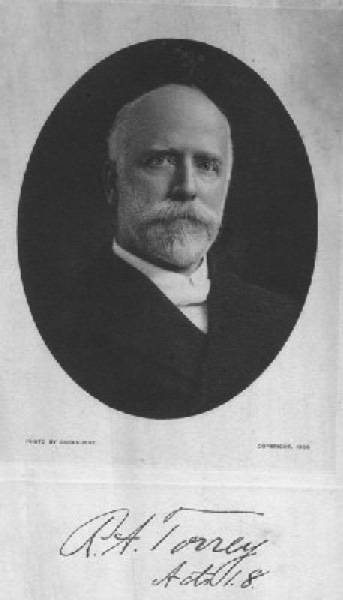
Found Wanting
Belshazzar was weighed in the balance and found wanting. Torrey turns God's scales on the hearer, weighing a life against God's law, and points to the one who can make the wanting whole.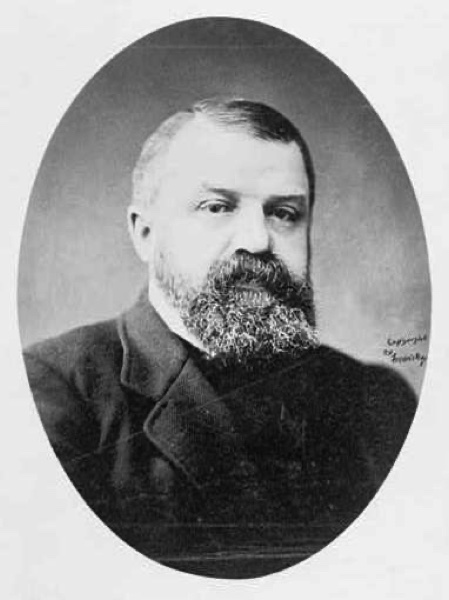
True Wisdom
Taking Daniel’s promise that the wise shall shine as the firmament, Moody notes that the captive Hebrew outshone every king of his day, as Joseph, Elijah, Paul and Bunyan outlived their persecutors while Napoleon is almost forgotten. Everyone wants to shine, he says, but in God’s kingdom even the weakest may, by letting a little light burn where it is dark. He ends by urging his readers to win souls, because a good man’s influence cannot be buried.Questions and Answers
What is the book of Daniel?
An Old Testament book in two halves. Chapters 1–6 are stories of Daniel and his friends, Jewish exiles serving at the courts of Babylon and Persia: the refusal of the king’s food, Nebuchadnezzar’s dream of the statue, the blazing furnace, the king who lost his mind, the writing on the wall and the lions’ den. Chapters 7–12 are visions of the empires to come and of God’s everlasting kingdom. The book is written partly in Hebrew and partly in Aramaic (2:4–7:28). Christian Bibles place it among the major prophets; the Hebrew Bible places it among the Writings.
Who wrote the book of Daniel, and when?
Christians hold different views. The traditional view, held by Jewish and Christian readers for most of history and by many today, is that the book comes from Daniel himself, who was taken to Babylon in 605 BC and lived into the reign of Cyrus of Persia, and that its visions are predictive prophecy. Many scholars date the book’s final form to the 160s BC, during the persecution of the Jews by Antiochus IV Epiphanes, holding that older stories of Daniel were joined to visions written to encourage the faithful in that crisis. Others take positions in between. All agree the book was given to strengthen God’s people under hostile powers.
Who is the son of man in Daniel 7?
In Daniel’s vision of four beasts rising from the sea, he sees “one like a son of man coming with the clouds of heaven”, who is brought before the Ancient of Days and given an everlasting kingdom (7:13–14). The phrase means a figure in human form, set against the beasts that stand for earthly empires; the angel links his kingdom with “the holy ones of the Most High” (7:18). Jesus used “the Son of Man” of himself more than any other title, and at his trial applied this very vision to himself (Mark 14:62). Christians therefore see in the figure the Messiah, who shares his kingdom with his people.
What are the four kingdoms in Daniel?
In chapter 2 Nebuchadnezzar dreams of a statue of gold, silver, bronze and iron, and in chapter 7 Daniel sees four beasts; both picture four empires followed by the kingdom of God. The first is Babylon (“You are the head of gold”, 2:38). The traditional Christian reading takes the others as Medo-Persia, Greece and Rome, with God’s kingdom arriving in Christ; many modern interpreters read them as Media, Persia and Greece, ending with the Greek kings of Daniel’s later visions. On either reading the point is the same: the kingdoms of the world pass away, and God’s kingdom “will never be destroyed” (2:44).
What are the seventy sevens in Daniel 9?
After Daniel prays over Jeremiah’s prophecy of seventy years of exile, the angel Gabriel tells him that “Seventy sevens have been decreed” for his people and city, to put an end to sin, “to bring in everlasting righteousness” and to anoint a most holy place, and that “an anointed one will be cut off” (9:24–27). Interpreters have read the seventy weeks of years in several ways: as reaching to the coming and death of Jesus the Messiah, to the crisis under Antiochus IV in the second century BC, or to a final period at the end of history. The passage is one of the most debated in the Bible, and is best read with humility.
Which translation of the Bible is this?
The Open Word Bible, a new translation made directly from the Hebrew and Aramaic and dedicated to the public domain, printed here at its Balanced level, which aims to be accurate and to read naturally aloud. Its poetic prayers and visions are set out line by line. The reasoning behind each of its sentences, with the original beside it, is published at openwordbible.org. The introduction and conclusion were written for this edition.
More like this
Taking books where there’s no signal? See Ochorus for missionaries or chaplains
About this text
- Source
- Scripture from the Open Word Bible (https://openwordbible.org), English, Balanced level, commit 64b913d623d6: dedicated to the public domain under CC0 1.0. The introduction and conclusion are by Ochorus. openwordbible.org
- Last updated
- November 13, 2026
- Rights
- Terms of Use
Cite this book
Copy a citation in the style you need.
- MLA
- Open Word Bible. Daniel. Ochorus, https://ochorus.com/books/daniel/.
- Chicago
- Open Word Bible. Daniel. Ochorus. https://ochorus.com/books/daniel/.
- Chicago footnote
- Open Word Bible, Daniel (Ochorus), https://ochorus.com/books/daniel/.
- BibTeX
- @book{openwordbibledaniel, author = {{Open Word Bible}}, title = {{Daniel}}, publisher = {Ochorus}, url = {https://ochorus.com/books/daniel/} }