Book
The Letter to the Colossians
Pros Kolossaeis, “To the Colossians”
Part of The Bible·Next in the series: The First Letter to the Thessalonians
6 chapters · 26 min read · Accessible
Free to read · No account needed
Listen to the whole book 33 min listenAbout this book
Christ, the image of the invisible God, is supreme over all and is enough.
- Author
- Paul
- Date
- c. AD 60
The Son is the image of the unseen God, the firstborn who stands above all creation.Paul’s letter from prison to a small church in the Lycus valley that he had never visited, which was being offered something more than Christ: a deeper philosophy, strict rules about food and festivals, visions and the worship of angels. His answer is Christ himself: “The Son is the image of the unseen God,” through whom and for whom everything was created, in whom all things are held together, and in whom all the fullness of God dwells bodily. So the Colossians need nothing more. Raised with Christ, they are to seek what is above, put on the new self and, over all, love, and live as a household in the Lord, where Christ is everything, and he is in all. Carried by Tychicus with Onesimus, alongside the letter to Philemon. In the Open Word Bible, a new translation from the Greek given freely to the public domain, with an introduction to the letter’s shape and meaning and a conclusion on where to read next.
From Paul, an apostle of Christ Jesus by the will of God, and from Timothy our brother, to God’s holy people in Colossae, the faithful brothers and sisters in Christ. Grace and peace to you from God our Father.
Contents
Sermons on this book
Himself
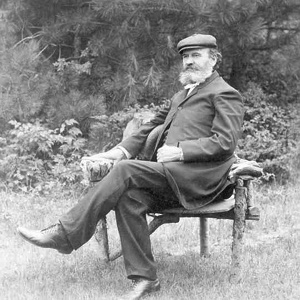
Simpson's best-loved message: the deepest need of the soul is not any blessing — not healing, not sanctification, not 'the it' we chase — but Christ Himself as indwelling life. He traces his own journey from seeking experiences to receiving the Person, showing how every gift is kept only while the Giver is kept, and closes with the hymn born of this discovery: 'Once it was the blessing, now it is the Lord.'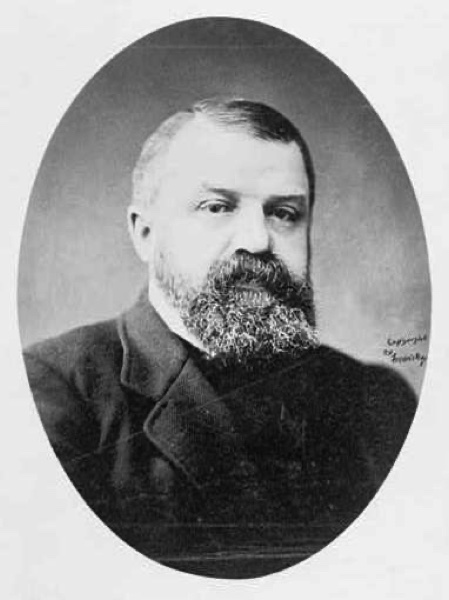
Christ All in All
Moody works through Colossians office by office — Saviour, Redeemer, Deliverer, Leader, Light, Teacher, Shepherd, burden-bearer — each meeting a need the one before it uncovers: to be pulled from the water is not yet to be bought back, and Israel out of Egypt still needed a way through the desert. He breaks off admitting the list could not be finished this side of eternity.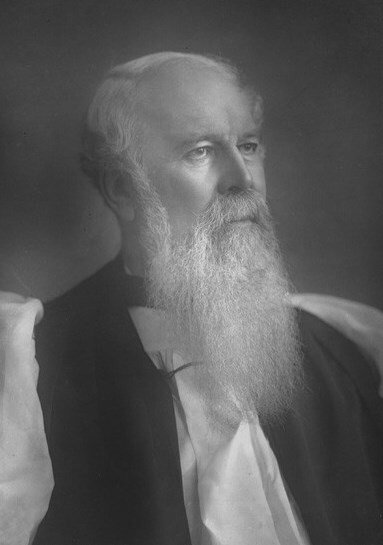
Christ Is All
Three short words, Ryle says, are “the essence and substance of Christianity.” He traces Christ through God’s counsels, through every book of the Bible, through the believer’s justification, holiness, comfort and hope, and into heaven. Then he warns against a Christless religion, or Christ plus anything, and urges believers to lean on him far more.Questions and Answers
What is the Letter to the Colossians?
The twelfth book of the New Testament, a letter of the apostle Paul and Timothy to the church at Colossae, a town in the Lycus valley in what is now western Turkey. Paul had never visited it; the gospel reached it through Epaphras, one of its own (1:7; 4:12). The letter answers teachers who were offering the Colossians something beyond Christ, by setting out who Christ is, the image of the unseen God and the one in whom all God’s fullness dwells, and what it means to live raised with him.
Who wrote Colossians, and when?
The letter comes from Paul and Timothy, and Paul signs it in his own hand (4:18). It is closely tied to Philemon: the same companions are with Paul, and Onesimus travels with Tychicus to Colossae (4:7–9). Most readers date both letters to Paul’s imprisonment, probably in Rome around AD 60–62, though some prefer Ephesus. Some scholars think a disciple wrote Colossians in Paul’s name, pointing to its style and its vision of Christ; others hold that its links with Philemon make Paul’s authorship the simplest explanation.
What was the false teaching at Colossae?
No one knows exactly, because Paul never describes it in full. He warns against a philosophy that follows human tradition and the elemental forces of the world (2:8), and mentions rules about food and drink, festivals, new moons and the sabbath, self-humbling, the worship of angels, visions, and the slogan “Do not handle, do not taste, do not touch” (2:16–23). Many think it mixed Jewish practice with mystical or local religion. Paul’s answer is that in Christ believers have been made full (2:10), so they need nothing more.
Does “firstborn” in Colossians 1:15 mean that Christ was created?
Paul calls the Son “the firstborn who stands above all creation”, and goes straight on to say that everything in heaven and on earth was created in him, through him and for him, and that in him all things are held together (1:16–17). The word speaks of rank, the place of the heir, not of being the first thing made. In the fourth century the followers of Arius argued otherwise, and Athanasius answered from the passage itself: if all creation came to be through the Son and holds together in him, he cannot be one of the things he holds together. The churches have followed him.
What does “Christ in you, the hope of glory” mean in Colossians 1:27?
Paul speaks of a mystery kept hidden through all past ages and now revealed: that among the Gentiles, of all people, Christ himself lives in those who believe, and that his presence is the promise of the glory still to come. It is his answer to teachers who said the Colossians needed something more, a deeper philosophy, stricter rules, visions or the help of angels. In Christ all the fullness of God dwells, and in him they have been made full (2:9–10). Their life now lies hidden with Christ in God, and when he is revealed they will be revealed with him in glory (3:3–4).
Which translation of the Bible is this?
The Open Word Bible, a new translation made directly from the Greek and dedicated to the public domain, printed here at its Balanced level, which aims to be accurate and to read naturally aloud. The reasoning behind each of its sentences, with the Greek beside it, is published at openwordbible.org. The introduction and conclusion were written for this edition.
More like this
Taking books where there’s no signal? See Ochorus for missionaries or chaplains
About this text
- Source
- Scripture from the Open Word Bible (https://openwordbible.org), English, Balanced level, commit 64b913d623d6: dedicated to the public domain under CC0 1.0. The introduction and conclusion are by Ochorus. openwordbible.org
- Last updated
- November 13, 2026
- Rights
- Terms of Use
Cite this book
Copy a citation in the style you need.
- MLA
- Open Word Bible. The Letter to the Colossians. Ochorus, https://ochorus.com/books/colossians/.
- Chicago
- Open Word Bible. The Letter to the Colossians. Ochorus. https://ochorus.com/books/colossians/.
- Chicago footnote
- Open Word Bible, The Letter to the Colossians (Ochorus), https://ochorus.com/books/colossians/.
- BibTeX
- @book{openwordbibleletter, author = {{Open Word Bible}}, title = {{The Letter to the Colossians}}, publisher = {Ochorus}, url = {https://ochorus.com/books/colossians/} }