Book
The First Letter to the Thessalonians
Pros Thessalonikeis A, “First to the Thessalonians”
Part of The Bible·Next in the series: The Second Letter to the Thessalonians
7 chapters · 26 min read · Accessible
Free to read · No account needed
Listen to the whole book 33 min listenAbout this book
Encouragement for a young church: holy living and the Lord’s coming.
- Author
- Paul
- Date
- c. AD 51
The Lord himself will come down from heaven at a shout of command, at an archangel’s call and the sound of God’s trumpet, and the dead who belong to Christ will rise first.Very likely the oldest of Paul’s letters, written around AD 50 to a church he had been driven away from only months before: Gentiles who had “turned to God from idols” and were already suffering for it. Paul gives thanks for their faith, love and hope, remembers how he lived among them like a nursing mother and a father, and tells of the joy Timothy’s news has brought. Then he urges them on in holiness, love and quiet work, comforts them over believers who have died with the hope of the Lord’s coming, and ends with words learned by heart ever since: be joyful at all times, never stop praying, give thanks whatever happens. In the Open Word Bible, a new translation from the Greek given freely to the public domain, with an introduction to the letter’s shape and meaning and a conclusion on where to read next.
From Paul, Silvanus and Timothy, to the church of the Thessalonians, which belongs to God the Father and the Lord Jesus Christ. Grace and peace to you. Every time we mention you in our prayers, we give thanks to God for all of
Contents
Sermons on this book
Wholly Sanctified
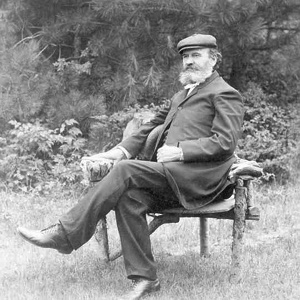
Simpson argues that sanctification is God's own work, "the great obtainment of faith, not the attainment of works," resting on a settled justification. He unfolds it in three senses — separation from evil and the world, dedication to God as His possession, and filling by Christ — the last opening boundless room for growth.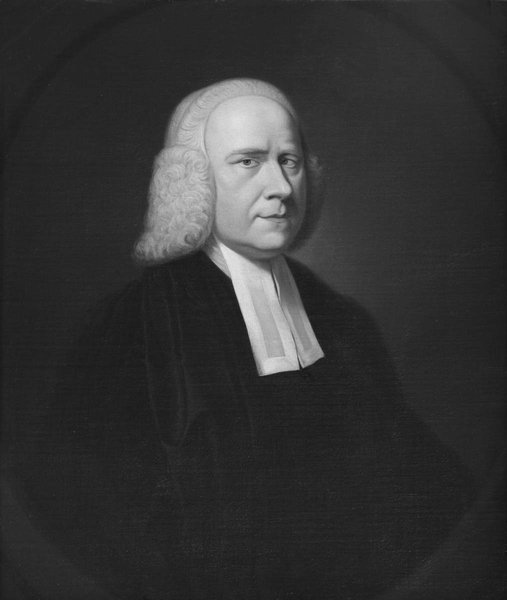
Intercession Every Christian's Duty
Why is there so little love among Christians? Because, Whitefield answers, so few of them pray for one another. He recovers intercession as the neglected root of Christian love — whom to pray for, and how — and presses it home as a duty no believer may leave to the ministers.Questions and Answers
What is the First Letter to the Thessalonians?
A letter from Paul, with Silvanus (Silas) and Timothy, to the young church in Thessalonica, the capital of the Roman province of Macedonia. Paul had founded the church on his second missionary journey and been forced to leave (Acts 17:1–10). The letter gives thanks for the believers’ faith, defends how Paul lived among them, encourages them under persecution, teaches them how to live in holiness and love, and comforts them about believers who have died.
Who wrote 1 Thessalonians, and when?
The apostle Paul, who names himself with Silvanus and Timothy in the first verse. Almost all scholars accept it as his. He wrote from Corinth, soon after Timothy returned from Thessalonica with news of the church (3:6), around AD 50 or 51. That makes it very likely the earliest of Paul’s letters that survive, and perhaps the oldest writing in the New Testament, though some date Galatians earlier.
Why did Paul write 1 Thessalonians?
He had left Thessalonica in a hurry, after only a short stay, and feared that persecution had shaken the new believers. When Timothy brought good news, Paul wrote to thank God for them, to answer those who said he was a travelling preacher out for money, to strengthen them in holiness and love, and to answer a question troubling them: what happens to believers who die before the Lord comes?
What does 1 Thessalonians 4 teach about the second coming?
That believers who have died are not lost. When the Lord comes down from heaven, “the dead who belong to Christ will rise first”, and the living will be swept up with them to meet the Lord, and “from then on we will be with the Lord always” (4:16–17). Christians differ over how this fits other passages: many evangelicals see here a rapture of believers before a time of tribulation, while others read it as the single return of Christ in glory, with the church going out to welcome him as a city welcomed an arriving king. Paul’s own aim is comfort: “So comfort one another with these words.”
What does “never stop praying” mean in 1 Thessalonians 5:17?
It comes in a group of three short commands: “Be joyful at all times. Never stop praying. Whatever happens, give thanks; this is what God wants for you in Christ Jesus” (5:16–18). Paul does not mean that believers should do nothing but pray, since the same letter tells them to work with their hands. He means a life turned toward God at every moment, returning to prayer again and again through the day, as he himself prayed for the Thessalonians “night and day” (3:10).
Which translation of the Bible is this?
The Open Word Bible, a new translation made directly from the Greek and dedicated to the public domain, printed here at its Balanced level, which aims to be accurate and to read naturally aloud. The reasoning behind each of its sentences, with the Greek beside it, is published at openwordbible.org. The introduction and conclusion were written for this edition.
More like this

Taking books where there’s no signal? See Ochorus for missionaries or chaplains
About this text
- Source
- Scripture from the Open Word Bible (https://openwordbible.org), English, Balanced level, commit 64b913d623d6: dedicated to the public domain under CC0 1.0. The introduction and conclusion are by Ochorus. openwordbible.org
- Last updated
- November 13, 2026
- Rights
- Terms of Use
Cite this book
Copy a citation in the style you need.
- MLA
- Open Word Bible. The First Letter to the Thessalonians. Ochorus, https://ochorus.com/books/1-thessalonians/.
- Chicago
- Open Word Bible. The First Letter to the Thessalonians. Ochorus. https://ochorus.com/books/1-thessalonians/.
- Chicago footnote
- Open Word Bible, The First Letter to the Thessalonians (Ochorus), https://ochorus.com/books/1-thessalonians/.
- BibTeX
- @book{openwordbiblefirst, author = {{Open Word Bible}}, title = {{The First Letter to the Thessalonians}}, publisher = {Ochorus}, url = {https://ochorus.com/books/1-thessalonians/} }