Book
Genesis
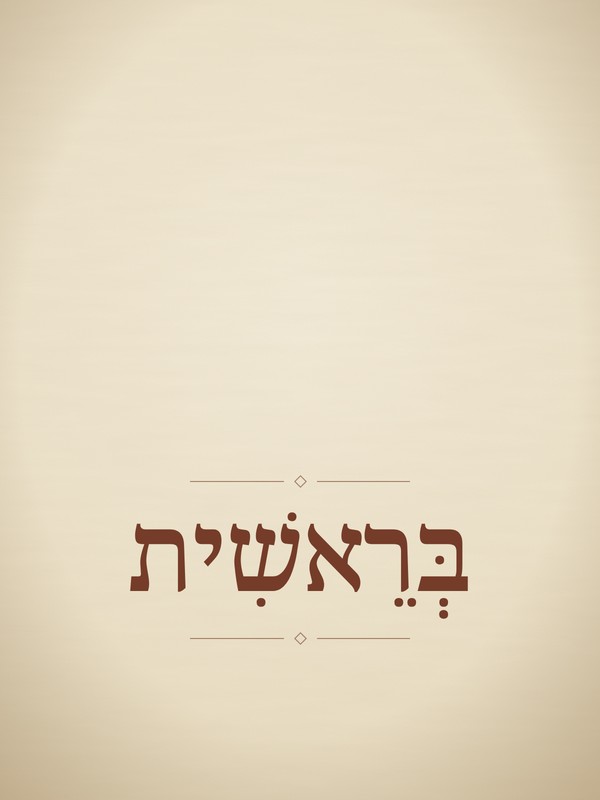
Bereshit, “In the beginning”
Part of The Bible·Next in the series: Exodus
52 chapters · 3 hr 22 min read · Accessible
Free to read · No account needed
Listen to the whole book 4 hr 20 min listenAbout this book
God creates the world, and begins its rescue through the family of Abraham.
- Author
- Traditionally Moses
- Date
- Date uncertain
In the beginning God created the heavens and the earth.The first book of the Bible, called in Hebrew Bereshit from its opening words, “In the beginning”. It begins with God speaking light into darkness and a world he calls very good, and ends with a coffin in Egypt and a promise still waiting to be kept. Between the two: Adam and Eve in the garden and outside it, Cain and Abel, Noah and the rainbow, the tower of Babel, and then one family called out of the nations for the sake of them all — Abraham counting the stars, Isaac on the mountain, Jacob wrestling through the night, and Joseph forgiving the brothers who sold him. In the Open Word Bible, a new translation from the Hebrew given freely to the public domain, with an introduction to the book’s shape and meaning and a conclusion on where to read next.
In the beginning God created the heavens and the earth. The earth was without form and empty. Darkness lay over the surface of the deep, while the Spirit of God hovered above the waters. God said, “Let there be light,” and light came into being. God saw that the light was good, and God divided the light from the darkness.
Contents
Sermons on this book
Walking with God
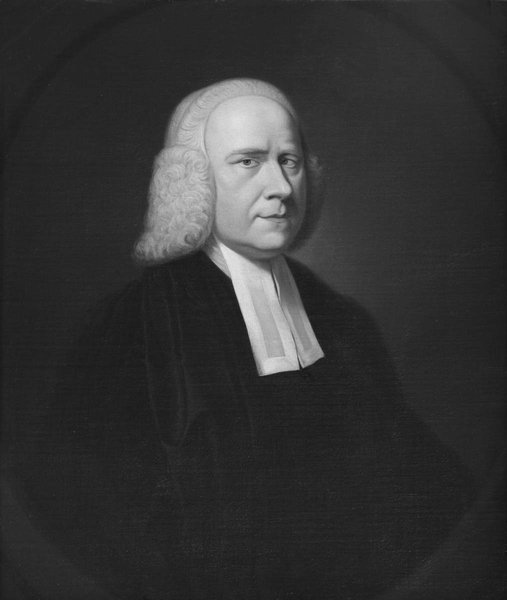
“Enoch walked with God.” From those four words Whitefield draws a whole portrait of the Christian life: what it means to walk with God, the means of keeping step with him — prayer, the Word, the company of his people — and the end of such a walk, when God takes his friend home.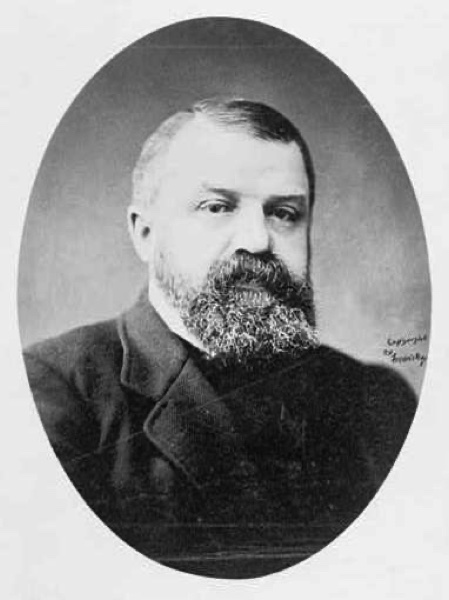
Come Thou and All Thy House into the Ark
Give up the ark, Moody says, and he would give up the whole Bible — and he reads God's word to Noah as a summons addressed to a household rather than to a man alone. The weight of it falls on parents, and on the door that God shut himself, before ending with a dying boy who promised to tell Jesus that his father had prayed for him.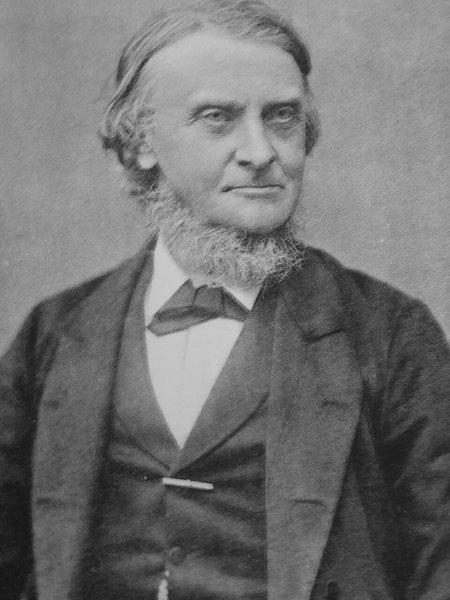
Jehovah-Jireh
From Abraham's naming of Moriah, Maclaren asks what God provides: outward needs, strength for hard duties, and above all the Sacrifice He Himself supplies, foreshadowed in the ram. The provision comes on the mount of the Lord, to those who obey, and often only at the last moment; and he ends by urging us to name our past heights for God's deliverances rather than our trials, and so to expect that the Lord will provide.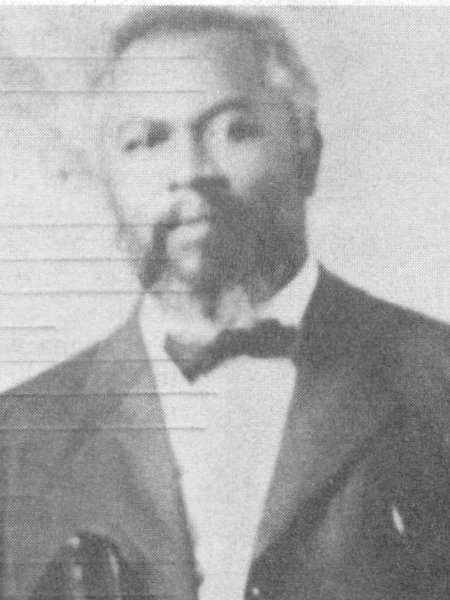
Rebecca: Type of the Bride of Christ
Seymour reads Genesis 24 as a picture of the Holy Spirit seeking a bride for Christ. Eliezer stands for the Spirit and Isaac for Christ, and Rebecca's readiness to water the camels and go at once is the pattern for believers seeking the baptism with the Holy Ghost. From The Apostolic Faith (Los Angeles), February–March 1907.Questions and Answers
What is the book of Genesis?
The first book of the Bible and of the five books of Moses, the Torah. Its Hebrew name, Bereshit, is its first word, “In the beginning”; the name Genesis, Greek for “origin”, comes from the ancient Greek translation. Its fifty chapters run from the creation of the world to the death of Joseph in Egypt: chapters 1–11 tell of the beginnings of the world and of all peoples, and chapters 12–50 follow one family, Abraham, Isaac, Jacob and Jacob’s twelve sons, through whom God promises to bless all the families of the earth (12:3).
Who wrote the book of Genesis?
Genesis does not name its author. Jewish and Christian tradition has long received it as the first of the five books of Moses, and the New Testament speaks of the Law as coming through Moses. Many scholars think the book drew on older sources and family records and reached its final form over a long period, some placing that well after Moses. Christians hold a range of views on how the book was composed, while agreeing that it is Scripture and the foundation of everything the rest of the Bible says about God, humanity and the promise.
How is the book of Genesis structured?
By a heading that recurs through the book, in Hebrew “these are the toledot of…”, traditionally translated “these are the generations of”. It appears ten times (eleven, counting the repeat at 36:9), introducing the accounts of the heavens and the earth (2:4), Adam (5:1), Noah (6:9), Noah’s sons (10:1), Shem (11:10), Terah (11:27), Ishmael (25:12), Isaac (25:19), Esau (36:1 and 36:9) and Jacob (37:2). Each heading names a father and goes on to tell what came of his line, so Terah’s account is the story of Abraham, Isaac’s is the story of Jacob, and Jacob’s is the story of Joseph and his brothers.
Does Genesis conflict with science?
Christians answer this in different ways. Some read the six days of Genesis 1 as ordinary days and the earth as young; others read them as long ages, or as a literary frame in which the days arrange God’s work rather than time it, or as an ancient account written to show who made the world and why, not how or when. What the chapter itself insists on is not in dispute among them: that one God made everything that exists, that he made it good, that he made human beings in his image, and that the world is his and not a god in its own right. Many believing scientists and theologians across the centuries have found no final conflict between that confession and the study of nature.
What is God’s covenant with Abraham?
God’s promise, first given in Genesis 12:1–3 and confirmed by covenant in chapters 15 and 17, to make Abraham a great nation, to give his descendants the land of Canaan, to be their God, and through him to bless all the families of the earth. Abraham was old and his wife Sarah was barren, and he “put his trust in the LORD, and the LORD counted it to his credit as righteousness” (15:6). The apostle Paul reads that verse as the pattern of faith for everyone, and the promise of blessing for all nations as the gospel announced ahead of time, fulfilled in Christ (Galatians 3:8, 3:29).
Which translation of the Bible is this?
The Open Word Bible, a new translation made directly from the Hebrew and dedicated to the public domain, printed here at its Balanced level, which aims to be accurate and to read naturally aloud. The reasoning behind each of its sentences, with the Hebrew beside it, is published at openwordbible.org. The introduction and conclusion were written for this edition.
More like this
Taking books where there’s no signal? See Ochorus for missionaries or chaplains
About this text
- Source
- Scripture from the Open Word Bible (https://openwordbible.org), English, Balanced level, commit 64b913d623d6: dedicated to the public domain under CC0 1.0. The introduction and conclusion are by Ochorus. openwordbible.org
- Last updated
- November 13, 2026
- Rights
- Terms of Use
Cite this book
Copy a citation in the style you need.
- MLA
- Open Word Bible. Genesis. Ochorus, https://ochorus.com/books/genesis/.
- Chicago
- Open Word Bible. Genesis. Ochorus. https://ochorus.com/books/genesis/.
- Chicago footnote
- Open Word Bible, Genesis (Ochorus), https://ochorus.com/books/genesis/.
- BibTeX
- @book{openwordbiblegenesis, author = {{Open Word Bible}}, title = {{Genesis}}, publisher = {Ochorus}, url = {https://ochorus.com/books/genesis/} }