Book
Portraits of Courage – Watchman Nee
The Life, Suffering, and Spiritual Vision of a Chinese Servant of Christ
Book 1 of 11 in Portraits of Courage·Next in the series: Portraits of Courage – Praying Hyde
- 21 chapters
- 5 hr 38 min read
- Advanced Reading difficulty
Free to read·No account needed
Preface
Taking books where there’s no signal? See Ochorus for missionaries or chaplains
Grow with the story

About this book
A Christian biography of Watchman Nee (1903–1972), the Chinese church leader and devotional teacher behind The Normal Christian Life and Sit, Walk, Stand. It places his teaching inside his life — conversion, the little flock, the breaking of the outer man, and twenty years in a Communist prison — weighing his insight and his controversies under Scripture. Written with gratitude but not hagiography; all Scripture from the public-domain ASV (1901).
Watchman Nee entered the world in 1903, at a moment when China was passing through one of the great upheavals of its long history. The old imperial order was nearing its end. Western powers had forced their way into Chinese ports and politics.
Contents
- 1 Preface 4 min
- 2 Introduction: The Watchman and His Century 8 min
- 3 A Life Given to Christ 16 min
- 4 The Conversion of Watchman Nee 15 min
- 5 Learning to Walk by Faith 16 min
- 6 The Young Preacher and the Little Flock 23 min
- 7 The Normal Christian Life 22 min
- 8 Sit: Our Position in Christ 22 min
- 9 Walk: Christ Lived Through Us 21 min
- 10 Stand: Spiritual Warfare and Victory 21 min
- 11 The Breaking of the Outer Man 22 min
- 12 Spirit, Soul, and Body 18 min
- 13 The Church and the Body of Christ 18 min
- 14 Faith, Prayer, and the Life of Dependence 17 min
- 15 Revolution, Persecution, and the Cost of Discipleship 17 min
- 16 Twenty Years in Chains 15 min
- 17 The Legacy of Watchman Nee 19 min
- 18 Appendix a: Twenty-Five Core Teachings of Watchman Nee 21 min
- 19 Appendix B: Chapter-by-Chapter Study and Reflection Guide 12 min
- 20 Appendix C: Chronology of the Life and Times of Watchman Nee 8 min
- 21 Appendix D: Notes on Historical Method and Sources 4 min
Questions and Answers
What is the biography Watchman Nee about?
It is a Christian biography of Watchman Nee (1903–1972), the Chinese church leader and devotional teacher behind The Normal Christian Life and other classics. It places his teaching inside his life — his conversion, the little flock he gathered, his prolific ministry, and the long imprisonment under the Communist government in which he died — showing the man behind the books.
Who was Watchman Nee?
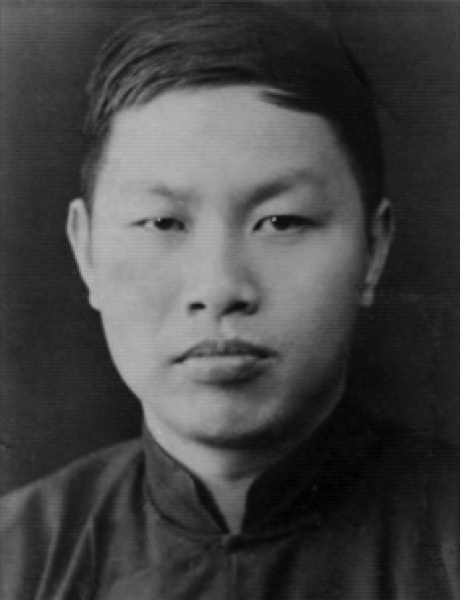
Watchman Nee was a Chinese Christian leader and author of the early twentieth century, one of the most influential figures in the indigenous Chinese church. He wrote and taught widely on the deeper Christian life, founded a network of churches, and spent the last twenty years of his life imprisoned for his faith, dying in a labour camp in 1972.
Why is Nee's life significant?
Because he was a leading figure in the growth of an independent, indigenous Christianity in China, and because his writings have influenced believers around the world. His life spans the flourishing of the Chinese church before the Communist takeover and the fierce persecution that followed, making his story both a personal testimony and a window onto a pivotal era in Chinese Christianity.
What happened to Nee under the Communist government?
He was arrested and imprisoned, and spent the last two decades of his life in confinement, dying in a labour camp in 1972 without regaining his freedom. His long imprisonment for his faith, borne without renouncing Christ, became part of his testimony, and the biography traces this costly final chapter alongside his earlier ministry.
How does the book connect his life and his teaching?
By setting his well-known books — like The Normal Christian Life and Sit, Walk, Stand — within the story of the man who wrote them. Seeing his teaching on the cross, the deeper life, and dependence on Christ against the background of his own suffering and faithfulness gives those books added weight, showing that he taught a life he himself was called to live under great cost.
What themes marked Nee's ministry?
The centrality of Christ and the cross, the believer's union with Christ, victory through his indwelling life, dependence on the Holy Spirit, and the nature of the church as the body of Christ. Nee pressed a deep, experiential Christianity of surrender and reliance on Christ, and the biography shows how these themes ran through both his teaching and his tested life.
Who should read this biography?
Anyone who has read Nee's books and wants to know the man behind them, and anyone interested in the history of the Chinese church or in Christian faithfulness under persecution. It helps readers understand both the depth of his teaching and the cost at which he held it, deepening their appreciation of his enduring writings.
Where should a reader begin?
At the beginning, following Nee's life in order from his conversion and early ministry through his imprisonment and death. As a continuous biography it is meant to be read in sequence, so that the reader sees how his teaching and his testimony grew together across a life that ended in long and faithful suffering for Christ.
Read in your language
People in this book
More like this





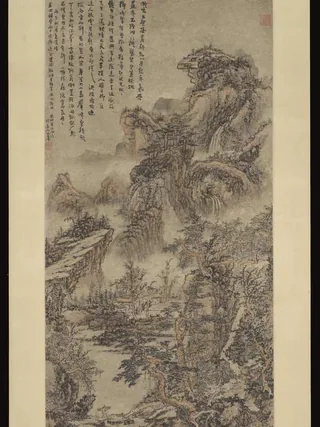
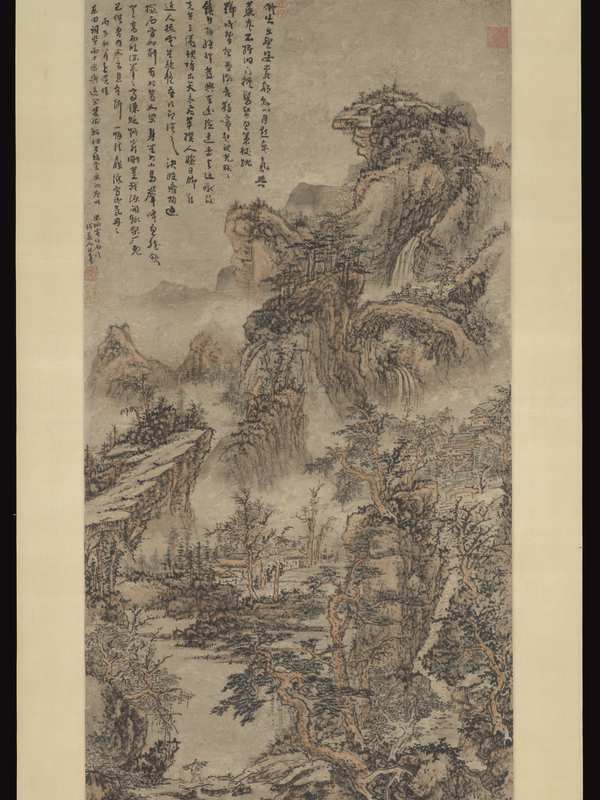
Kuncan, “Wooded Mountains at Dusk” (dated 1666). The Metropolitan Museum of Art, Open Access.
Cite this book
Copy a citation in the style you need.
- MLA
- Ochorus Originals. Portraits of Courage – Watchman Nee. 2026. Ochorus, https://ochorus.com/books/watchman-nee-a-life/.
- Chicago
- Ochorus Originals. Portraits of Courage – Watchman Nee. 2026. Reprint, Ochorus. https://ochorus.com/books/watchman-nee-a-life/.
- Chicago footnote
- Ochorus Originals, Portraits of Courage – Watchman Nee (2026; repr., Ochorus), https://ochorus.com/books/watchman-nee-a-life/.
- BibTeX
- @book{ochorusoriginals2026portraits, author = {{Ochorus Originals}}, title = {{Portraits of Courage – Watchman Nee}}, year = {2026}, publisher = {Ochorus}, url = {https://ochorus.com/books/watchman-nee-a-life/} }