

Book
Watchman Nee (For Teens)
- 13 chapters
- 40 min read
- Accessible Reading difficulty
Free to read·No account needed
The Sound of the Clapper
Taking books where there’s no signal? See Ochorus for missionaries or chaplains
Grow with the story
About this book
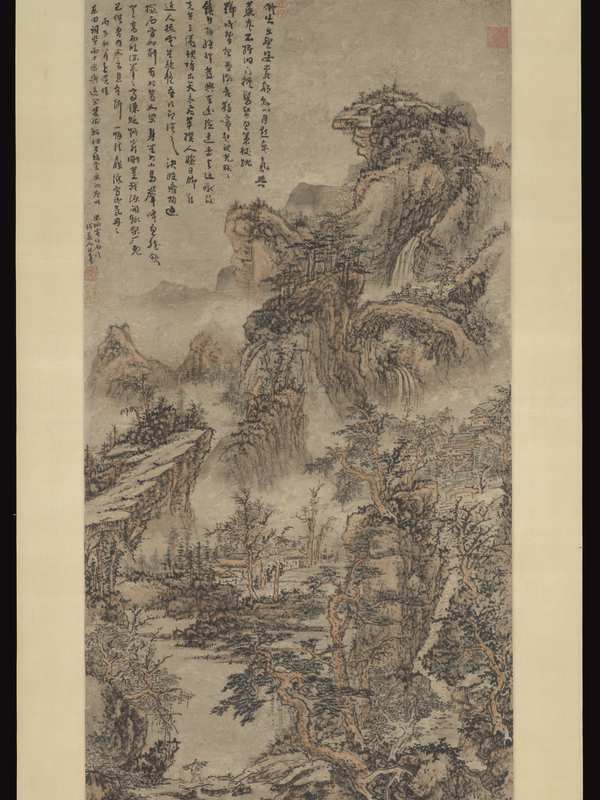
Watchman Nee chose a name that called to mind a night watchman's clapper, the signal that wakes sleepers. He became one of China's best-known Christian teachers, the voice behind The Normal Christian Life and Sit, Walk, Stand, and spent almost twenty years in a Communist prison. This teen edition tells his story straight: the conversion that cost him his plans, the mentor who would not flatter him, the business controversy and six years of silence, the choice to go back to China, his 1952 arrest and the disputed charges against him, and the faith that was still standing at the end.
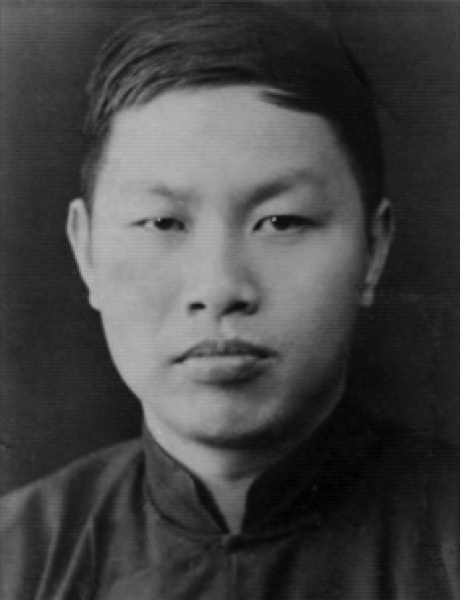
Watchman Nee was not born with that name. He was born Ni Shuzu on 4 November 1903, in Shantou, in the southern Chinese province of Guangdong. His family's roots were in Fuzhou, in Fujian province. (Some older sources give a different year, and his gravestone has added to the confusion, but modern scholars generally use 1903.)
Contents
- 1 The Sound of the Clapper 3 min
- 2 Not My Own 3 min
- 3 A Mentor Who Could Say No 3 min
- 4 Right in the Argument 3 min
- 5 Racing Death 3 min
- 6 The Church in the City 3 min
- 7 Know, Reckon, Present 3 min
- 8 Six Years of Silence 3 min
- 9 A Grain of Wheat 3 min
- 10 He Went Back 3 min
- 11 How Long? 3 min
- 12 Fifteen Became Twenty 3 min
- 13 Treasure in Clay 3 min
Questions and Answers
Who was Watchman Nee?
A Chinese church leader and Bible teacher, born Ni Shuzu in 1903. Converted at seventeen, he founded a network of independent Chinese churches often called the Little Flock and taught messages later published as The Normal Christian Life and Sit, Walk, Stand. He was arrested in 1952 and died in state custody in 1972.
Is the book honest about the hard parts?
Yes. It tells how Nee was shut out of ministry for about six years after a conflict over a pharmaceutical business, how he and his churches at first took part in public patriotic demonstrations and expressed support for parts of the new Communist government, and how the 1956 charges against him included sexual immorality. Where the sources disagree, it says so instead of choosing a side.
What does “sit, walk, stand” mean?
It is Nee's summary of Paul's letter to the Ephesians. First sit: rest in what God has already done in Christ. Then walk: live it out in ordinary life. Then stand: hold your ground against evil from Christ's victory. The order matters, because you don't walk to earn a seat God has already given you.
Was he put in prison just for being a Christian?
Not only that. The charges were political, economic and moral, and some are still disputed. But they came in a Communist campaign to bring independent religious leaders under control, and accounts report that release after his sentence ended depended on renouncing his faith, which he refused. That is why many Christians call him a martyr.
How did he treat other Christians?
He refused to cut himself off from believers outside his own circle, which is why his fellowship with the Exclusive Brethren broke down, and he wanted ordinary believers, not only leaders, to pray, preach and serve. His movement later faced the charge of becoming exclusive itself, and he reportedly came to regret how often his wife Charity was left alone.
Where do the stories come from?
From the full-length biography of Watchman Nee, which compares sympathetic movement accounts, recent academic scholarship, reference works, family memories and Communist-era records. Where they disagree, especially about the business conflict and the 1956 charges, it says so, and it marks family stories like his last statement of faith as remembered rather than word-for-word.
What can a teenager today take from his story?
That faith can't be inherited secondhand; that you need people who will tell you the truth; that being right in an argument is not the same as being right in spirit; and that you are more than what you are useful for, because Christ is still enough when everything else is taken away.
Why did he go back to mainland China in 1950?
He was in Hong Kong and had the chance to stay outside, and colleagues urged caution. He chose to return because he believed he should share the future of the Chinese churches. Two years later he was arrested, and he never lived as a free man again.
Read in your language
People in this book
More like this


Cite this book
Copy a citation in the style you need.
- MLA
- Ochorus Originals. Watchman Nee (For Teens). Ochorus, https://ochorus.com/books/watchman-nee-a-life-teens/.
- Chicago
- Ochorus Originals. Watchman Nee (For Teens). Ochorus. https://ochorus.com/books/watchman-nee-a-life-teens/.
- Chicago footnote
- Ochorus Originals, Watchman Nee (For Teens) (Ochorus), https://ochorus.com/books/watchman-nee-a-life-teens/.
- BibTeX
- @book{ochorusoriginalswatchman, author = {{Ochorus Originals}}, title = {{Watchman Nee (For Teens)}}, publisher = {Ochorus}, url = {https://ochorus.com/books/watchman-nee-a-life-teens/} }