

Book
Pandita Ramabai (For Children)
- 12 chapters
- 22 min read
- Accessible Reading difficulty
- Ages 8–12
Free to read·No account needed
The Baby in the Cane Box
Taking books where there’s no signal? See Ochorus for missionaries or chaplains
Grow with the story

About this book
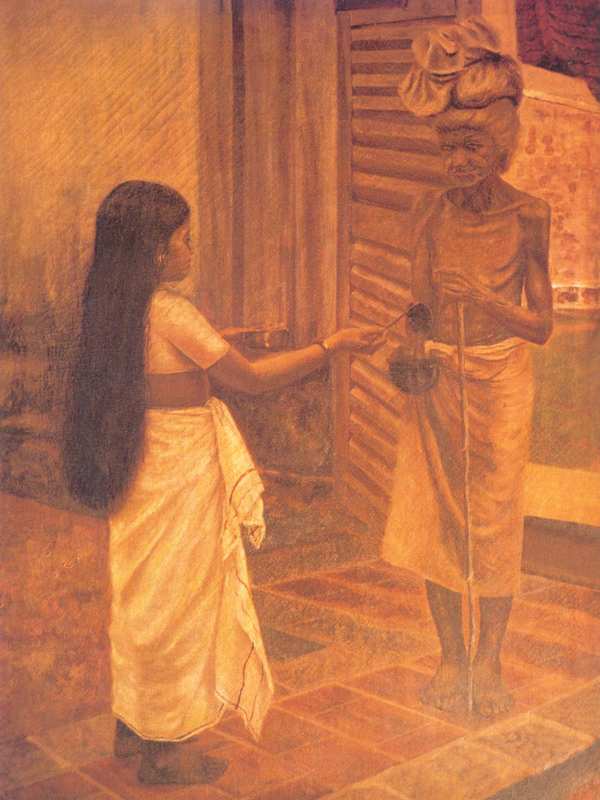
The true story of Ramabai, a girl from India who was carried down a mountain in a cane box, lost her family in a famine, walked four thousand miles, and grew up to make a home for thousands of widows and orphan girls and to give her people the Bible in their own everyday words. This children’s edition retells her life in short chapters made to be read aloud: a Bible verse, one part of her story, one thing it means for you, and a short prayer, with questions to talk about together.
Long ago, in India, a young man named Anant Shastri went to the city of Poona to study Sanskrit. Sanskrit was the old, holy language of the Hindu books, and people said girls must not learn it. But one day, at a palace, Anant heard a queen reciting Sanskrit poems. She knew them well!
Contents
- 1 The Baby in the Cane Box 2 min
- 2 No Golden City 2 min
- 3 Sugar and Water 2 min
- 4 Four Thousand Miles 2 min
- 5 Heart’s Joy 2 min
- 6 A Voice for the Girls 2 min
- 7 The Woman at the Well 2 min
- 8 The Home of Wisdom 2 min
- 9 The Heavy Load Rolls Away 2 min
- 10 The Girl by the River 2 min
- 11 The Sweeper 2 min
- 12 A Bible for Everyone 2 min
Questions and Answers
What is Pandita Ramabai (For Children) about?
It is a children’s version of the full-length biography of Pandita Ramabai. It tells how a girl who was taught to read the old Sanskrit books lost her family in a famine, came to know Jesus, and spent her life rescuing widows and hungry girls and giving the women of India a Bible they could understand.
Who was Pandita Ramabai?
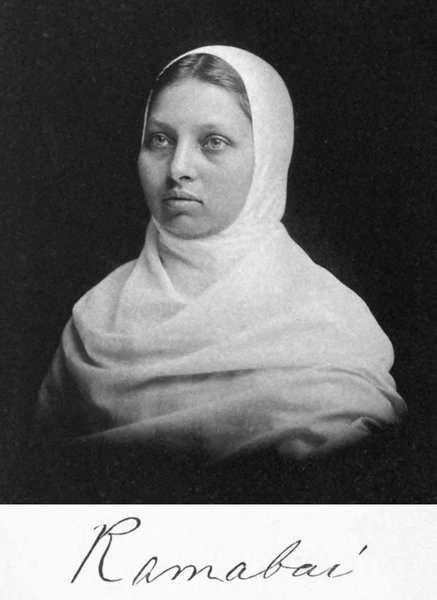
An Indian woman who lived from 1858 to 1922. She was such a great scholar that the wise teachers of Calcutta honoured her with a title, and she became one of the first Indian women to speak up in public for girls and widows. She became a Christian, opened a school for young widows, founded Mukti, a home for thousands of girls and women, and translated the Bible into everyday Marathi.
How is each chapter set out?
Every chapter is short and made to be read aloud. It begins with a Bible verse, tells one part of Ramabai’s story, shows one simple thing it means for you, and ends with a short prayer. Three questions follow, to talk about together.
Is this book too sad for children?
Some of it is sad. Ramabai’s family died in a famine, her husband died young, and she worked among child widows and hungry girls. The book does not pretend otherwise, but it tells these parts gently, for children, and it is above all a story of how God cared for Ramabai and used her to care for thousands of others.
Are the stories true?
Yes. They come mostly from Ramabai’s own writings and letters, and from people who knew her. The words in quotation marks are her own words, or the words of people who were there.
Who is this book for?
It is for children, to be read aloud by a grown-up or read by an older child alone. There is also a teen edition, and the full-length biography for older readers.
Read in your language
People in this book
More like this




Cite this book
Copy a citation in the style you need.
- MLA
- Ochorus Originals. Pandita Ramabai (For Children). Ochorus, https://ochorus.com/books/pandita-ramabai-a-life-children/.
- Chicago
- Ochorus Originals. Pandita Ramabai (For Children). Ochorus. https://ochorus.com/books/pandita-ramabai-a-life-children/.
- Chicago footnote
- Ochorus Originals, Pandita Ramabai (For Children) (Ochorus), https://ochorus.com/books/pandita-ramabai-a-life-children/.
- BibTeX
- @book{ochorusoriginalspandita, author = {{Ochorus Originals}}, title = {{Pandita Ramabai (For Children)}}, publisher = {Ochorus}, url = {https://ochorus.com/books/pandita-ramabai-a-life-children/} }