

Book
Pandita Ramabai (For Teens)
- 13 chapters
- 45 min read
- Accessible Reading difficulty
Free to read·No account needed
The Well of Ignorance
Taking books where there’s no signal? See Ochorus for missionaries or chaplains
Grow with the story

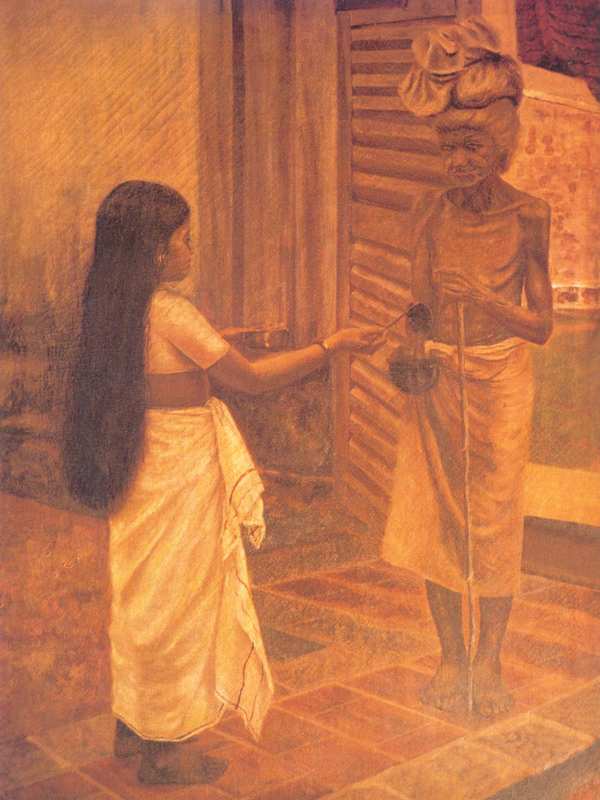
About this book
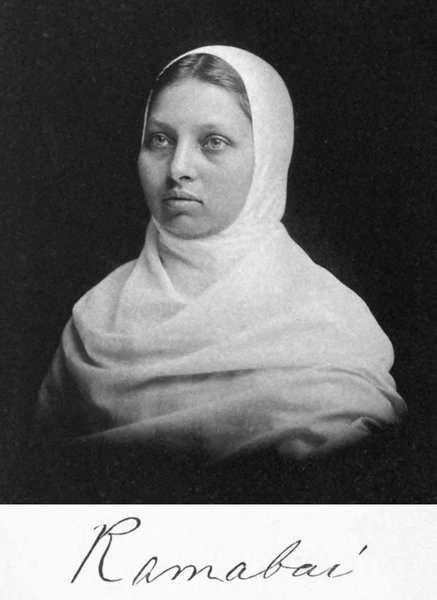
At about sixteen, Ramabai watched her father, mother and sister die in a famine, then walked more than four thousand miles with her brother, once sleeping in pits of sand dug on a river bank. A Brahman girl taught Sanskrit when girls were not meant to learn it, she became a famous scholar, a widow at twenty-three, a voice for India's child-widows, and a Christian who said she found the religion eight years before she found Christ. This teen edition tells the true story straight: the losses, the quarrels on every side, the girls rescued from famine and exploitation, and the faith that fed thousands without a bank account.
Pandita Ramabai's story begins with a woman reciting poetry. Anant Shastri Dongre was a Brahman scholar from the Mangalore district of south-western India. As a young man studying in Poona, he heard one of the ruler's wives reciting Sanskrit poems in the palace. It astonished
Contents
- 1 The Well of Ignorance 4 min
- 2 Sugar and Water 3 min
- 3 Worse Than Demons 3 min
- 4 Nineteen Months 3 min
- 5 Open Thy Mouth for the Dumb 3 min
- 6 The Woman at the Well 3 min
- 7 Out of Nazareth 3 min
- 8 Building from the Top 3 min
- 9 The Storm of 1893 3 min
- 10 Remember the Days of Old 4 min
- 11 The Sweeper 4 min
- 12 Fire 3 min
- 13 Having Nothing 4 min
Questions and Answers
Who was Pandita Ramabai?
An Indian scholar, reformer and Christian, born in 1858 in a forest in the Western Ghats and died in 1922. Orphaned by famine and widowed at twenty-three, she spoke out for the education of women, founded a school for child-widows, rescued thousands of girls from famine at Mukti near Poona, and translated the whole Bible into everyday Marathi.
Is the book honest about the hard parts?
Yes. It tells how her parents and sister died of starvation, how her father meant to drown himself, how her friend took her own life in England, and how girls were exploited in the famine camps, all named plainly but not in detail. It also gives the Hindu reformers who broke with her a fair hearing, and admits where she and her friends got things wrong.
What did she mean by “I had not found Christ”?
She wrote that for eight years after her baptism in 1883 she had found the Christian religion, which she believed was true, but had not found Christ, “who is the Life of the religion.” In about 1891 she came to the end of herself and trusted Christ personally as her Saviour, and found that salvation was a free gift, for women as much as for men.
Was she the first woman to translate the whole Bible?
Not quite. An American woman, Julia Smith, had published her own English translation of the whole Bible in 1876, and the Marathi Bible had been translated long before by missionaries. Ramabai's was the first whole Bible in plain, everyday Marathi, and she was among the first women anywhere to translate all of Scripture from the original languages.
Why did the Hindu reformers who helped her break with her school?
Her school for widows had been promised as neutral in religion, and by 1893 many girls were coming to her morning prayers and reading the Bible. Respected reformers such as Ranade and Bhandarkar felt the promise had been broken and resigned. She answered that nothing was done in secret and no girl was forced, but she would not shut her door. Both sides had a point.
How did she treat people who did not share her faith?
She never forced anyone to become a Christian, and she defended the memory of her Hindu parents, who did not know Christ but taught her to love the truth. She was also frank about what she thought was wrong, and in later life she saw little good in the religion she grew up in, which one of her careful biographers thought was a blind spot. At the end, her old Poona friend Ramabai Ranade still came to visit her.
Where do the stories come from?
From the full-length biography of Pandita Ramabai, which draws on her own writings, including The High-Caste Hindu Woman, her account of the famine, A Testimony and her letters, and checks them against the early lives and modern scholars. Stories that admirers added later, and that she never told herself, are left out or marked.
What can a teenager today take from her story?
That honest questions can lead you to God rather than away from him; that suffering does not automatically make you kind, but grace can; that believing Christianity is true is not the same as trusting Christ; and that instead of wishing someone else would help people in need, you can begin yourself.
Read in your language
People in this book
More like this

Cite this book
Copy a citation in the style you need.
- MLA
- Ochorus Originals. Pandita Ramabai (For Teens). Ochorus, https://ochorus.com/books/pandita-ramabai-a-life-teens/.
- Chicago
- Ochorus Originals. Pandita Ramabai (For Teens). Ochorus. https://ochorus.com/books/pandita-ramabai-a-life-teens/.
- Chicago footnote
- Ochorus Originals, Pandita Ramabai (For Teens) (Ochorus), https://ochorus.com/books/pandita-ramabai-a-life-teens/.
- BibTeX
- @book{ochorusoriginalspandita, author = {{Ochorus Originals}}, title = {{Pandita Ramabai (For Teens)}}, publisher = {Ochorus}, url = {https://ochorus.com/books/pandita-ramabai-a-life-teens/} }