Biography
- 1858 Born
- 1878 Pandita
- 1883 Baptized
- 1889 Sharada Sadan
- 1907 Testimony
- 1922 Died
We are happy, getting our daily bread directly from the loving hands of our Heavenly Father, having no banking account anywhere, no endowment or income from any earthly source, but depending altogether on our Father G…
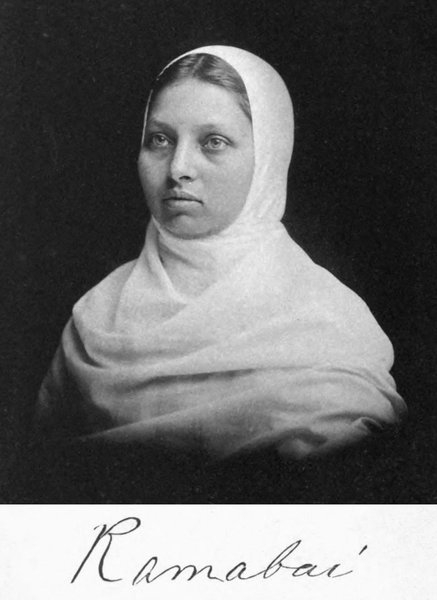
She was one of the most learned women India had ever produced — a Sanskrit scholar honoured with titles that few men held, a reformer who argued for the widows and child-brides of her country before audiences on three continents, and, at the end of her life, the translator of the whole Bible into her mother tongue. And she came to all of it from grief. Pandita Ramabai lost her father, her mother, and her sister to starvation before she was twenty, walked thousands of miles across a famine-struck land, buried a husband after sixteen months of marriage, and was left, in her own words, alone to face the world with one baby in her arms. What she built out of that loss still stands and still feeds and shelters the poor today.
A scholar born in a forest
She was born on 23 April 1858, not in any city but in a forest home high on a peak of the Western Ghats, the mountains that run down the western edge of India. Encyclopedias have loosely placed her birth near Mangalore, but her own account is of a hermitage in the hills, and it is worth keeping her version. Her father, Anant Shastri Dongre, was an orthodox Sanskrit scholar with one deeply unorthodox conviction: that women could learn. Against the custom of his caste and time, he taught his wife the sacred language, and his wife in turn taught Ramabai, from about the age of eight to fifteen, until the girl had committed thousands of verses of Hindu scripture to memory.
That education was the making of her. When she came to Calcutta as a young woman and was examined by the pandits there, they conferred on her in 1878 two titles that measured what she had become — Pandita, the learned, and Sarasvati, after the goddess of wisdom. She was barely twenty, a woman, and reckoned among the scholars of the land.
Orphaned by famine, widowed young
But the years that gave her those titles had already taken almost everything else. Between 1876 and 1878 a great famine swept the country, and it fell on her family without mercy. Her father, her mother, and her elder sister all died of starvation. She and her brother were left to wander — by her own reckoning more than four thousand miles across India, on foot, homeless and hungry, watching a nation die around them. Her brother, too, would later die, and she was alone.
In November 1880 she married. It was a bold step: a civil marriage across caste lines to a Bengali lawyer, Bipin Behari Medhavi — the kind of union her father's world would have forbidden. A daughter, Manorama, was born the next year. And then, in February 1882, her husband died of cholera. The marriage had lasted sixteen months. She was twenty-three, twice-widowed of the family she had known, and now left, as she put it, alone with one baby in her arms.
It would have been enough to end most people. In Ramabai it lit a determination. She had seen with her own eyes what her country did to its widows and its unwanted girls, and she resolved to spend her life for them.
Finding the religion, and then finding Christ
Her path to Christ was neither sudden nor simple, and it is important not to flatten it into a single moment. In early 1883 she travelled to England, helped by the Sisters of Wantage, an Anglican community, and later that year she was baptized in the Church of England. By any outward measure she had become a Christian.
But Ramabai herself drew a careful line between what happened in 1883 and what happened years afterward. The baptism was, she came to feel, an act of the mind — she had found the Christian religion, its truth and its arguments, but she had not yet found Christ. That deeper turning came around 1891, a conversion not of the intellect but of the heart. The two were different, and she never pretended otherwise. It is one of the most honest things about her: a woman of formidable learning admitting that learning had carried her only to the doorstep, and that she had to be brought the rest of the way.
Between the two came America. From 1886 to 1888 she lectured across the United States, published a searing book, The High-Caste Hindu Woman, in 1887, and read. Among the books she read were the lives of Hudson Taylor and George Müller — and Müller in particular, the man of Bristol who fed thousands of orphans on prayer alone and kept no endowment, marked her permanently. She had found her model. Whatever she built would be built the same way: by asking God, and not man, for the bread.
Sharada Sadan and the road to Mukti
Back in India, she opened Sharada Sadan in 1889, a home and school for high-caste child-widows — girls married as infants, widowed before they understood the word, and then treated as bad luck for the rest of their lives. It was a beginning, but the work that would define her came out of another catastrophe.
When famine struck again in 1896 and 1897, Ramabai did not wait for the destitute to reach her. She went to them. She toured the stricken villages with a caravan of bullock carts, gathering up the children nobody wanted — outcast girls, child-widows, orphans, women left with nothing — and carrying them back to safety. She acquired land at Kedgaon, some forty miles east of Pune, and there she raised the Mukti Mission. Mukti means salvation, and the name was exact: it was a place of rescue.
The scale of it was astonishing. By 1900 something like fifteen hundred to two thousand people lived at Mukti. They were fed, housed, and educated; they were taught to teach, to nurse, to weave, to stand on their own. It was open to every caste, which in that society was itself a quiet revolution. And it was carried, as she had determined it would be, on prayer.
We are happy, getting our daily bread directly from the loving hands of our Heavenly Father, having no banking account anywhere, no endowment or income from any earthly source, but depending altogether on our Father God. The Lord is our Inexhaustible Treasure.
— Pandita Ramabai, A Testimony of Our Inexhaustible Treasure (1907)
It was not a boast; it was a report. She had put God to the test she found in Scripture and staked hundreds of lives on the result.
I have responded to the Lord's challenge, "Prove Me now," and have found Him faithful and true. I know He is a prayer-hearing and prayer-answering God.
— Pandita Ramabai, A Testimony of Our Inexhaustible Treasure (1907)
The revival of 1905
By her own testimony, the great spiritual awakening at Mukti did not fall out of a clear sky. It was prayed down. At the beginning of 1905 she gathered a band of about seventy who met every morning to ask God for one thing above all others — the true conversion of India's Christians, herself first among them, and a fresh outpouring of the Holy Spirit.
The prayer band grew, and in the middle of that year the answer came. In her account, within about six months the Lord sent a glorious Holy Spirit revival among them — confession, weeping, joy, and changed lives spreading through the mission. It came in June 1905, before the events at Azusa Street in America with which the wider Pentecostal awakening is usually dated; that is a matter of chronology and not of cause, and Ramabai claimed nothing for it but that God had heard her praying women.
The whole Bible in Marathi
Her last great labour was the quietest and, in some ways, the largest. Ramabai wanted the women of India to be able to read the Word of God for themselves, in their own ordinary speech. So she taught herself Greek and Hebrew and set out to translate the entire Bible into Marathi — not from another translation, but from the original languages, into the plain colloquial tongue a village woman could understand.
It took her some fifteen years. She was still checking the final pages as her health failed. It is the fruit of a life that trusted the book completely, and it grew straight out of the conviction she had proved a hundred times over at Kedgaon.
I have come to believe the Word of God implicitly, and I have found out by experience, that it is true.
— Pandita Ramabai, A Testimony of Our Inexhaustible Treasure (1907)
What she leaves
Her daughter Manorama, her helper and successor, died in 1921, a grief the old woman felt to the depths. Ramabai followed her a few months later, dying of septic bronchitis at Kedgaon on 5 April 1922, just short of her sixty-fourth birthday. The Marathi Bible she had all but finished was published soon afterward.
The shape of her life had a strange symmetry. It began in the mountains with a father who dared to teach his daughters, and it ended with a woman handing her daughters — thousands of them, gathered off the famine roads — a Bible they could read. She had once written that the Lord's own question stopped her in her tracks: when she wished someone would care for India's destitute women, she heard the Still Small Voice ask why she did not begin the work herself instead of wishing others would. She began it. She never stopped.
Pandita Ramabai was not a martyr and not a theologian. She was a scholar whom grief drove to the poor, and the poor to Christ. She left behind a mission that still feeds and teaches the outcast at Kedgaon, a Bible in the hands of ordinary women, and a plain, tested testimony that the God who says Prove Me now can be taken at His word.
Books about Pandita Ramabai (3)


Also appears in

Questions and Answers
Who was Pandita Ramabai?
Pandita Ramabai (1858–1922) was a Sanskrit scholar of Brahmin birth, orphaned by famine, who became a Christian and gave her life to India's abandoned women. Her faith-supported Mukti Mission sheltered and educated thousands of child-widows and orphans, and she translated the whole Bible into Marathi from the original languages. One of the most learned women India had ever produced, she came to all of it from grief.
What was her upbringing?
She was born on 23 April 1858 in a forest hermitage high on a peak of the Western Ghats. Her father, Anant Shastri Dongre, was an orthodox Sanskrit scholar with one unorthodox conviction — that women could learn — and against the custom of his caste he taught his wife and then his daughter, until Ramabai had committed thousands of verses of Hindu scripture to memory. In Calcutta the pandits examined her and in 1878 conferred two titles: Pandita, the learned, and Sarasvati, after the goddess of wisdom. She was barely twenty.
What losses marked her early life?
The years that gave her those titles had already taken almost everything else. Between 1876 and 1878 a great famine killed her father, mother, and elder sister by starvation, and she and her brother wandered — by her reckoning more than four thousand miles across India, on foot, watching a nation die. Her brother later died too. In 1880 she married a Bengali lawyer across caste lines; a daughter, Manorama, was born, and then in February 1882 her husband died of cholera. At twenty-three she was left, as she put it, alone with one baby in her arms.
How did she come to Christ?
Her path was neither sudden nor simple. In 1883, helped by an Anglican community in England, she was baptized in the Church of England — but she drew a careful line: the baptism was an act of the mind, in which she had found the Christian religion and its arguments but not yet Christ. That deeper turning came around 1891, a conversion not of the intellect but of the heart. It is one of the most honest things about her — a woman of formidable learning admitting that learning had carried her only to the doorstep.
Who was her model for the work?
From 1886 to 1888 she lectured across the United States, published a searing book, "The High-Caste Hindu Woman," and read — among other things the lives of Hudson Taylor and George Müller. Müller in particular, the man of Bristol who fed thousands of orphans on prayer alone and kept no endowment, marked her permanently. She had found her model: whatever she built would be built the same way, by asking God, and not man, for the bread.
What was the Mukti Mission?
Back in India she opened Sharada Sadan in 1889 for high-caste child-widows, but the defining work came out of the famine of 1896–97, when she toured the stricken villages with a caravan of bullock carts, gathering up the children nobody wanted, and raised the Mukti Mission at Kedgaon. Mukti means salvation, and the name was exact — a place of rescue. By 1900 something like fifteen hundred to two thousand people lived there, fed, housed, educated, and taught to stand on their own, open to every caste.
How was Mukti supported?
On prayer, as she had determined. "We are happy," she wrote, "getting our daily bread directly from the loving hands of our Heavenly Father, having no banking account anywhere, no endowment or income from any earthly source, but depending altogether on our Father God." Fifteen hundred and more mouths to feed and no bank account behind them — only the daily asking of God. It was not a boast but a report: "I have responded to the Lord's challenge, 'Prove Me now,' and have found Him faithful and true."
What happened in the 1905 revival?
By her own testimony it was prayed down. At the beginning of 1905 she gathered a band of about seventy who met every morning to ask God for the true conversion of India's Christians, herself first among them, and a fresh outpouring of the Holy Spirit. The prayer band grew, and in the middle of that year, in June 1905, the answer came — a Holy Spirit revival of confession, weeping, joy and changed lives spreading through the mission. She claimed nothing for it but that God had heard her praying women.
What was her translation of the Bible?
Her last great labour was the quietest and largest. She wanted the women of India to be able to read the Word of God for themselves, in their own ordinary speech, so she taught herself Greek and Hebrew and set out to translate the entire Bible into Marathi — not from another translation but from the original languages, into the plain colloquial tongue a village woman could understand. It took some fifteen years, and she was still checking the final pages as her health failed: "I have come to believe the Word of God implicitly, and I have found out by experience, that it is true."
How did she die, and what does she leave?
Her daughter Manorama, her helper and successor, died in 1921, a grief she felt to the depths; Ramabai followed a few months later, dying of septic bronchitis at Kedgaon on 5 April 1922, and the Marathi Bible she had all but finished was published soon after. She had once heard the Still Small Voice ask why she did not begin the work herself instead of wishing others would. She began it, and never stopped — leaving a mission that still feeds and teaches the outcast, a Bible in ordinary women's hands, and a tested testimony that the God who says "Prove Me now" can be taken at his word.