Book · 29 chapters · 4 hr 48 min read
Portraits of Courage – Mary Slessor
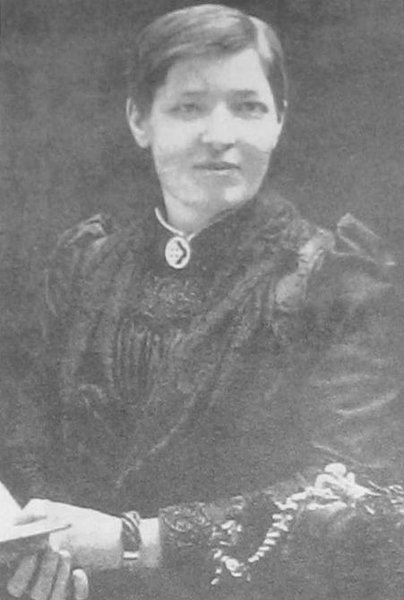
A Dundee Weaver, the Twin-Mothers of Calabar, and a Life Laid on the Altar
Book 4 of 5 in Portraits of Courage·Next in the series: Portraits of Courage – Samuel Ajayi Crowther
Free to read·No account needed
Preface
About this book
A Christian biography of Mary Slessor (1848–1915), the Dundee factory girl who spent almost forty years in south-eastern Nigeria — learning Efik, living alone in Okoyong, sheltering twin babies and their mothers, sitting as a magistrate, and opening the Enyong Creek to the gospel. Built on her own letters and checked against the civil records and modern historians, it tells the real woman behind the legend: frightened and brave, loving and sometimes harsh, tied to empire and devoted to Africa. All Scripture from the public-domain ASV (1901).
“Like as a father pitieth his children, So Jehovah pitieth them that fear him.” — Psalm 103:13, ASV Mary Mitchell Slessor was born on 2 December 1848 in Gilcomston, a district on the edge of Aberdeen. Her birth was entered in the register of the parish of Old Machar. She was named after her mother.
Contents
- 1 Preface 5 min
- 2 Introduction: The Legend and the Letters 7 min
- 3 A Wild Lassie 9 min
- 4 Fourteen Years at the Loom 7 min
- 5 Taming the Roughs 8 min
- 6 “Pray for Me!” 8 min
- 7 Learning Calabar 14 min
- 8 Bereft 13 min
- 9 “Father!” 12 min
- 10 Ma Eme 12 min
- 11 The Poison Bean 15 min
- 12 Twin-Mothers 12 min
- 13 Laid on the Altar 9 min
- 14 “The Woman’s God” 12 min
- 15 Consul and Gunboat 10 min
- 16 Smallpox and Silence 11 min
- 17 Not by Might 10 min
- 18 First Fruits 11 min
- 19 “I Dare Not Go Back” 12 min
- 20 On the Bench 10 min
- 21 Children of the Desolate 11 min
- 22 Ikpe 12 min
- 23 A Poor Exponent of Faith 12 min
- 24 The Time of the Singing of Birds 11 min
- 25 Everybody’s Mother 9 min
- 26 Appendix A: Lessons from the Life of Mary Slessor 6 min
- 27 Appendix B: Chapter-by-Chapter Study and Reflection Guide 7 min
- 28 Appendix C: Chronology of the Life and Times of Mary Slessor 6 min
- 29 Appendix D: Notes on Sources and Method 7 min
Questions and Answers
What is this biography of Mary Slessor about?
It is a Christian biography of Mary Slessor (1848–1915), the Scottish missionary who went from the jute and linen mills of Dundee to Calabar in 1876 and spent the rest of her life in what is now south-eastern Nigeria. It follows her from her poor childhood and conversion, through Okoyong, the Enyong Creek and Ikpe, to her death at Use in January 1915, drawing mainly on her own letters as printed by W. P. Livingstone in 1916.
Who was Mary Slessor?
Mary Slessor was a Scottish weaver who became a missionary of the United Presbyterian Church in Calabar. She learned Efik fluently, lived alone among the Okoyong people from 1888, protected twin babies and their mothers, presided over local courts, and opened new mission work along the Enyong Creek. The people called her Ma, and remembered her as Eka kpukpru owo, ‘Everybody’s Mother.’
Did Mary Slessor end the killing of twins?
No, and she never claimed to. The Efik rulers of Calabar, with British consuls, had banned the killing of twins from 1849, and missionaries had been rescuing twins since 1852. What she did was to carry that protection into the interior, take twins and their mothers into her own household for decades, and over time help families keep their children. Many of the babies she rescued died.
Why did Mary Slessor never marry?
She was engaged in 1890 to Charles Morrison, a young teacher on the mission staff, on condition that he join her at Okoyong. The Church would not transfer him, she would not leave the people she had promised to serve, and his health then broke down. She wrote that her life had been ‘laid on His altar for that people long ago.’
How does the book handle her connection with British colonial rule?
Honestly. Her work coincided with the British conquest of southern Nigeria. She relied on consuls and officials, sat in a colonial court, and entered Aro country with the commander of the 1901–02 expedition. She also refused a government house, said that Europeans were ‘foreigners, and they own the country,’ and defended local people against officials. The book quotes historians who see her as both imperialist and liberator.
Which famous quotations are really hers?
The book quotes her letters as Livingstone printed them — for example ‘Heaven is now nearer to me than Britain’ and ‘I am a poor exponent of faith.’ It notes that ‘Why should I fear? I am on a Royal Mission’ cannot be traced before the 2000s, that ‘God and one are always a majority’ was an older proverb she wrote in her Bible, and that the ‘Failed, failed’ quotation came from a newspaper article her friends thought was a leg-pull.
How is Scripture used in the book?
Each chapter opens with a passage from the American Standard Version (1901) that carries its theme — from ‘God chose the weak things of the world’ to ‘not the gospel of God only, but also our own souls’ — and further passages are woven through the story, including verses she marked and annotated in her own Bibles. Every quotation was checked against the ASV text.
Where should a reader begin?
At the beginning. The preface and introduction explain the sources and how the legend differs from the record; the chapters then follow her life in order, from Aberdeen and Dundee to Calabar, Okoyong, the Creek, and Ikpe. Appendix A gathers lessons from her life, Appendix B is a study guide for groups, Appendix C a chronology, and Appendix D a note on sources.
People in this book
More like this
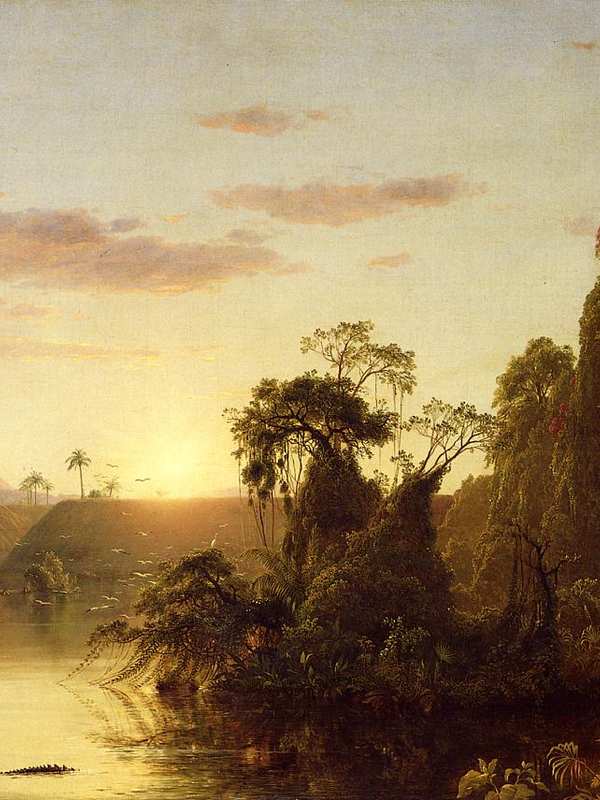
Frederic Edwin Church, “La Magdalena” (1854). Wikimedia Commons, public domain.