Book · 29 chapters · 3 hr 40 min read
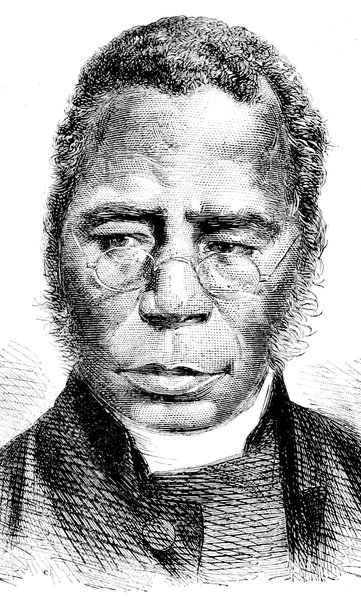
Portraits of Courage – Samuel Ajayi Crowther
A Yoruba Captive Set Free, a Bishop on the Niger, and the Gospel in His Mother Tongue
Book 5 of 5 in Portraits of Courage
Free to read·No account needed
Preface
About this book
A Christian biography of Samuel Ajayi Crowther (c. 1807–1891), the Yoruba boy enslaved in 1821 and freed by a British warship, who became a Niger explorer, the translator who gave the Yoruba the Bible in their own language, and the first African bishop of the Anglican Church. Built on his own letters and journals and checked against the missionary records and modern historians, it tells the whole story, including the crisis of 1890, when young European missionaries overruled him and his clergy, and the Church of England’s later confession: “It was wrong.” All Scripture from the public-domain ASV (1901).
“Thine eyes did see mine unformed substance; And in thy book they were all written, Even the days that were ordained for me, When as yet there was none of them.” — Psalm 139:16, ASV The boy who became Samuel Crowther was born in the town of Osogun, in the Yoruba country of what is now south-western Nigeria, about the year 1807.
Contents
- 1 Preface 5 min
- 2 Introduction: The Bishop and His Biographers 6 min
- 3 Ajayi of Osogun 7 min
- 4 The Unhappy, Blessed Day 9 min
- 5 Myrmidon 8 min
- 6 Samuel Crowther 9 min
- 7 The Niger, 1841 8 min
- 8 “Who Maketh Thee to Differ?” 7 min
- 9 The Helper of the Fatherless 8 min
- 10 In Our Own Language 7 min
- 11 The Pleiad 7 min
- 12 Wrecked at Jebba 10 min
- 13 Africa’s Own Children 6 min
- 14 “I Am Not Worthy” 7 min
- 15 A Bishop in a Canoe 9 min
- 16 Sympathy with All Classes 9 min
- 17 Cotton Gins and Gin 7 min
- 18 The Delta Churches 7 min
- 19 Asano 10 min
- 20 The Gathering Storm 9 min
- 21 Onitsha, 1890 8 min
- 22 The Delta Pastorate 6 min
- 23 “Good Night” 8 min
- 24 A Weaned Child 8 min
- 25 Essentially African, Essentially Missionary 7 min
- 26 Appendix A: Lessons from the Life of Samuel Ajayi Crowther 5 min
- 27 Appendix B: Chapter-by-Chapter Study and Reflection Guide 7 min
- 28 Appendix C: Chronology of the Life and Times of Samuel Ajayi Crowther 7 min
- 29 Appendix D: Notes on Sources and Method 8 min
Questions and Answers
What is this biography of Samuel Ajayi Crowther about?
It is a Christian biography of Samuel Ajayi Crowther (c. 1807–1891). It follows him from his Yoruba home at Osogun, through his capture in 1821 and rescue by HMS Myrmidon in 1822, his conversion and education in Sierra Leone, the Niger expeditions, the mission at Abeokuta and his reunion with his mother, to his consecration in 1864 as the first African Anglican bishop and his death at Lagos. It draws mainly on his own letters, journals and charges.
Who was Samuel Ajayi Crowther?
He was a Yoruba man, sold into slavery as a boy and freed by the Royal Navy, who became a teacher, explorer, linguist and missionary. He led the translation of the Bible into Yoruba, began written work in Igbo, Nupe and other languages, founded the Niger Mission with an all-African staff in 1857, and was consecrated Bishop of the Niger in Canterbury Cathedral in 1864.
Was he the first African bishop?
He was the first African bishop of the Anglican Church, consecrated in 1864. He was not the first African bishop in history, since the ancient churches of North Africa and Ethiopia had African bishops for centuries, and he was not the first African Anglican priest, since Philip Quaque of Cape Coast was ordained in 1765.
What happened in the Niger Mission crisis of 1890?
After years of real problems in a thinly supervised mission, including a crime committed by two of its employees, a group of young English missionaries took control. At a committee meeting at Onitsha in August 1890, African agents and clergy were dismissed or suspended, among them his son, Archdeacon Dandeson Crowther. The bishop withdrew from the committee but remained bishop until his death. The missionary society’s own historian later called the young men ‘too severe,’ and in 2014 the Archbishop of Canterbury said of his treatment, ‘It was wrong.’
Was the Niger Delta Pastorate a breakaway church?
Not from the Anglican Church. The Delta churches, under Archdeacon Dandeson Crowther, stopped taking the missionary society’s money and became a self-supporting pastorate, inaugurated at Bonny in April 1892 with Crowther’s approval. They remained part of the Church of England, and in time came back into closer relations with the society.
How does the book handle the racism of his time?
Honestly. It shows the racial prejudice he faced from scientists, newspapers and some missionaries, and it notes where his own biographers used the language of racial superiority. It also looks at his deference to Europeans, including his 1884 letter beginning ‘I know my place as negro,’ and asks what it cost him.
How is Scripture used in the book?
Each chapter opens with a passage from the American Standard Version (1901) that carries its theme, from ‘Thou hast been the helper of the fatherless’ to ‘a great multitude … out of every nation and of all tribes and peoples and tongues’, and further passages are woven through the story, including verses Crowther himself quoted. Every quotation was checked against the ASV text.
Where should a reader begin?
At the beginning. The preface and introduction explain the sources and how the story has been told differently by his biographers; the chapters then follow his life in order. Appendix A gathers lessons from his life, Appendix B is a study guide for groups, Appendix C a chronology, and Appendix D a note on sources and on popular claims the book corrects.
People in this book
More like this
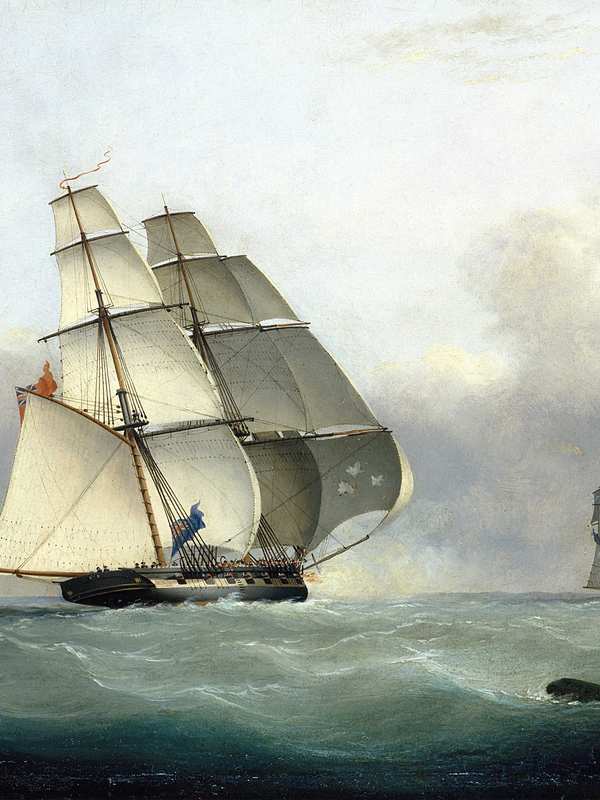
Nicholas Matthews Condy, “The Capture of the slaver Gabriel by HMS Acorn, 6 July 1841” (1841). Wikimedia Commons, public domain.