

Book
Mary Slessor (For Teens)
- 13 chapters
- 45 min read
- Accessible Reading difficulty
Free to read·No account needed
Saturday Nights
Taking books where there’s no signal? See Ochorus for missionaries or chaplains
Grow with the story

About this book
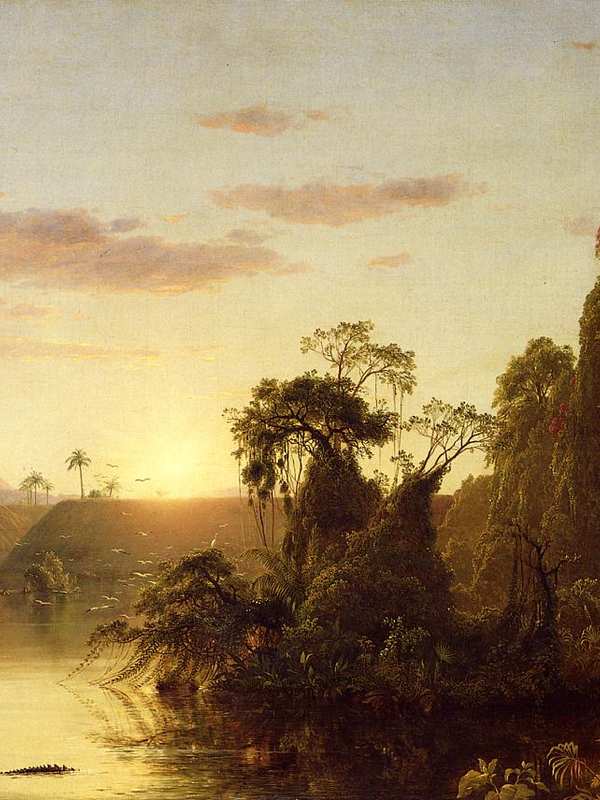
From the age of eleven, Mary Slessor worked at a loom in a Dundee factory, and on Saturday nights she sat up with her mother waiting for her father to come home drunk. At twenty-seven she sailed for Calabar, learned Efik so well that people said she spoke it better than they did, and walked alone into Okoyong, where she sat beside chained prisoners facing the poison ordeal and took in the twin babies others had been taught to throw away. This teen edition tells her story straight: the fear, the babies she buried, the friend who never believed, the power she borrowed, and the love nobody doubted.
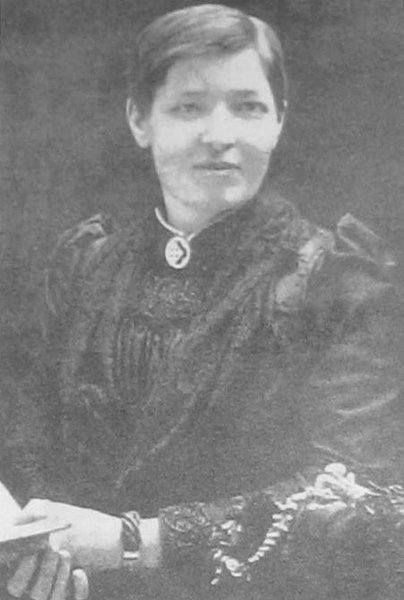
Mary Mitchell Slessor was born on 2 December 1848 in Gilcomston, on the edge of Aberdeen in Scotland. Her mother, also called Mary, was a gentle woman with a deep, quiet faith. Her Church had just started a mission far away, at a place in West Africa called Calabar, and she followed every report from
Contents
- 1 Saturday Nights 3 min
- 2 A Changed Lassie 3 min
- 3 Scores of Casks 3 min
- 4 Not in Haste 3 min
- 5 Stranded and Alone 3 min
- 6 “Father!” 4 min
- 7 A Secret Ally 3 min
- 8 “Ifehe!” 3 min
- 9 “Oh, Susie, Susie!” 3 min
- 10 Laid on His Altar 3 min
- 11 The Woman's God 4 min
- 12 “I Dare Not Go Back” 3 min
- 13 Safe 4 min
Questions and Answers
Who was Mary Slessor?
A Scottish factory girl, born in Aberdeen in 1848 and raised in Dundee, who went to Calabar, in what is now south-eastern Nigeria, in 1876 as a teacher for the United Presbyterian Church of Scotland. She spent almost forty years among the Efik, Okoyong and Ibibio peoples, protecting twins and their mothers and people accused of witchcraft, sitting as a magistrate, and opening the Enyong Creek to the gospel. She died at Use in 1915.
Is the book honest about the hard parts?
Yes. It names her father's drinking, the killing of twins, the poison ordeal and the killings at chiefs' funerals, the many babies she buried, her loneliness and dark moods, and her use of laudanum. It also names her faults: she could be harsh, she struck people in her court, and she leaned on British colonial power and sometimes spoke of it as Christian.
What did she mean by “the woman's God”?
A chief told her that a woman going into a war only proved her ignorance. She replied, “In measuring the woman's power, you have evidently forgotten to take into account the woman's God.” She meant that what she could do never depended on her own strength, which she knew was small, but on God.
Did Mary Slessor end the killing of twins in Nigeria?
No, and she would not have claimed it. The Efik rulers of Calabar, with the British consul, banned it in 1849 and 1851, missionaries rescued twins from 1852, and the practice went on in some places after her death. What she did was carry protection for twins and their mothers into districts the old agreements did not reach. In 1898 she said she had saved fifty-one twins.
How did she treat the people she lived among?
She learned Efik so well that people said she spoke it better than many Efik did, ate local food, and lived among the people rather than apart. She said, “After all we are foreigners, and they own the country.” She could also be imperious and shared some prejudices of her time. Her closest friend, Ma Eme, never became a Christian, and Mary honoured her all her life.
Where do the stories come from?
From the full-length biography of Mary Slessor, which draws mainly on her own letters as printed by her first biographer, W. P. Livingstone, and checks them against Scottish records, Mary Kingsley's eyewitness account and modern historians in Scotland and Nigeria. A few stories, like the gang leader with the lead weight, rest on her own later telling, and this edition says so.
What can a teenager today take from her story?
That courage is not the absence of fear; that God can use a shy, poorly schooled young person from a hard home; that you can stand with people everyone else rejects; and that strength is often given only once you begin.
Why did she never marry?
She was engaged to Charles Morrison, a young teacher at the mission. She would not leave Okoyong, the Church would not send him there, and then his health failed. She wrote that her life “was laid on His altar for that people long ago, and I would not take one jot or tittle of it back.”
Read in your language
People in this book
More like this


Cite this book
Copy a citation in the style you need.
- MLA
- Ochorus Originals. Mary Slessor (For Teens). Ochorus, https://ochorus.com/books/mary-slessor-a-life-teens/.
- Chicago
- Ochorus Originals. Mary Slessor (For Teens). Ochorus. https://ochorus.com/books/mary-slessor-a-life-teens/.
- Chicago footnote
- Ochorus Originals, Mary Slessor (For Teens) (Ochorus), https://ochorus.com/books/mary-slessor-a-life-teens/.
- BibTeX
- @book{ochorusoriginalsmary, author = {{Ochorus Originals}}, title = {{Mary Slessor (For Teens)}}, publisher = {Ochorus}, url = {https://ochorus.com/books/mary-slessor-a-life-teens/} }