

Book
Mary Slessor (For Children)
- 12 chapters
- 22 min read
- Accessible Reading difficulty
- Ages 8–12
Free to read·No account needed
A Wild Lassie
Taking books where there’s no signal? See Ochorus for missionaries or chaplains
Grow with the story
About this book
The true story of Mary Slessor, a factory girl from Scotland who sailed to Calabar in West Africa, learned to speak Efik like the people, walked into the forest of Okoyong where no missionary had lived, and rescued twin babies and their mothers when everyone else ran away from them. This children’s edition retells her life in short chapters made to be read aloud: a Bible verse, one part of her story, one thing it means for you, and a short prayer, with questions to talk about together.
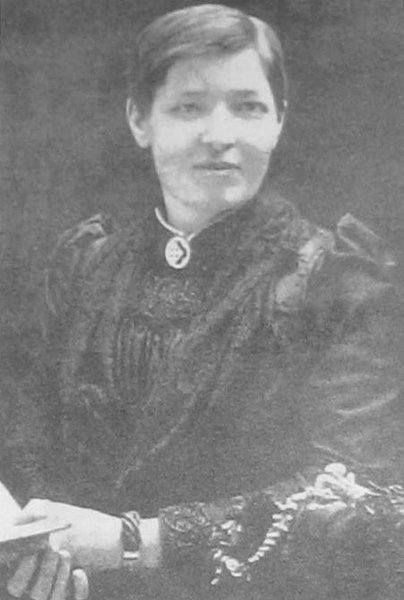
On 2 December 1848, a baby girl was born in Aberdeen, a city in Scotland. Her name was Mary Mitchell Slessor. Mary’s mother was a gentle woman with a deep, quiet faith. Her church had a mission far away in West Africa, at a place called Calabar, and the news from it was read aloud at home.
Contents
Questions and Answers
What is Mary Slessor (For Children) about?
It is a children’s version of the full-length biography of Mary Slessor. It tells how a poor girl who worked in a factory in Dundee went to Calabar, in what is now Nigeria, lived among the Okoyong people, protected twin babies and their mothers, and came to be called “Everybody’s Mother.”
Who was Mary Slessor?
A Scottish missionary who lived from 1848 to 1915. She started work in a factory when she was eleven, sailed to Calabar in 1876, and spent almost forty years in what is now south-eastern Nigeria. She learned the Efik language, lived in Okoyong from 1888, helped to make peace between enemies, rescued twins, and started schools and churches along the Enyong Creek. The people called her Ma.
How is each chapter set out?
Every chapter is short and made to be read aloud. It begins with a Bible verse, tells one part of Mary’s story, shows one simple thing it means for you, and ends with a short prayer. Three questions follow, to talk about together.
Is this book too sad for children?
Some of it is sad. Mary’s father drank too much, many of the babies she cared for died, and some old customs cost people their lives. The book does not pretend otherwise, but it tells these things gently, without frightening detail. Above all it is a story of how God looked after a frightened woman, made her brave, and used her to save many lives.
Are the stories true?
Yes. They come from Mary Slessor’s own letters and from people who knew her, as gathered by her first biographer. A few stories, like the one about the gang leader with the lead weight, were remembered from her own telling years later, and the book says so. It also says plainly that Mary was not the first to stand against the killing of twins, and that many others, African and Scottish, helped her.
Who is this book for?
It is for children, to be read aloud by a grown-up or read by an older child alone. There is also a teen edition, and the full-length biography for older readers.
Read in your language
People in this book
More like this
Cite this book
Copy a citation in the style you need.
- MLA
- Ochorus Originals. Mary Slessor (For Children). Ochorus, https://ochorus.com/books/mary-slessor-a-life-children/.
- Chicago
- Ochorus Originals. Mary Slessor (For Children). Ochorus. https://ochorus.com/books/mary-slessor-a-life-children/.
- Chicago footnote
- Ochorus Originals, Mary Slessor (For Children) (Ochorus), https://ochorus.com/books/mary-slessor-a-life-children/.
- BibTeX
- @book{ochorusoriginalsmary, author = {{Ochorus Originals}}, title = {{Mary Slessor (For Children)}}, publisher = {Ochorus}, url = {https://ochorus.com/books/mary-slessor-a-life-children/} }