Book
Isaiah
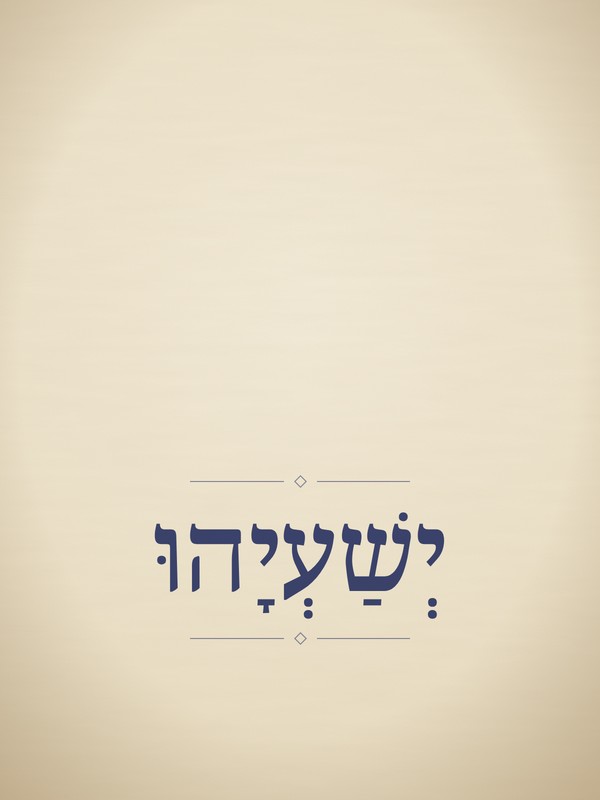
Yeshayahu, “The LORD saves”
Part of The Bible·Next in the series: Jeremiah
68 chapters · 3 hr 33 min read · Accessible
Free to read · No account needed
Listen to the whole book 4 hr 35 min listenAbout this book
The Holy One of Israel judges and redeems, through his suffering servant.
- Author
- Isaiah son of Amoz
- Date
- 8th century BC
But it was for our rebellions that he was pierced through, for our guilt that he was crushed. On him fell the discipline that won our peace, and his welts have brought us healing.The grandest of the prophets, whose name means “The LORD saves”: sixty-six chapters that reach from the temple in Jerusalem to the ends of the earth. Isaiah sees the Lord high and lifted up and hears the seraphim cry “Holy, holy, holy”; he answers “Send me.” He warns kings who trust in armies instead of the Holy One of Israel, and promises a child called Immanuel, a son on David’s throne named Planner of Wonders and Ruler of Peace, and a shoot from Jesse’s stump. Then comes comfort for exiles — a road through the wilderness, a shepherd gathering the lambs, those who wait for the LORD taking on fresh strength — and the servant pierced for our rebellions, by whose welts we are healed, and at the last new heavens and a new earth. The prophet the New Testament quotes most, set out line by line as the poetry it mostly is, in the Open Word Bible, a new translation from the Hebrew given freely to the public domain, with an introduction to the book’s shape and meaning and a conclusion on where to read next.
The vision of Isaiah son of Amoz: what he saw concerning Judah and Jerusalem in the days when Uzziah, Jotham, Ahaz, and Hezekiah were kings of Judah.Listen, heavens; earth, open your ears,for the LORD has spoken:I raised children and made them great,but they have rebelled against me.An ox recognizes its owner,a donkey the feeding trough of its master;but Israel does not know,my people give it…
Contents
Sermons on this book
The Seraphim's Worship
Tozer looks through Isaiah 6 into the real, eternal world that presses on this one, and sees Isaiah turning from the dead king Uzziah to the living King. The seraphim worship freely, with their presence, their feet, hands and wings, their voices, their reverence and their fire, and he asks whether believers worship with the same fervency.
Unto Us a Child Is Born
One of Newton’s discourses on the texts of the Messiah oratorio. He notes that people may be moved by the music yet ashamed to be moved by the words, then walks through each name: Wonderful, Counsellor, the Mighty God, the Everlasting Father, the Prince of Peace. He ends by pleading with the undecided not to delay: “Why are you afraid of being happy too soon?”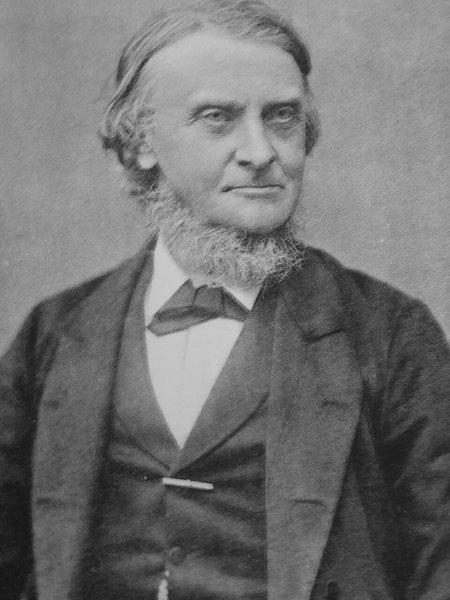
Our Strong City
Maclaren reads Isaiah's song of the strong city as a picture of God's unseen, indestructible order, which outlasts every falling Babylon and every human institution and which believers may belong to now. Its only wall is salvation, which God Himself appoints and which is invisible but real. Its gates open to the righteous nation that keeps faith, and the sermon closes with the robes washed in the blood of the Lamb.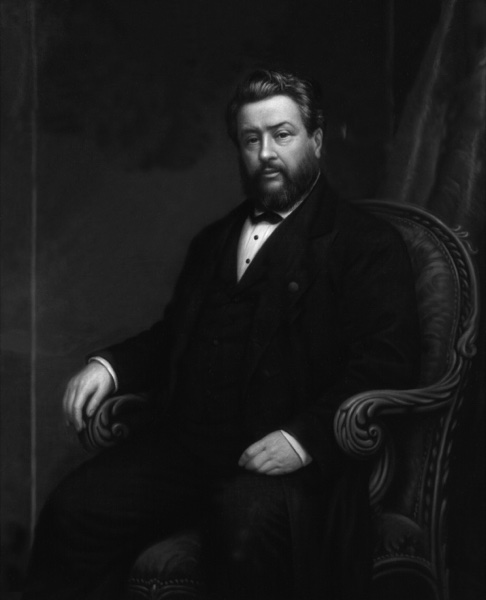
The Desire of the Soul in Spiritual Darkness
From Isaiah’s cry, "With my soul have I desired thee in the night," Spurgeon tells mature believers that the best saints have their nights, and that true religion keeps its colour in the dark, wanting God alone and pleading its desire for him when every other evidence fails. To newly awakened souls he gives three tests of real desire, constancy, efficacy and urgency, explains why God delays, and assures them he never casts off a sinner who sincerely seeks him.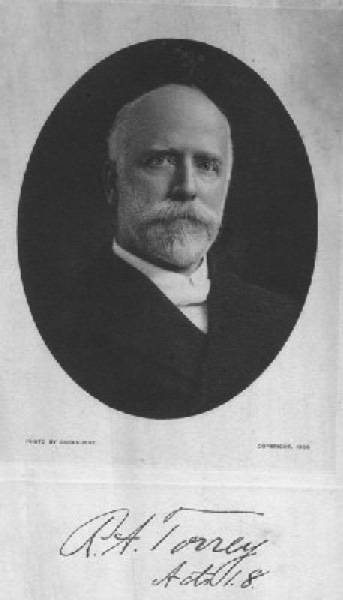
Refuges of Lies
Every man shelters somewhere. Torrey names the false refuges people hide in from God — morality, indifference, delay — and shows the hail will sweep each away, leaving Christ the only sure refuge. Every Man's Need of a Refuge
“A man shall be as a hiding-place from the wind, a covert from the tempest … the shadow of a great rock in a weary land.” Torrey loves the Old Testament because it is full of Christ, and here finds him foretold as the refuge every soul needs — from the storm of conviction, the tempest of judgment, the drought of a thirsty heart, the weariness of a hard road. The rock stands open; his whole appeal is that no one leave the shelter unentered.Questions and Answers
What is the book of Isaiah?
The first and longest of the major prophets of the Old Testament, sixty-six chapters of prophecy, mostly in poetry. It falls into three movements: chapters 1–39, warnings and promises to Judah and Jerusalem in the time of the Assyrian empire, including Isaiah’s call (chapter 6), the promise of Immanuel and of a king on David’s throne (7–11) and the story of Hezekiah and the siege of Jerusalem (36–39); chapters 40–55, comfort for the exiles in Babylon and the songs of the servant of the LORD; and chapters 56–66, the hope of a renewed Zion and of new heavens and a new earth. No prophet is quoted more often in the New Testament.
Who wrote the book of Isaiah, and when?
The book is “The vision of Isaiah son of Amoz” (1:1), a prophet in Jerusalem whose work ran from the year King Uzziah died, around 740 BC, through the reigns of Jotham, Ahaz and Hezekiah, to the Assyrian invasion of 701 BC and beyond. Jewish and Christian tradition received the whole book as his, foreseeing the exile and naming Cyrus by the Spirit of God, and many Christians still hold this view; the New Testament quotes every part of the book under Isaiah’s name. Many scholars think chapters 40–66 come from later prophets in Isaiah’s tradition who spoke to the exiles in Babylon and to those who returned, in the sixth century BC. Either way, the book is bound together by its themes and its name for God, “the Holy One of Israel”.
What does Isaiah 7:14 mean?
It is the sign Isaiah gave to King Ahaz when Syria and northern Israel threatened Jerusalem: a young woman will give birth to a son and call him Immanuel, “God with us”, and before the child is old enough to choose good and evil, the two kings Ahaz feared will be gone (7:14–16). The Hebrew word means a young woman of marriageable age; the ancient Greek translation, made before the time of Christ, rendered it with a word that usually means “virgin”, and Matthew 1:22–23 quotes that form, seeing the sign fulfilled in the birth of Jesus to the virgin Mary. Christians have held different views of how far Isaiah himself foresaw that fulfilment, but agree with Matthew that the child whose name means “God with us” has come, and that the promise of a son on David’s throne in Isaiah 9:6–7 belongs to him.
Who is the suffering servant in Isaiah 53?
Isaiah 52:13–53:12 is the last of four passages, often called the Servant Songs (42:1–4; 49:1–6; 50:4–9; 52:13–53:12), about a servant of the LORD who brings justice and salvation to the nations. In the last song the servant is despised and rejected, “pierced through” for the rebellions of others, silent like a lamb led to slaughter, and yet afterward “will make the many righteous” (53:5, 7, 11). Elsewhere in these chapters Israel is called God’s servant, and Jewish interpreters have often understood the servant as Israel, or a faithful remnant, suffering among the nations. The New Testament reads the songs as fulfilled in Jesus: Philip explains Isaiah 53 to the Ethiopian official as the good news about him (Acts 8:32–35), and Peter writes, “By the bruises he bore you have been healed” (1 Peter 2:24).
What does “the Holy One of Israel” mean?
It is Isaiah’s favourite name for God, used some twenty-five times across the whole book and only a handful of times elsewhere in the Old Testament. It grows out of Isaiah’s vision in the temple, where the seraphim cry “Holy, holy, holy is the LORD of Armies!” (6:3). To be holy is to be set apart, utterly other and utterly pure; and yet this holy God has bound himself to one people as their own. In Isaiah the title carries both warning and comfort: Judah is judged for scorning the Holy One of Israel (1:4), and the exiles are told, “The Holy One of Israel is your Redeemer” (41:14).
Which translation of the Bible is this?
The Open Word Bible, a new translation made directly from the Hebrew and dedicated to the public domain, printed here at its Balanced level, which aims to be accurate and to read naturally aloud. Each line of the poetry is set on its own, and “LORD” in capitals stands for God’s personal name. The reasoning behind each of its sentences, with the Hebrew beside it, is published at openwordbible.org. The introduction and conclusion were written for this edition.
More like this
Taking books where there’s no signal? See Ochorus for missionaries or chaplains
About this text
- Source
- Scripture from the Open Word Bible (https://openwordbible.org), English, Balanced level, commit 64b913d623d6: dedicated to the public domain under CC0 1.0. The introduction and conclusion are by Ochorus. openwordbible.org
- Last updated
- November 13, 2026
- Rights
- Terms of Use
Cite this book
Copy a citation in the style you need.
- MLA
- Open Word Bible. Isaiah. Ochorus, https://ochorus.com/books/isaiah/.
- Chicago
- Open Word Bible. Isaiah. Ochorus. https://ochorus.com/books/isaiah/.
- Chicago footnote
- Open Word Bible, Isaiah (Ochorus), https://ochorus.com/books/isaiah/.
- BibTeX
- @book{openwordbibleisaiah, author = {{Open Word Bible}}, title = {{Isaiah}}, publisher = {Ochorus}, url = {https://ochorus.com/books/isaiah/} }