Book
The Second Letter to the Corinthians
Pros Korinthious B, “Second to the Corinthians”
Part of The Bible·Next in the series: The Letter to the Galatians
15 chapters · 54 min read · Accessible
Free to read · No account needed
Listen to the whole book 1 hr 10 min listenAbout this book
God’s power made perfect in weakness, in Paul’s defence of his ministry.
- Author
- Paul
- Date
- c. AD 56
But he answered me, “My grace is enough for you, for power comes to its fullness in weakness.” So I will be all the happier to boast of my weaknesses, for then the power of Christ may spread its tent over me.The most personal of Paul’s letters, written after a painful visit and a letter written with many tears, to a church he loved and that had hurt him. Here is the God from whom all comfort comes; a ministry not of the written letter but of the Spirit, with faces uncovered, changed from glory to ever greater glory; treasure in pots made of clay; the message of reconciliation and a new creation in Christ; the grace of the Lord who, rich as he was, became poor; and, against rivals who boasted of their strength, an apostle who boasted of his weakness, a thorn in the flesh, and the answer “My grace is enough for you.” In the Open Word Bible, a new translation from the Greek given freely to the public domain, with an introduction to the letter’s shape and meaning and a conclusion on where to read next.
From Paul, an apostle of Christ Jesus by the will of God, and from Timothy our brother, to the church of God in Corinth, together with all God’s holy people throughout Achaia. Grace and peace to you from God our Father and from the Lord Jesus Christ.
Contents
Sermons on this book
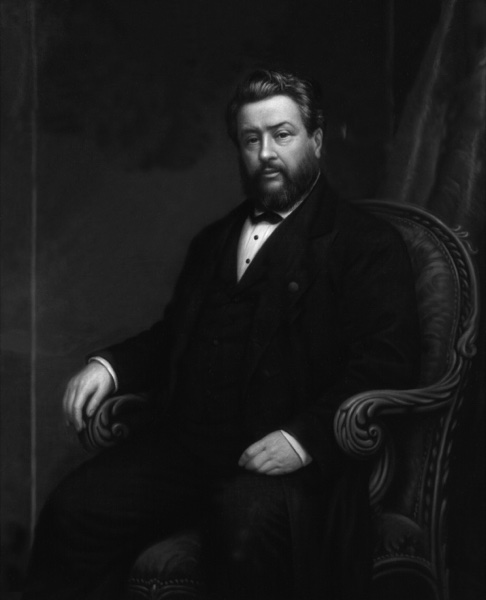
Consolation Proportionate to Spiritual Sufferings
Spurgeon refuses to sell the gospel like a recruiting sergeant: the Christian must expect trouble, looking upward to God’s holiness, downward to Satan’s rage, around at a hostile world and within at his own heart. Only suffering for Christ’s sake counts as Christ’s sufferings, and God balances those with matching consolations, for trial enlarges the heart and drives the believer near to God. He gives all the honour to Jesus and closes with counsel for the fearful, the troubled and the despairing.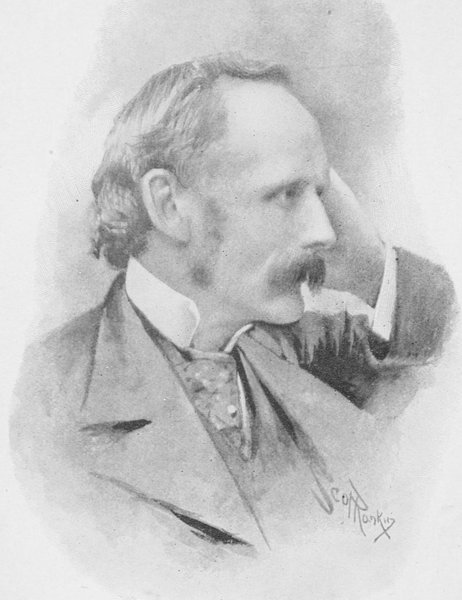
The Changed Life
Drummond sets aside the usual ways of becoming better men, from resolution and fighting single sins to copying virtues and keeping a diary of rules, and finds the true method in Paul's verse on reflecting the glory of the Lord. Glory is character, and since we become like those we habitually reflect, we are changed by keeping Christ our constant companion. The will's task is to hold the mirror in position, for "Christ can. Wherefore put on Christ."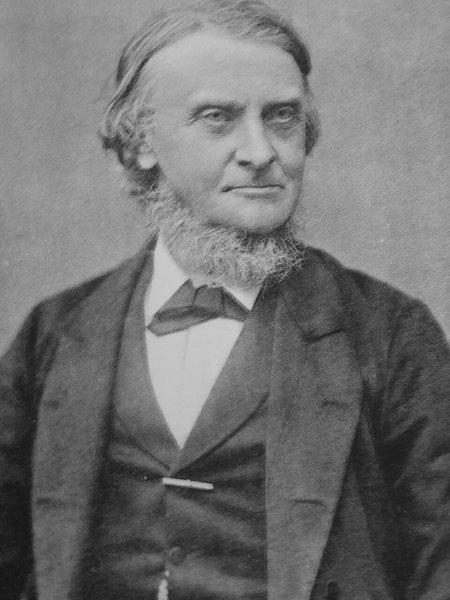
Looking at the Unseen
Maclaren reads Paul's contrast between things seen and unseen not as present against future but as the visible world against realities that surround us now. Looking at the unseen sets earthly sorrows and duties in their true size and lets time prepare us for eternity; such a look is possible only through Christ, who has gone and come back; and it should be the habitual, concentrated gaze of every Christian, turning from the perishable to the permanent.The Transitory Nature of Visible Things
Chalmers shows that all that is seen is temporal: mountains wear away, the earth and heavens will pass, and long before that each hearer will pass from them, as friends, families and faces already do. Yet he distrusts the feeling such pictures stir, for a man may weep over time and glow at visions of heaven while his heart still cleaves to the dust. He ends by warning that a tasteful admiration of heaven is no step along the narrow path to it. The Love that Constrains
Starting from the world's charge that Paul was mad, Maclaren finds his explanation in "The love of Christ constraineth us". He shows that Christ's love is universal because it reaches each person, and is proved in His death for all; that our love can only be an echo, deepened by gazing on His; and that this echoed love moves the centre of life off self, makes us like Christ, and turns duty into delight and freedom.Sinners Entreated to Be Reconciled to God
Davies takes up Paul’s title of ambassador for every preacher who keeps to his Master’s instructions. He first strips away the hearer’s plea of “not guilty”, testing professed love for God by thoughts, motives and obedience, then lays out the terms of peace: penitence, reliance on Christ alone, new obedience and a break with sin. He closes by pleading, in the name of God, of Christ and of the sinner’s own soul, for peace with an enemy none can resist.Questions and Answers
What is 2 Corinthians?
The eighth book of the New Testament, a letter from the apostle Paul to the church in Corinth, written after 1 Corinthians. It celebrates a reconciliation between Paul and the church after a painful break, prepares them for a collection for the poor believers in Jerusalem, and defends Paul’s ministry against rival teachers. Its great theme is that God’s power is seen in human weakness: “it is when I am weak that I am strong” (12:10).
Who wrote 2 Corinthians, and when?
The apostle Paul, together with Timothy, who is named in the first verse. Nearly all scholars agree that Paul wrote it. He sent it from Macedonia, in northern Greece, probably around AD 55–56, after Titus had brought him the news that the Corinthians had repented and longed to see him again (7:5–7).
What happened between 1 and 2 Corinthians?
The letter itself suggests the outline, though details are uncertain. Paul made a painful visit to Corinth (2:1), where someone wronged him; he then wrote a severe letter “with many tears” (2:4), now usually called the tearful letter, and sent it with Titus. Anxious for news, he left Troas for Macedonia, where Titus met him with good news (2:12–13, 7:5–16). Meanwhile, rival teachers had arrived in Corinth, whom Paul answers in chapters 10–13.
Is 2 Corinthians one letter or several?
Christians and scholars differ. The tone changes sharply at chapter 10, chapters 8 and 9 both deal with the collection, and 6:14–7:1 seems to interrupt its context, so many scholars think the book joins two or more of Paul’s letters to Corinth, perhaps with chapters 10–13 as part of the tearful letter or a later one. Others argue that it is a single letter written over some time. No manuscript has it in any other form, and the church has always received it as one book.
What was Paul’s thorn in the flesh?
No one knows. Paul says only that “a thorn in the flesh was given” to him, “a messenger of Satan”, to keep him from becoming too proud after a vision of paradise, and that he begged the Lord three times to remove it (12:7–8). Suggestions have included an illness or disability, perhaps of the eyes, persecution, a group of opponents and temptation. What Paul passes on is the Lord’s answer: “My grace is enough for you, for power comes to its fullness in weakness.”
Which translation of the Bible is this?
The Open Word Bible, a new translation made directly from the Greek and dedicated to the public domain, printed here at its Balanced level, which aims to be accurate and to read naturally aloud. The reasoning behind each of its sentences, with the Greek beside it, is published at openwordbible.org. The introduction and conclusion were written for this edition.
More like this




Taking books where there’s no signal? See Ochorus for missionaries or chaplains
About this text
- Source
- Scripture from the Open Word Bible (https://openwordbible.org), English, Balanced level, commit 64b913d623d6: dedicated to the public domain under CC0 1.0. The introduction and conclusion are by Ochorus. openwordbible.org
- Last updated
- November 13, 2026
- Rights
- Terms of Use
Cite this book
Copy a citation in the style you need.
- MLA
- Open Word Bible. The Second Letter to the Corinthians. Ochorus, https://ochorus.com/books/2-corinthians/.
- Chicago
- Open Word Bible. The Second Letter to the Corinthians. Ochorus. https://ochorus.com/books/2-corinthians/.
- Chicago footnote
- Open Word Bible, The Second Letter to the Corinthians (Ochorus), https://ochorus.com/books/2-corinthians/.
- BibTeX
- @book{openwordbiblesecond, author = {{Open Word Bible}}, title = {{The Second Letter to the Corinthians}}, publisher = {Ochorus}, url = {https://ochorus.com/books/2-corinthians/} }