

Book
Job
Iyov, “The Book of Job”
Part of The Bible·Next in the series: The Psalms
44 chapters · 1 hr 51 min read · Accessible
Free to read · No account needed
Listen to the whole book 2 hr 23 min listenAbout this book
A righteous man’s suffering, and God’s answer out of the whirlwind.
- Author
- Author unknown
- Date
- Date unknown
But I know that my Redeemer lives, and that at the last he will stand upon the dust.The Bible’s great book about suffering, which asks its question in the first chapter: “Does Job fear God for nothing?” A blameless man in the land of Uz loses his wealth, his children and his health in a few days, and says, “The LORD gave, and the LORD has taken away.” Then three friends sit with him in silence for seven days, and then argue, chapter after chapter, that he must have sinned, while Job curses the day he was born, demands a hearing from God, and rises to the words “I know that my Redeemer lives.” A poem asking where wisdom can be found; a young man named Elihu; and at last the LORD answering Job from the storm: “Where were you when I founded the earth?” Set out line by line as the poetry it is, in the Open Word Bible, a new translation from the Hebrew given freely to the public domain, with an introduction to the book’s shape and meaning and a conclusion on where to read next.
There was a man in the land of Uz named Job. He was blameless and upright; he feared God and turned away from evil. He had seven sons and three daughters. He owned 7,000 sheep, 3,000 camels, 500 yoke of oxen and 500 female donkeys, and he had a great many servants. He was the greatest man among all the peoples of the East.
Contents
Sermons on this book
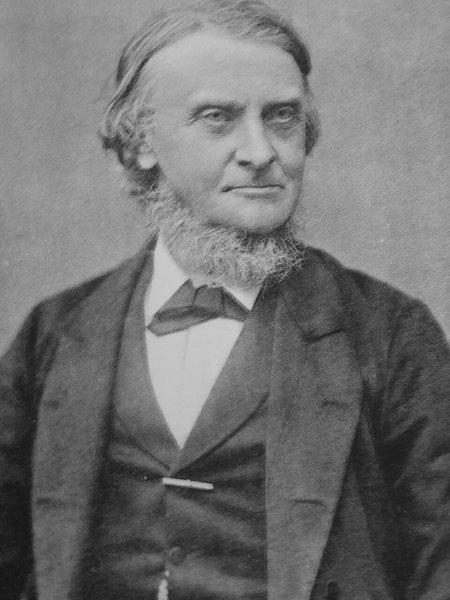
The Peaceable Fruits of Sorrows Rightly Borne
Reading Eliphaz’s speech to Job, Maclaren finds it beautiful and partly true but defective: Eliphaz rightly calls the chastened man happy and sees wounding as meant for healing, yet he assumes Job’s sin and speaks without sympathy. Maclaren lifts the promises to a deeper sense: the evil is drawn out of evil, all things serve those who serve God, and maturity is likeness to God rather than length of days. He ends by rebuking comforters who rub salt into wounds.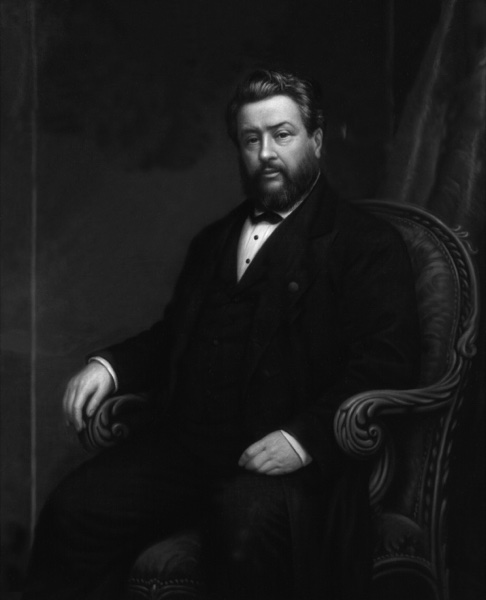
The Sweet Uses of Adversity
That God should contend with man at all astonishes Spurgeon — the Almighty taking up weapons against the insect of a day — and Job's demand to be shown why becomes a question he answers separately for the child of God and for the sinner. Affliction is read as purpose rather than accident, and the hearer is sent to picture Christ on the tree.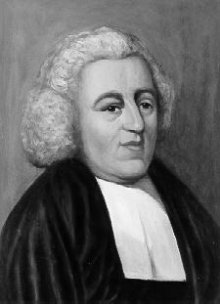
I Know That My Redeemer Liveth
Job’s cry opens the third part of the Messiah oratorio, and Newton takes it phrase by phrase: the Redeemer as the near kinsman who pays the ransom, the “appropriating word” my, his standing upon the earth, and Job’s hope of seeing God in his own flesh. Along the way he gives a humble account of assurance as something weak faith grows into. What Life May Be Made
Maclaren takes Eliphaz’s self-interested promise to Job and lifts it into a portrait of the devout life. Such a life delights in God and lifts its face to Him with confidence through Christ; it holds frank intercourse with Him in prayer, answer and thanksgiving; it knows neither real failure nor darkness when its will rests in God’s; and it stays hopeful in every dip of the road, ending in final deliverance and endless communion with God. Order and Argument in Prayer
Job's cry is not for relief but for an audience: 'Oh that I knew where I might find him!' Spurgeon takes it as a lesson in the craft of prayer — order your cause as the priest laid out his sacrifice, and ask plainly, saying Ishmael if you mean Ishmael — then catalogues the pleas that have prevailed: God's attributes, His promises, His great name, past mercies, even our own unworthiness. Comfort for the Desponding
Job's wish to be as in months past is the cry Spurgeon takes up for the believer who once walked in the light and cannot now find it. He treats it first as a complaint worth hearing rather than rebuking — the Shepherd's own people do cross the wilderness — before turning it toward the promise that whoever wills may still come and drink.Questions and Answers
What is the book of Job about?
A righteous man who loses everything and wrestles with God over why. In the prose prologue (chapters 1–2) the Accuser in the heavenly court claims that Job serves God only for what he gets, and God allows him to be tested: Job loses his wealth, his ten children and his health, but does not curse God. In the long poetic middle (3:1–42:6) his three friends insist that he must be suffering for his sins, Job protests his innocence and demands that God answer him, a young man named Elihu speaks, and finally the LORD answers Job from the storm. In the prose epilogue God rebukes the friends, says that Job has spoken rightly of him, and restores Job’s fortunes.
Who wrote the book of Job, and when?
The book does not name its author or say when it was written. One ancient Jewish tradition credited it to Moses. The story is set in a patriarchal world outside Israel, in the land of Uz, where Job offers sacrifices for his own family and counts his wealth in flocks and herds, but that tells us when the story is set rather than when the book was written. Scholars have proposed dates from the time of Solomon to after the exile, and the question remains open. Ezekiel 14:14 names Job with Noah and Daniel, and James 5:11 speaks of Job’s endurance.
Who is the Accuser in the book of Job?
In chapters 1–2 a figure called in Hebrew “the satan”, with the article, comes among the heavenly beings before the LORD and questions Job’s motives: “Does Job fear God for nothing?” The word is a title meaning the adversary or accuser, which this translation renders “the Accuser”. Later Scripture uses the word as a name, Satan, for God’s great enemy, and many Christians identify him with this figure. The book of Job itself presents him as an accuser in the heavenly court who can act only as far as the LORD allows, and he disappears from the story after chapter 2.
What does “I know that my Redeemer lives” mean in Job?
In Job 19:25–27, abandoned by his family and friends, Job declares that his Redeemer lives and will stand up for him at the last, and that he will see God for himself. The Redeemer, in Hebrew go’el, was the nearest relative who stood up for a family member in trouble, buying back his land, freeing him from slavery and defending him in court. Most interpreters think Job means God himself, who will in the end take his side. Christians have long heard in the words a hope fulfilled in Christ and in the resurrection of the body; Handel set them at the opening of the third part of Messiah.
Does God ever explain to Job why he suffered?
No. When the LORD answers Job from the storm (chapters 38–41), he never mentions the scene in heaven or gives a reason for Job’s suffering. Instead he asks Job a long series of questions about the making of the world and the wild creatures he cares for, from the stars to the raven, and shows him Behemoth and Leviathan. Job is answered all the same: “I had heard of you by what my ears were told, but now my own eyes have seen you.” The book does not solve the problem of suffering. It shows a man who meets God in the middle of it, and God declares that Job, who argued honestly with him, spoke rightly, while the friends who defended him with false reasons did not.
Which translation of the Bible is this?
The Open Word Bible, a new translation made directly from the Hebrew and dedicated to the public domain, printed here at its Balanced level, which aims to be accurate and to read naturally aloud. The poetry, which runs from chapter 3 to 42:6, is printed one line at a time, and “LORD” in capitals stands for God’s personal name. The reasoning behind each of its sentences, with the Hebrew beside it, is published at openwordbible.org. The introduction and conclusion were written for this edition.
More like this






Taking books where there’s no signal? See Ochorus for missionaries or chaplains
About this text
- Source
- Scripture from the Open Word Bible (https://openwordbible.org), English, Balanced level, commit 64b913d623d6: dedicated to the public domain under CC0 1.0. The introduction and conclusion are by Ochorus. openwordbible.org
- Last updated
- November 13, 2026
- Rights
- Terms of Use
Cite this book
Copy a citation in the style you need.
- MLA
- Open Word Bible. Job. Ochorus, https://ochorus.com/books/job/.
- Chicago
- Open Word Bible. Job. Ochorus. https://ochorus.com/books/job/.
- Chicago footnote
- Open Word Bible, Job (Ochorus), https://ochorus.com/books/job/.
- BibTeX
- @book{openwordbible, author = {{Open Word Bible}}, title = {{Job}}, publisher = {Ochorus}, url = {https://ochorus.com/books/job/} }