Book
Answers to Prayer
From George Müller's Narratives
Other titles: Answers to Prayer, from George Müller's Narratives
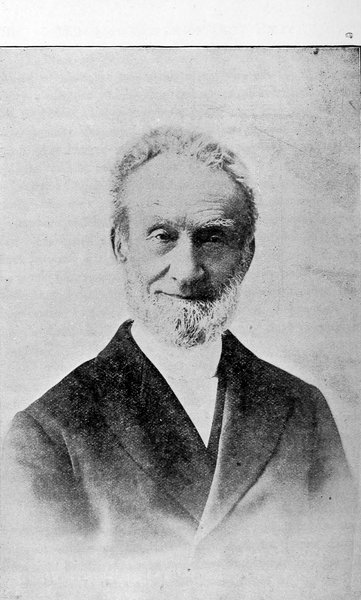
George Müller · 1805–1898
- 5 chapters
- 2 hr 37 min read
- Moderate Reading difficulty
Free to read·No account needed
Beginning and Early Days of the Orphan Work
Taking books where there’s no signal? See Ochorus for missionaries or chaplains
About this book
George Müller, who cared for thousands of orphans in Bristol without asking anyone but God for support, here records specific answers to prayer drawn from his own narratives. From the beginning of the orphan work to the great houses on Ashley Down, he shows how need after need was met in response to believing prayer. A quiet, factual testimony that God still hears and provides.
Mr. George Müller, the founder of the New Orphan-Houses, Ashley Down, Bristol (institutions that have been for many years the greatest monuments of modern times to a prayer-answering God), gives in that most valuable and instructive book, "A Narrative of Some of the Lord's Dealings with George Müller," Vol. I., among other reasons for establishing an Orphan-House, the following:—
Contents
Questions and Answers
What is Answers to Prayer about?
It is George Müller's record of specific answers to prayer, drawn from his own journals. Müller, who cared for thousands of orphans in Bristol without ever asking anyone but God for support, here sets down particular needs and the particular ways God met them — from the beginning of the orphan work to the great orphan houses — as plain evidence that God still hears and answers prayer.
Who was George Müller?
A German-born Christian who settled in England and spent his long life caring for orphans in Bristol. Converted from a dishonest, worldly youth, he became a man of extraordinary faith, supporting the care of more than ten thousand children over his lifetime entirely through prayer, without appeals for money — that God's faithfulness might be plainly seen.
How is this book different from The Life of Trust?
The Life of Trust is Müller's fuller autobiography and running journal; Answers to Prayer is a more compact selection focused specifically on recorded instances of prayer being answered. It gathers the concrete cases — the needs named and met — into a shorter, faith-building book meant to demonstrate the reality of answered prayer.
Why did Müller keep such records?
Deliberately, as a witness. Müller wanted to prove to a doubting age that God still answers prayer, so he wrote down needs and their answers with care, dates and details included. The records were not for his own memory alone but for others — evidence, plainly set out, that the God who promises to hear can be trusted to do so.
What kinds of answered prayers does the book record?
Very concrete ones — money arriving in time to buy the day's food for hundreds of children, sums needed for building given by unknown donors, needs told only to God and met to the day. Müller's record is deliberately plain and specific, a ledger of asking and receiving that lets the facts themselves make the case for prayer.
Did Müller ever ask people for money?
No — that was the point of his whole enterprise. He made it a fixed rule never to ask any human being for funds and never to go into debt, so that every provision would visibly be an answer to prayer and not to appeals. This book records the results of that rule: God supplying, again and again, in response to prayer alone.
What can a reader learn from this book?
That prayer is real and that God is faithful in concrete, daily matters, not only in spiritual ones. Müller's plain record presses the reader to pray more honestly and to trust God for actual needs. It has strengthened the faith of countless Christians and shaped the modern movement of faith missions built on the same conviction.
Where should a reader begin?
At the beginning and forward through the record, since it roughly follows the growth of the orphan work. The entries can also be read a few at a time as devotional, faith-building reading; taken together they form one of the most striking records of answered prayer ever set down, meant to send the reader to prayer with fresh confidence.
Read in your language
More like this


Georg Flegel, “Still Life” (probably ca. 1625–30). The Metropolitan Museum of Art, Open Access.
Cite this book
Copy a citation in the style you need.
- MLA
- Müller, George. Answers to Prayer. 1896. Ochorus, https://ochorus.com/books/answers-to-prayer/.
- Chicago
- Müller, George. Answers to Prayer. 1896. Reprint, Ochorus. https://ochorus.com/books/answers-to-prayer/.
- Chicago footnote
- George Müller, Answers to Prayer (1896; repr., Ochorus), https://ochorus.com/books/answers-to-prayer/.
- BibTeX
- @book{muller1896answers, author = {Müller, George}, title = {{Answers to Prayer}}, year = {1896}, publisher = {Ochorus}, url = {https://ochorus.com/books/answers-to-prayer/} }