- 28 chapters
- 12 hr 59 min read
- Moderate Reading difficulty
Free to read·No account needed
Editor’s Preface
Taking books where there’s no signal? See Ochorus for missionaries or chaplains
Grow with the story

Reader’s guide
About this book
The Life of Trust is George Müller's own account of a life lived on the promises of God. Written by himself, it tells how a converted spendthrift student came to Bristol and, asking help from no one but God, built orphan houses that sheltered thousands of children — meeting every need by prayer alone and keeping a faithful record of the answers. Part autobiography, part daily journal of the Lord's dealings, it is the classic testimony that God still hears and provides for those who trust him.
Contents
- 1 Editor’s Preface 3 min
- 2 Author’s Preface 3 min
- 3 Introduction 27 min
- 4 Boyhood and Youth 11 min
- 5 The Prodigal’s Return 14 min
- 6 Self-dedication 18 min
- 7 Leaning on Jesus 37 min
- 8 Ministry at Bristol Begun 24 min
- 9 The Scriptural Knowledge Institution 26 min
- 10 Home for Destitute Orphans 22 min
- 11 The Field Widening 21 min
- 12 Trial 20 min
- 13 Deliverance 27 min
- 14 Asking and Receiving 24 min
- 15 Plenty and Want 31 min
- 16 Faith Strengthened by Exercise 24 min
- 17 Walking in Darkness 46 min
- 18 Prosperity 32 min
- 19 Stewardship 64 min
- 20 Reaping Bountifully 41 min
- 21 Faith Confirmed by Prosperity 47 min
- 22 Continued Mercies 28 min
- 23 A New Victory of Faith 43 min
- 24 Unvarying Prosperity 22 min
- 25 Reaping in Joy 40 min
- 26 Three Years of Prosperity 31 min
- 27 Conclusion 44 min
- 28 Appendix 8 min
Questions and Answers
What is The Life of Trust about?
It is George Müller's own account of a life lived on the bare promises of God. Written by himself, it tells how a converted spendthrift student came to Bristol and, asking help from no human being, built orphan houses that sheltered thousands of children — meeting every need by prayer alone. Much of the book is his running journal, recording specific needs and the specific ways they were met.
Who was George Müller?
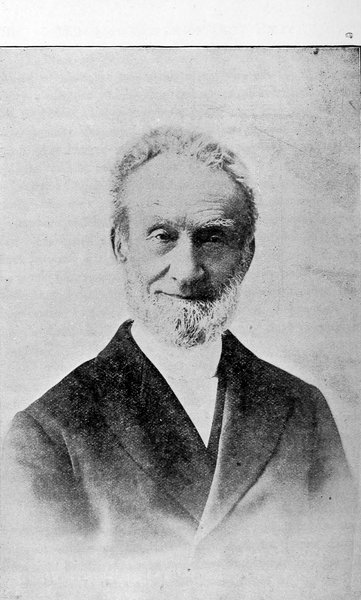
A German-born Christian who settled in England and spent his long life caring for orphans in Bristol. In his youth he had been dishonest and worldly; converted as a student, he became a man of extraordinary faith. By the end of his life his orphanages had cared for more than ten thousand children, all supported without appeals for money — only prayer.
Why did Müller refuse to ask people for money?
He did it deliberately, as a witness. Müller wanted to demonstrate to a doubting age that God still hears and answers prayer, and that a believer may trust him for daily bread as literally as for salvation. By making it a fixed rule never to ask any person for funds, and never to go into debt, he ensured that every provision was visibly an answer to prayer and not to fundraising.
What kind of answers to prayer does the book record?
Very concrete ones. Müller records mornings when there was no food in the house and hundreds of children to feed, and how bread and milk arrived in time; sums needed for building, given by unknown donors; needs named only to God and met to the day. The book's power is in its plainness — a dated ledger of asking and receiving, kept honestly over decades.
Is the book only a biography, or also devotional?
Both. It is a narrative of Müller's life and work, but it is written to build the reader's faith, and it is full of reflection on the promises of God and the discipline of prayer. Müller intended it not as a monument to himself but as evidence for others — proof that the life of trust is possible and that God can be taken at his word.
What did Müller teach about the promises of God?
That they are meant to be believed and acted upon, not merely admired. He treated Scripture's promises as a bank on which faith may draw, and his whole enterprise was an experiment in taking them literally. The book returns again and again to the faithfulness of God — that the one who promises to supply every need can be relied on in the smallest particulars.
What can a reader learn from Müller's example today?
Chiefly that prayer is real and that God is trustworthy in matters of daily provision, not only in spiritual ones. Müller's life has strengthened the faith of countless believers and shaped modern faith missions. His example presses the ordinary reader to pray more honestly and to trust God for concrete needs rather than only general ones.
Where should a reader begin?
At the account of his early life and conversion, which makes the later faith all the more striking, then into the founding of the orphan work and the journal of its daily provision. The journal entries can be read a few at a time as devotional reading; taken together they are one of the most remarkable records of answered prayer ever kept.
Read in your language
More like this





Camille Flers, “Cottage by the River with Washerwomen” (1835). The Cleveland Museum of Art, CC0.
Cite this book
Copy a citation in the style you need.
- MLA
- Müller, George. The Life of Trust. 1861. Ochorus, https://ochorus.com/books/the-life-of-trust/.
- Chicago
- Müller, George. The Life of Trust. 1861. Reprint, Ochorus. https://ochorus.com/books/the-life-of-trust/.
- Chicago footnote
- George Müller, The Life of Trust (1861; repr., Ochorus), https://ochorus.com/books/the-life-of-trust/.
- BibTeX
- @book{muller1861life, author = {Müller, George}, title = {{The Life of Trust}}, year = {1861}, publisher = {Ochorus}, url = {https://ochorus.com/books/the-life-of-trust/} }