

- 17 chapters
- 1 hr 19 min read
- Moderate Reading difficulty
Free to read·No account needed
Preface to the English Protestant Edition
Taking books where there’s no signal? See Ochorus for missionaries or chaplains
Reader’s guide
About this book
A Short and Easy Method of Prayer is Jeanne Guyon's little classic on the prayer of the heart. Written in 1685, it insists that prayer is not the labour of the learned but the birthright of every soul — that the poor, the busy, and the child may all seek and find God within. Guyon leads the reader from simple meditation through self-surrender and inward silence toward union with God. Condemned in her own day and cherished ever since by Wesley, Fénelon, and Watchman Nee, it remains one of the tenderest guides to a life of continual prayer.
Prayer is nothing else but the application of the heart to God, and the interior exercise of love. St Paul commands us to “pray without ceasing” (1 Thess. v. 17). Our Lord says: “Take ye heed, watch and pray.” “And what I say unto you, I say unto all” (Mark xiii. 33, 37).
Contents
- 1 Preface to the English Protestant Edition 2 min
- 2 Author’s Preface 5 min
- 3 All Are Commanded to Pray 4 min
- 4 The First Degree of Prayer 6 min
- 5 The Second Degree: The Prayer of Simplicity 3 min
- 6 Abandonment to God 2 min
- 7 Suffering, Mysteries, and Virtue 4 min
- 8 Of Perfect Conversion 3 min
- 9 The Simple Presence of God 4 min
- 10 Rest in the Presence of God 3 min
- 11 Self-Examination and Confession 4 min
- 12 Distractions and Temptations 2 min
- 13 Prayer and Sacrifice 4 min
- 14 Prayer as Noble Action 12 min
- 15 Interior and Exterior Actions 7 min
- 16 A Word to Preachers 5 min
- 17 The Way to Divine Union 10 min
Questions and Answers
What is A Short and Easy Method of Prayer about?
It is Jeanne Guyon's little classic on the prayer of the heart. Written in 1685, it insists that prayer is not the labour of the learned but the birthright of every soul — that the poor, the busy, and the simple can pray as truly as the scholar. Guyon teaches a way of quiet, inward prayer that anyone may practise: turning the heart to God, praying the Scriptures, and resting in his presence.
Who was Jeanne Guyon?
A French Christian mystic of the seventeenth century, associated with the movement known as Quietism, who suffered imprisonment, including a spell in the Bastille, for her teaching on prayer and the inner life. Her writings profoundly influenced later Christians of many traditions, and this short book on prayer is her most widely read work.
What method of prayer does she teach?
A simple, inward turning of the heart to God rather than a technique of many words. Guyon commends two chief practices: praying the Scripture — reading a little, then pausing to let its truth sink into the heart before God — and the prayer of quiet or simple presence, in which the soul rests attentively in God's love without effort or eloquence. The aim is communion, not performance.
Why does she call it 'short and easy'?
Because she is convinced that prayer has been made to seem hard and reserved for the spiritually advanced, when in truth it is open to all. Her whole point is that the way to God is near and simple — a matter of the heart's attention and desire, not of learning or long labour — so that the plainest believer can enter it at once.
What does Guyon mean by praying the Scripture?
Not reading quickly for information, but taking a short passage and dwelling on it prayerfully — reading a phrase, then stopping to taste it, to let it move the heart toward God, before moving on. It is Scripture used as fuel for communion rather than as a text to be covered, turning reading into prayer.
Is this book only for mystics or contemplatives?
No — Guyon wrote it precisely for ordinary people, the busy and the unlearned, insisting that the deepest prayer is for everyone and not a special vocation. Though she stands in the contemplative tradition, her aim is to democratize inward prayer, and generations of very ordinary Christians have found her method both accessible and life-giving.
Has this book been controversial?
Guyon's Quietism drew suspicion and condemnation in her own day, and she suffered for it; some of her expressions have been debated since. But the heart of this little book — the call to a simple, inward, heartfelt prayer open to all — has been treasured across the traditions, and many read it for that devotional core rather than for the controversies around her.
Where should a reader begin?
At the beginning, and then by actually trying what she describes — the book is meant to be practised, not merely read. Guyon's short chapters lead gently from the call to pray, through praying the Scriptures, into the prayer of quiet rest in God; taken slowly and put into practice, they open a door to prayer that she insists stands open to all.
Read in your language
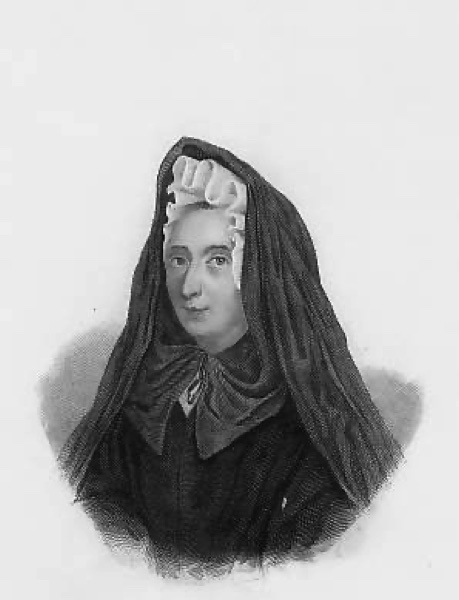
About the author
Jeanne Guyon
A Short and Easy Method of Prayer · 1685
More like this





Célestin François Nanteuil, “In the Forest” (1841). The Cleveland Museum of Art, CC0.
Cite this book
Copy a citation in the style you need.
- MLA
- Guyon, Jeanne. A Short and Easy Method of Prayer. 1685. Ochorus, https://ochorus.com/books/a-short-and-easy-method-of-prayer/.
- Chicago
- Guyon, Jeanne. A Short and Easy Method of Prayer. 1685. Reprint, Ochorus. https://ochorus.com/books/a-short-and-easy-method-of-prayer/.
- Chicago footnote
- Jeanne Guyon, A Short and Easy Method of Prayer (1685; repr., Ochorus), https://ochorus.com/books/a-short-and-easy-method-of-prayer/.
- BibTeX
- @book{guyon1685short, author = {Guyon, Jeanne}, title = {{A Short and Easy Method of Prayer}}, year = {1685}, publisher = {Ochorus}, url = {https://ochorus.com/books/a-short-and-easy-method-of-prayer/} }