Book
The Second Letter to Timothy
Pros Timotheon B, “Second to Timothy”
Part of The Bible·Next in the series: The Letter to Titus
6 chapters · 22 min read · Accessible
Free to read · No account needed
Listen to the whole book 28 min listenAbout this book
Paul’s last letter: guard the gospel, endure, and preach the word.
- Author
- Paul
- Date
- c. AD 66
All Scripture is breathed out by God and is useful for teaching, for rebuking, for correcting and for training in righteousness, so that the one who belongs to God may be fully capable, equipped for every good work.Paul’s last letter, written in chains in Rome to Timothy, the younger man he called his dear son, as he waited for the verdict he expected to be death. Do not be ashamed; stir up the gift God gave you, for God has not given us a spirit of fear; be strong, like a soldier, an athlete and a farmer; handle the message of truth correctly and correct opponents gently; continue in the Scriptures, all of them breathed out by God; preach the word. Then Paul’s farewell — “I have fought the good fight, I have finished the race, I have kept the faith” — and his requests: come before winter, bring Mark, bring my cloak and my scrolls. In the Open Word Bible, a new translation from the Greek given freely to the public domain, with an introduction to the letter’s shape and meaning and a conclusion on where to read next.
From Paul, an apostle of Christ Jesus by the will of God, sent to proclaim the promise of life that is in Christ Jesus, to Timothy, my dear son. Grace, mercy and peace to you from God the Father and from Christ Jesus our Lord.
Contents
Sermons on this book

Guard the Fire
Preaching on Pentecost Sunday from 2 Timothy 1, Evans traces the fire of God's presence from the disciples in the upper room to Moses at the burning bush and the revivals of Wales and Nunavut, then turns the history into a charge: guard the flame God has lit in you. Drawing on decades of pastoral experience and personal testimony, he presses hearers, worship leaders, and pastors alike to seek God's presence itself, not just songs or activity, and to tarry until they receive it.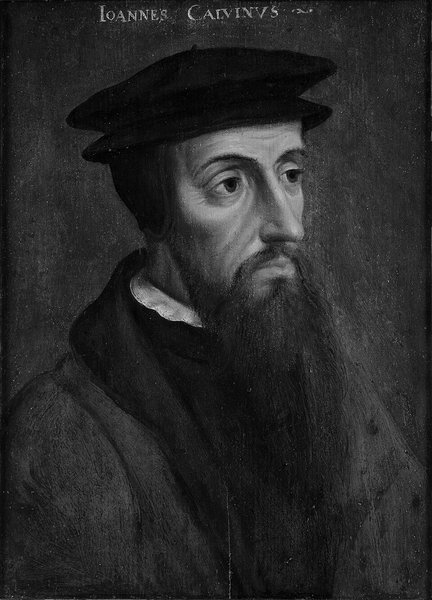
All Scripture Is Given by Inspiration
Scripture is our spiritual sword, and Calvin will not let us “pick and cull” it to suit our fancy. Because God speaks in it, it rules over every human tradition; because it is profitable, it teaches, reproves, corrects and instructs, reforming our lives rather than making us “eloquent and subtle.”Questions and Answers
What is the Second Letter to Timothy?
A letter in the New Testament from the apostle Paul, imprisoned in Rome, to his co-worker Timothy, probably in Ephesus. It is the most personal of the three Pastoral Letters. Paul urges Timothy not to be ashamed of the gospel or of him, to guard what has been entrusted to him and pass it on, to endure suffering, to hold to the Scriptures and to preach the word. It ends with Paul’s farewell and with requests and news about friends who have deserted him or stood by him.
Who wrote 2 Timothy, and when?
The letter names Paul as its author, and the church has read it as his last letter, written during a second imprisonment in Rome shortly before his execution under Nero, in the mid 60s AD; the historian Eusebius records this tradition. Many modern scholars think the Pastoral Letters were written after Paul’s death by a follower, though some of them think this letter preserves genuine notes from Paul. Others hold that its many personal details are best explained as Paul’s own.
What does 2 Timothy 3:16 mean when it says Scripture is “breathed out by God”?
The Greek word, used only here in the Bible, is literally “God-breathed”. Paul says that all Scripture comes from God, as breath comes from a mouth, and is therefore “useful for teaching, for rebuking, for correcting and for training in righteousness” (3:16), so that God’s people are equipped for every good work. He was speaking of the Jewish Scriptures, the Old Testament, which Timothy had known from infancy; Christians have applied the same words to the New Testament as well.
What does Paul mean by “I have fought the good fight” in 2 Timothy 4:7?
Paul writes from prison expecting to die. He sees his coming death as a drink offering, the wine poured out on the altar to complete a sacrifice (4:6), and looks back on his life as a contest fought to the end, a race finished and the faith kept. Then he looks forward to “the crown of righteousness, which the Lord, the righteous judge, will give me on that day”, and not to him only but to all who have longed for his appearing (4:8). These are not the words of a defeated man, but of one who knows the one he has believed and trusts him to guard what he has entrusted to him.
Who were Lois and Eunice in 2 Timothy?
Timothy’s grandmother and mother. Paul recalls Timothy’s sincere faith, “which first lived in your grandmother Lois and in your mother Eunice, and which I am sure now lives in you” (1:5). The gospel came to Timothy through a family, and from infancy he had known the sacred writings that are able to make a person wise for salvation through faith in Christ Jesus (3:15). Paul names the two women to remind a young leader, who may have been tempted to keep his head down, that this faith is truly his own, and to urge him to stir up the gift God has given him.
Which translation of the Bible is this?
The Open Word Bible, a new translation made directly from the Greek and dedicated to the public domain, printed here at its Balanced level, which aims to be accurate and to read naturally aloud. The reasoning behind each of its sentences, with the Greek beside it, is published at openwordbible.org. The introduction and conclusion were written for this edition.
More like this
Taking books where there’s no signal? See Ochorus for missionaries or chaplains
About this text
- Source
- Scripture from the Open Word Bible (https://openwordbible.org), English, Balanced level, commit 64b913d623d6: dedicated to the public domain under CC0 1.0. The introduction and conclusion are by Ochorus. openwordbible.org
- Last updated
- November 13, 2026
- Rights
- Terms of Use
Cite this book
Copy a citation in the style you need.
- MLA
- Open Word Bible. The Second Letter to Timothy. Ochorus, https://ochorus.com/books/2-timothy/.
- Chicago
- Open Word Bible. The Second Letter to Timothy. Ochorus. https://ochorus.com/books/2-timothy/.
- Chicago footnote
- Open Word Bible, The Second Letter to Timothy (Ochorus), https://ochorus.com/books/2-timothy/.
- BibTeX
- @book{openwordbiblesecond, author = {{Open Word Bible}}, title = {{The Second Letter to Timothy}}, publisher = {Ochorus}, url = {https://ochorus.com/books/2-timothy/} }