Text
2 Timothy 1:6-7
In brief
Preaching on Pentecost Sunday from 2 Timothy 1, Evans traces the fire of God's presence from the disciples in the upper room to Moses at the burning bush and the revivals of Wales and Nunavut, then turns the history into a charge: guard the flame God has lit in you. Drawing on decades of pastoral experience and personal testimony, he presses hearers, worship leaders, and pastors alike to seek God's presence itself, not just songs or activity, and to tarry until they receive it.
Would you bow your heads as we pray? Oh Father, what a gift that as a church we've had this man and other people here as well traveling to visit in Lethbridge and minister to us. It's been nothing short of profound and deep and of you and your Spirit. So as we gather again in the name of Jesus, Lord, we pray for your words, your anointing, and we thank you for that, God, that you're faithful in this place and time as we submit it all at your feet, at the feet of Jesus, at the cross, with faith in him. In the name of the Father and the presence of the Holy Spirit, we ask these things. Amen.
Good morning. Such a joy to be with you. Thank you, Pastor Greg, for the invitation to speak here. It's been a great blessing to me, a great privilege to be here. The theme of this weekend has been God the treasure that has been entrusted to you. Paul's writing to Timothy in 2 Timothy 1. A message on Friday was God the message that has been committed to you. The church today seems to me to be so much in historical drift, far away from the truth of the message that was first committed to the church. A message last night was God the giftings that have been given to you. Every one of us has received a gift from the Holy Spirit, every one of us, for the building up of the body of Christ. This morning I want to speak about another treasure that is probably the most important of them all. Today is Pentecost Sunday.
Pentecost Sunday was a time when Jesus said to his disciples, tarry in Jerusalem until you receive power to be my witnesses. So they did. Then, as Pastor Greg read on that wonderful day, suddenly there was a roaring noise and tongues of fire came down upon each of the disciples, empowering them to do the work he had called them to do. They went out and began to speak in other languages, so that everybody — Greeks, people from far away, all different people — heard him speak in their own language. They began to see miracles of healing; they began to see demons cast out, because they had power that had been given by God, symbolized by tongues of fire. I want to call my message today God the Fire.
Do you ever see fire in your church? Do you ever see tongues of fire? No, of course not. I want to take you back seven weeks.
Receive the Holy Ghost
We've got a group of people, the same disciples, who gathered together seven weeks earlier. They're in a locked room because they're afraid that the Jewish authorities are going to come and take them and do to them exactly what they've done to their master Jesus that weekend. Jesus has just been crucified. The disciples are gathered in a locked room for fear of the Jews. Two on the road to Emmaus are discussing what had happened in Jerusalem when Jesus approaches them and joins them and goes in and has supper with them. As he speaks to them, he is revealed to them for who he really is, and they rush back to Jerusalem.
They find their friends locked in an upper room. They come and say, we've seen Jesus. He's alive. Oh, come on, come on, you're hallucinating, others say. Well, we saw him at the tomb, they reply. I told you before, the tomb was empty. He's alive. But the disciples — all of the hundred and twenty — most of them just don't believe this. And Thomas said, unless I see the marks of nails, I'm not going to believe. Then Jesus suddenly appears among them, and they're afraid. He said, do not be fearful. Look at my hands, and he shows them the marks of the nails in his hands and feet. Touch me. Then they were so glad, because this was their glorified, resurrected Jesus.
And then he said these words: as the Father sent me, I am now going to send you. Listen to these words. And he breathed on them and said, receive the Holy Ghost. Now, you're not going to go from here this morning and say, Gareth breathed on us — unless, of course, you and I get into conversation and I've got a very bad cold, and tomorrow you wake up with a very bad cold, and you say, well, how on earth did I get this cold? Gareth breathed on me. Otherwise, you're never going to say that. But Scripture says Jesus breathed on them. He said, receive the Holy Ghost.
The Greek word there is labete. I'm not a Greek scholar — I have studied Greek, but I'm not a Greek scholar — but I can tell you this: the Greek word there, receive, is labete. It is what they call in Greek the aorist imperative. Now, in English, which is not a classical language — it's actually a very poor language to express many things — we have one imperative tense, called the present imperative. If any English teachers are here, the present imperative says, pass the butter, close the window, come and see me. That's the imperative, and you may respond positively, or you may ignore the comment. You may not pass the butter or close the window. But in the Greek there is a present imperative, just like in English, but there's also an aorist imperative, and when the aorist imperative is used, as here, it demands an immediate response. It's a command from a superior to an inferior — come and see me, you come and see me. It's not an invitation, it's an order. And Jesus says to the disciples, receive the Holy Ghost.
And they received the Holy Ghost, and they were born again. Hallelujah. At that moment, they could not have been born again before, because he had not been crucified, he had not been resurrected. The church was in embryo form before that, but the church was birthed right there, among those hundred and twenty people, when Jesus breathed his Holy Spirit upon them. Has Jesus breathed his Holy Spirit on you? I pray that every one of you has known the new birth in Christ, that you have received the Holy Spirit and have been born again. We talked the first night about the need for contrition, confession, and repentance as the doorway into all the blessings that God has for us.
I remember, as a sixteen-year-old boy in my bed, I gave my heart to Jesus. I meant it. Three days later I knew, without a doubt, that he had come into my life, and I knew that his Spirit was in me, and that I was a child of God. Hallelujah. That's when the church was born — not at Pentecost, as I often hear people say. I heard a man on TV say just last night, of course, praise God for Pentecost, that's when the church was born. The church was not born then; it was in embryo form when Jesus called his disciples. He came with a new birth for the hundred and twenty. He breathed his Spirit into them. The purpose of Pentecost was power, not new birth. He walked with them for six weeks, and they were so delighted to walk with Jesus after his resurrection. Then he said, I am going now to my Father, but I want you to tarry in Jerusalem until you receive power. And that power became evidenced by tongues of fire that came down upon them.
Seeking the Fire of Revival
Oh God, send the fire. I come from Wales, and you may know, if you've been in the church for any time, that Wales is noted for great moves of God's Spirit and revivals. There was a mighty revival in Wales in 1904. It swept over Wales, it swept over Europe, it swept into Korea — the church in Korea still looks back to those days. God poured out his Spirit upon my country in a mighty way through a young man called Evan Roberts. My heart longs for revival.
Did you know that the last great move of God's Spirit in Canada occurred about twenty years ago? When people talk about revival, they talk about the Nunavut revival. Have you heard of the Nunavut revival? Twenty years ago, in Pond Inlet, a small community with a small Anglican church, people were praying to God to change a society where there was so much drunkenness and so much crime — such a lostness among the people. They began to cry out to God, and suddenly, one night, in a youth meeting, a young woman was standing praying, and as she prayed she started crying, it's coming, it's coming. They heard a mighty sound, like a roaring airplane coming close, and people outside saw the church with fire coming down upon it. God did a mighty work in Nunavut. Read about it — it's in your own country.
I long to see the fire of God fall upon his people. I was home in Wales a few years back with a young woman from Canada — she and her husband had sadly parted, and she came over to Britain for her daughter's wedding. I met her there and took her down to Wales, and we sat at a little table with my brother-in-law and sister-in-law, Vivian and Betty. They had been missionaries in Lapland, but they were both Welsh, and we sat eating Norwegian waffles — my friend Nancy, Betty, my brother-in-law, and I, at this small table. Vivian's father had come to Christ in the Welsh Revival of 1904, so Vivian knew all the stories. Betty's mother, my mother-in-law, had also come to Christ in the Welsh Revival, so she knew the stories too.
So I said to Vivian and Betty, tell Karen the stories you know — Karen was my friend's name. So they told their stories of the Welsh Revival, of when God visited my country, and I watched my quiet, introverted brother-in-law Vivian get what we in Wales call the hwyl, the passion, as I have probably got as well, for telling the story, and I watched tears in his eyes as he told it. Then I said, Viv, Betty, what was the main characteristic of the Welsh Revival? Was it the hymn singing? We're noted for our hymn singing in Wales. Was it the preaching? We know very little of Evan Roberts's preaching. What was the main characteristic? And both spoke together and said, oh Gareth, it was the awesome presence.
Don't you long for the presence of God in your congregation? Why do you bother to go to church if God is not present? Do you go for community, for fellowship, for a nice social life — or do you come to meet God? God wants his presence to be known among us. I want to go back to another story, much earlier, from the book of Exodus.
You know the story well, so I'll just repeat it to you briefly. Moses grew up in the palace of Pharaoh, brought up as an Egyptian, but he was truly an Israelite. At the age of forty he had to flee for his life because he killed a man, and for the next forty years he looked after sheep in the wilderness — this man, educated in the royal household, become a shepherd, one of the lowest callings. At the age of eighty, while tending sheep, he saw a remarkable sight: a bush on fire. As he went closer he realized the bush was not being consumed by the fire. He drew close to see this phenomenon of a bush that was burning but not consumed, and then he heard a voice.
Take the shoes off your feet; the ground on which you stand is holy ground. Moses was immediately startled, and God spoke to him from the bush: I have seen my people in bondage in Egypt, and I want to go and set my people free. Moses said, I can't do that, I'm but a shepherd, I can't speak well. God said, take your brother with you, but I want you to go. You know the story — maybe you've seen the film. Pharaoh refuses to let the children of Israel go, and it makes their bondage worse, so God sends plagues, and Moses sees these plagues. Finally, after the plagues, the last plague is that the firstborn in every house will die, except those houses upon which the blood has been applied. You know the story, it's Sunday school material.
Moses sees the children set free, and he leads them out to the borders of the country, where he is trapped by the Red Sea, and the people are fearful because they do not know how to get across, and they see the dust of the pursuing Egyptians. They cry out to Moses, why did we bother — if we'd stayed, we at least had food back there. And Moses says, stand still, do not fear, behold the salvation of God which he will show you today. And he touched the waters, and the waters parted.
They come across on dry land, and all the pursuing Egyptians are slain in the waters. And Moses and God are on intimate terms — they are talking to one another. The next twenty-odd chapters of the book of Exodus are all about God speaking to Moses, giving him the commandments, giving him instructions for building the tabernacle, instructions about the priesthood and the ceremonial laws. Moses is hearing all this on the mountaintop, Mount Sinai, while the rest of the children of Israel are down below in the valley. And because Moses has been away too long, they make for themselves a golden calf. They had no vision of God, no apprehension of God — this golden calf was their god.
And God says to Moses, I'm going to go before you, I'm going to send my angel before you. Wonderful, I want you to go into Canaan, but I'm going to send my angel before you. Thank you, Lord, we're going to have a good guide. Then Moses comes down the mountain and sees the golden calf, and he breaks the tablets of stone, the Ten Commandments, and he berates the people and the leaders — what have you done? He goes back up the mountain to speak with God. He has broken the tablets; he wants new tablets. And God says, I have seen the evil, and I will destroy these people, but I will make of you a great nation, Moses. And Moses says, no, no, God, please, please don't — and he pleads on behalf of the people.
And God says to him, okay, I hear your cry, I will go before you. And Moses says, no way, I'm not going unless you go before me. You promised me an angel — that sounded good, but now I can see what the people will do if only an angel goes before us. God, we're not going unless you will go with us. Then in Exodus 33, as he cries out, he says, God, please, please go with us. And he says, oh Lord, please show us your glory. I've seen the burning bush, I've seen all these miracles, I've seen the plagues, I've seen the waters parted, I've spoken to you face to face and we've talked and we've communed — but God, all of it has only done one thing for me: it has created a hunger in me to see more of you. I long to see your glory.
And God says, I cannot show you my face, but because I know who you are, I know your name, I am going to tell you who I am — I am going to reveal myself to you, and I will lead you. And he led them by a pillar of fire.
Guard the Flame
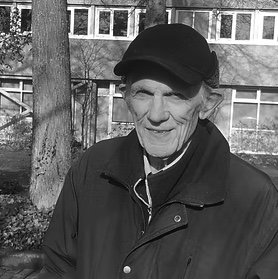
I have been in places where I have seen the fire. When I was at university I had a wonderful experience with God — in worship one day, God's presence was so real to me that a fire was lit within me. Some call it the baptism of the Spirit, whatever you want to call it — I know that I met God in a very special way. May the fourth, 1961, a fire was lit within me. And I have been very careful, for the last sixty-odd years — I am now eighty-seven years of age — to maintain that fire. I know how easy it is for the draughts of this world to dampen the flame, and so I have become passionate about the fire.
I was walking with a pastor friend in Victoria ten years ago, and he said to me, Gareth, I love being with you because you have a fire in your belly. It was meant as a compliment, but my response was this: why doesn't everyone else? Particularly pastors, who spend their time preaching the word of God — how is it that so many of them are burning out, so many of them are frustrated? Where is the fire? I'm not asking for charismatic mania, I'm not asking for that — I'm asking for God's presence among his people. When was the last time you sensed God's presence among your people? And my message today, if you want it very simply, is this: guard the flame. Because God wants to be here among his people.
I've experienced God in many ways — I've experienced the healing touch. I had collapsed once playing racquetball, and they diagnosed a major prolapse. My mother had died from prolapse problems. I was at a pastors' conference a little while later, and I was prayed for. Then, three years later, I was in surgery for a hernia, and the doctor put a stethoscope to my back and examined me. I said, oh, you can probably hear the prolapse. No, he said, your papers say you have a prolapse, but I can't hear it. God had healed me.
A couple of years back I was in Powell River, on the coast of BC — I'd been invited to speak at a Full Gospel Business meeting. I'd never been to Powell River before; from the island, where I live, you have to take a ferry and go overnight, you can't get back the same day. I got to the hotel where I was speaking, and three men greeted me in the lobby of the hotel, welcomed me, and we chatted. Then another man came in — let's call him John. Hi, John, how are things going? Oh, okay — but clearly, things weren't going very well with John. Well, let's pray for you, brother, they said, and typical of Full Gospel Business, come and link arms, who cares who's watching us. So I joined arms with these four strangers as they prayed for John.
As they prayed, it became clear John's problem was his wife — she wasn't very supportive of him going to Full Gospel Business. I don't know if she was a Christian, I have no idea, but she was the problem. As we prayed, a picture came to my mind, and when we finished I turned to John and said, John, I don't know if this means anything to you — I did not say the Lord told me, I will never use those words; I feel the gifts of the Spirit have been so abused that we've washed them out, we've thrown the baby out with the bathwater, we don't want any evidence of those things in our churches. I said, I don't know if it means anything to you, John, but a picture came to my mind. I saw a house in a rainstorm, and the rain was beating down on the house — and then I realized it was beating down inside the house.
This man fell to the floor as though he'd been dropped, and began to weep. Many people stood around watching this strange thing, and then he got up and said, guys, I've got to go home. He turned to me and said, thank you, brother. I said, why? He said, on the way here in the car tonight, I was complaining to the Lord about my wife, and the Lord said to me, you are a leaky roof — when you get yourself in order, then I can do something about your wife. That's called a word of knowledge — the gifts of the Spirit. When was the last time you saw God move? When was the last time you heard God speak? When was the last time you went home and said, God was in that service? God, the flame. God, the presence of God.
Leading People Into the Presence of God
I've got a soapbox — I'm eighty-seven years of age, and I have a webpage, and when I turned eighty or so I said to myself, you're old enough now to have a soapbox. So on my webpage I have a soapbox about karaoke worship, about the lack of power in the churches. Believe me, it is not from a place of criticism, it is from a place of sadness. I want to commend the worship team — I've been so blessed by the worship you've led us in this weekend. But I've been to many worship services that are nothing more than a karaoke service. We sang songs, it was lovely.
I was once invited to a palace to see the king's palace — this is a story, not the truth. I gathered with many others in the courtyard, all excited to see the palace of the king. Then the doors opened, and an usher dressed in the finest livery took us into the great hallway of the castle. On the walls were all the paintings of the heritage of the king, the previous kings and rulers of the country, and we all said, wow. Then our guide took us to the first room. He opened the door, and there were pictures of the king as a baby — there was his cradle, and the toys he used to play with, and we said, oh, that's lovely, it's beautiful.
He took us to the next room, and in this room were the books the king had had as a child, as he grew older, the things he was educated in — there were drawings the king had made, the desk where he had been taught — and we said, wow. He took us into the next room, and there were suits of armor, and swords — this is what the young king used in battle. The guide said to me, you can pick up a sword, and I picked one up — it was so light — and I said, wow, it would be such an honor to serve in the army with the king. He took us to the next room, full of treasures the king had been given by embassies from other countries, and it was, oh, wow. But I moved on, and I was so excited.
There was a door ajar, and I looked inside, and there was a table laid with food, and as I looked I saw the king standing behind the table. He saw me, and he bid me to come in. I was about to go in when the guide closed the door and took us to the next room — full of the great honors the king had received over his lifetime. Everybody was so excited, and then he opened the door, and we were back in the courtyard outside, and everybody said, oh, wasn't that wonderful? But my heart ached, because I had seen the king, and I was not allowed to enter his presence.
I challenge the worship leaders here — and I say this in a gracious way, because you have been a blessing to me this week — your job is to lead us to see the king. That's the purpose of praise and worship. It's not just to sing songs, it's to lead us into the presence of the king. How many times have I listened to songs, and my heart responds, and I want to — and then we're told to sit, and then suddenly somebody gets up and makes announcements, and I say, oh God, please leave me here, I want to be in the presence of the king.
I moved from Kitchener — I passed through the church in Kitchener, and God did wonderful works there. I came out to Victoria, to Victoria Christian and Missionary Alliance Church. The previous pastor had just left suddenly, because of issues with his worship team — there had been some unfaithfulness there, big issues, and an explosion. So when I came to the church I inherited a church of wounded people, concerning worship. All I had was a man at the keyboard, Rob — we didn't have any instruments left, nobody playing guitar, just a keyboard.
I knew how wounded the people were. So I came to the time of the service and said, we're now going to come to corporate worship. Corporate worship is individuals worshiping — you're free to sit, you're free to stand, free to raise your hands, and if you want to dance there's an area at the back where you can dance. If you're interested in people performing — if you want to dance, dance — just remember the man next to you, the woman next to you, needs to be given the space to worship as they want to; do not intrude on their space. But I want you to worship. I said, Rob, you choose the songs, but take us into the throne room of God, and when you bring us there, leave us there to worship him. Take us into the room where the king is inviting us to go, Rob, whatever songs you choose.
I have a lapel mic on, and if you see me do this — I always came down off the platform, I stood on the floor deliberately, so I'd be with the people in worship — I said, Rob, if you see me do this, I want you to go quiet. So Rob started leading, and this wounded, hurting congregation began to sing, those are the days when I love you, Lord, and I lift my voice to worship you — it was very popular. Why did three of you say, I love you, Lord? Because there was silence. A hundred people, silence. I waited, and somebody said, I love you, Lord, because you died on the cross for me. And somebody else said, I love you, Lord, because you've been so faithful. And that was it — everyone else just sat.
The second week I did exactly the same thing — you're free to sit, you're free to stand — but this time there were ten people standing, and half of them had their hands in the air. Oh Lord, you're beautiful. Is he beautiful today? Three of you, what adjective would you use to describe Jesus today? I didn't wait long; the three came quickly. By the end of five weeks, almost everybody was standing, worshiping God — I had to stop them after three, because so many wanted to answer. The people had come into a liberty of worshiping, and people said, God is here. There were always some who sat there, negative, but that church came into healing.
Many years later I was back in Victoria — I'd traveled a lot — and I was speaking at the church. I was sitting in the entranceway, and Rob came in. He was married now; he had moved away many years before. He saw me there and came up to me — Pastor, it's so good to see you, are you speaking this morning? Oh, wonderful. His next words were these: Pastor, thank you so much for teaching me how to worship. You come to church, you hear a message, you come to church to meet friends, you come to church for good community, and all of these are good — but surely, surely, surely, do you not come to church to meet God, and worship him?
Let me repeat again — how blessed I've been by your worship, but I challenge you: take us into the throne room of God. But I add this: you can never take us where you have never been yourself. Worship him. I speak to you from my heart, as one who loves worship — make sure you spend time in the presence of God, so that he can lead us into his presence. I'm not interested in how good you are at the guitar, or the drums, or the keyboard — I'm not at all interested in that. I had one man on the keyboard, but we went into the presence of God. I'm not interested in dark, dimmed lights, or noise so loud you need earplugs — one church gave me earplugs when I entered. That doesn't tell me God is present because you're loud, you're copying the world, you're trying to get me to worship God in the ways of the world. It's never going to happen. That's a golden calf. But please, please, please, take me into his presence.
I was in Fortaleza, Brazil, with the privilege of working with Youth With A Mission and their young leader there, Tony Camara — twenty years of age, not a pastor, he had worked as an engine man on the ship where I served in Africa, a missionary ship. Tony called together all the pastors of the city for a missions and evangelistic crusade in Fortaleza. Fortaleza is near the Amazon, and I saw a Canadian news series on the vice capitals of the world — Fortaleza was named the vice capital for child pornography, with a lot of tourists coming from Europe, the nearest point across the Atlantic. I was there overseeing a YWAM base where they were developing this outreach.
It was three days in a football stadium, and there was a worship team from Belo Horizonte — a brother and sister, a drummer, a couple of guitarists, much like the team here — and they led us in worship in that football stadium. I noticed that every so often the brother and sister would disappear to the back of the stage in the middle of a song, and the drummer would put his sticks down in the middle of a song. When the crusade was over I was at the beach with my host, and this team from Belo Horizonte was swimming there. So I went up to the leader and thanked him for his work, for the blessing he had been to me, and I said I had noticed how often they stopped. He said his team had been told: if ever they sense that our singing has become secular — that the response of the crowd, twenty thousand people, has become secular — turn and seek God's face, because we want to present Jesus here on the platform.
Were they anointed? Let me tell you — we counted, and we stopped counting at thirty-five thousand decisions for Christ. Did you hear that number? Because God made his presence known, not only through the preaching, but through the worship.
A Pastor Set Free to Seek God
Pastor Greg, it's been a joy to meet you, but I want to speak to you. I was a physics teacher for twenty years — I came to Canada to teach physics. In 1977 I was head of department at the Hebrew Academy in Toronto, the only non-Jew on a staff of over forty. I was the highest-paid teacher in Canada, other than principals — the Jewish school paid way above the norm. I was on a big salary, with a big pension, when God suddenly started tugging at my heart for a pastoral call. My district superintendent invited me to become a pastor.
I was with the Christian and Missionary Alliance. I said to Mel, I would consider no greater honor, but there's no way I'd become a pastor unless I knew God had called me. He said, what are you waiting for, a flash of light from heaven? I said, yeah. He said, all I look for is a witness of the brethren. Then I said, Mel, I've got three teenage daughters, I'm earning big money — it's the first time I've earned real money, and I've got no savings, I can't afford to go to seminary. He said, Brother Gareth, I do not want you to go to seminary, I want you as you are. I wrestled with that for the next six months, and many men spoke into my life, miraculously confirming what God was calling me to, without knowing of my conversation with Mel.
After eight months I said to my wife, Anne, I think God is calling me into the pastorate. My godly wife, who had grown up in the home of an itinerant evangelist in Norway — they lived in poverty, a very poor family — though her heart cried out against ever becoming a pastor's wife, replied, if God is calling you, you'd better obey. So I stepped down from a high salary and a big pension to a half salary and a half pension. I came to Kitchener, and I knew nothing about being a pastor — I'd never been to seminary, I was totally ignorant about pastoring.
I went into my building in Kitchener, a little building, thirty by fifty, maximum seating a hundred people. I had forty in my congregation, young people, young adults — my heart. I locked the door behind me, pulled the phone out of the wall, and spent all day Tuesday in God's presence. I read my scriptures, I walked around singing worship, I was on my knees praying, asking God for a message. I did not want to preach a Bible series — I wanted to speak to my young people relevant to their lives, right then. I wanted God's word for that Sunday, and that's where God molded me as a pastor, in that room.
If anyone needed to contact me, they'd call the church, get no answer, they'd call my wife, and my wife would say, I'm sorry, he's not available, talk to one of the three elders. And I met God in that room. On a Sunday I would go to preach — it was a Sunday afternoon service. The elders took the first hour and worshiped, the second hour was given to me, the third hour was a communion time, the fourth hour was fellowship again — a four-hour Sunday afternoon. That's what I came into, and during the first hour George would be at the piano, leading us in worship.
Charlie Neunkirk — Dr. Charles Neunkirk, who now lectures at Regina Bible College — would get up and read a testimony or a scripture. My wife says it happened twelve times in that first year, I say six, somewhere between the truth and the truth: Charlie Neunkirk read out my text for that morning. There is no way in the world he could have known what I was going to preach on. He'd stand up and say, today I feel led to read from the book of Habakkuk, chapter two — can you imagine the first time that happened? What a coincidence, we thought. The second time, my young people went, wow, God's done it again. By the third, fourth, fifth, sixth, seventh, eighth, ninth, tenth, maybe eleventh and twelfth time, we began to realize that God was speaking. Can you imagine how I preached on those Sunday mornings? I knew that I had God's word, because God was confirming it through the words of Charlie Neunkirk. God was present.
And we saw that church grow from forty to a hundred and forty in four years. We started to build a new building — we built a building to seat two hundred and eighty, totally paid for in three years, because God's fire was present in our services. On the strength of that, word spread across Canada, and I was invited to Victoria to pastor a church, and I inherited a wounded church. For the next several years — seven years — I found myself living in a wilderness. The church became healthy, but we never saw any of the miracles I had seen in Kitchener.
Then, in 1990, I was sick — I was not sleeping. My doctor ordered me out of work and put me on a sickness pension. And then I got a phone call from Texas, asking if I'd go on the Anastasis, a ship with Youth With A Mission, a medical mercy ship in Africa. I became their pastor for the next four years, and suddenly God opened up fields for me — I was teaching at pastors' conferences, speaking at some of the biggest churches in Europe and America. God gave me great liberty.
Two years ago I was back home — since Covid I hadn't been traveling as I once had. I'm now eighty, so I could retire, but when a pastor has a flame burning in his belly, he can't retire. So I was with a group of friends praying for the street people in Victoria, and for the government of BC and the federal government, over whether they should allow drugs in hospital for those who'd overdosed. One of my friends said, at this prayer time, when is the government going to realize they have no answer for the street problems? Only Jesus is the answer.
So I went downtown the following Monday. I walked into our place, a nice, clean spot where we can get coffee and food for street people, and across the street were people dressed in leather jackets with tattoos all over them. I asked what was going on. They said, we deal with drug addicts here, this is a warming shelter — it was November, a year and a half ago. I said, well, can I talk to someone? They said, you need to talk to Jimmy. So Jimmy came across to me — a skinhead, whose father had been a leading light in the Hells Angels in Quebec, a very violent man. Jimmy had been in prison fifteen years and so on. I said, Jimmy, I'm a pastor, I'd love to pray for these people, I want to see God move on the streets. Jimmy said to me, Jesus is the answer. And James is here, my friend — he is now part of a ministry team, with Jimmy and Megan, and God is moving on the streets of Victoria. We've seen the flame lit in the streets.
Pastor, spend time with God. Congregation, give your pastor time to spend time with God. Did you hear what I just said? So many pastors burn out, because they're so busy doing work that God never intended them to do. Shortly after this Pentecost experience, as the church was growing, complaints were made by the widows that some of them were not receiving a fair portion of the food. So the apostles said to the rest, find for yourselves seven men of good repute, filled with the Spirit — choose them, and set them over this task, while we dedicate ourselves to what? To prayer and the preaching of the word. I want to see your pastor set free to dedicate himself to prayer and the preaching of the word, to seek God's presence, so that he can come here and present to you what God is saying, so that you will see God's flame start operating in the church.
Let me give you one more story. Alistair Smith was an officer with the Salvation Army in Wales, and nobody had ever heard of him. I was doing my university degree in physics, and I said to my fiancee, I can't see you until next weekend, because I've got all my exams this week. On the Thursday she telephoned me and said, Gareth, I don't want to disturb you — what are you studying tonight? — is there any possibility of you coming to hear a man called Alistair Smith? He had come to the local Salvation Army, but it was too small for the meetings, so he went to an apostolic church, which was too small for him, so he moved to the largest church in the city.
The next day was my practical exam for my honors degree, and you can't really study for that, so I decided to go to the meeting. I sat in a congregation of maybe a thousand people, listening to this unknown man speaking. After an hour and a quarter he glanced at his watch and said, oh my goodness, is that the time? I'm so sorry, I've overspent my time, I need to stop right now — because he knew the last bus left at nine o'clock, and we didn't have a lot of cars in those days, and a lot of people needed to catch that last bus home. So I need to stop right now. And nobody moved. Then a man got up and said, Major Smith, you cannot leave us here. And Major Smith said, look, I've got about twenty minutes more I need — if you need to leave, I understand, it's my fault, I've gone too long, I'm sorry. He went on, and not one person left the building. Many missed their buses home. Why? Because God was present.
I've spoken enough — I could go on like this all morning, but I've spoken enough. I charge you, King's Church, to seek the presence of God, seek the fire. I'm not talking about charismatic mania — please, understand me — I'm talking about the presence of God, that convicts, that heals, that charges, that motivates. Seek the presence of God. Pastors, seek the presence of God. Worship leaders, seek to lead us into the presence of God. How do we do that? Tarry in Jerusalem until you receive power.
Prayer is the fundamental root of this. I've said to so many young people — I've worked a lot with young people who are seeking God — go for a walk alone with God. When was the last time you went for a walk with God? I live near the coast in Wales, and I tell my young people, there are huge sand dunes, many miles of them — go for a walk alone with God, just go and spend time with him, just talk to him. So many who came back said they met God on the sand dunes.
My last story — I said my last story, I might think of another one, who knows. You've probably gathered by now that I'm preaching because I've got a fire in my belly. I was leading a youth work in Wales, and God was blessing it, it was growing quite large, and a woman came up to me in church one day and said, Gareth, I didn't see you at the prayer meeting on Tuesday. And in my foolish, wisecracking way I said, I didn't see you at the barbecue on Saturday, Mrs. Jones — a barbecue with the young people on the sand dunes. I didn't see any of you young people at the prayer meeting, Gareth, she said. I didn't see you at the barbecue. It was a bit foolish of me, but I was a bit convicted by that, so I said to my young people, I want to see you at the prayer meeting on Tuesday.
So about twenty of them turned up for the prayer meeting on the Tuesday. The prayer meeting was made up of people sitting in a large square around a heater, in the fall. And we had a standard prayer meeting — one of the elders stood up and said, O thou that dwellest in the seventh heaven, we come unto thee this morning. What were my young people thinking about? And when I say young people, I'm talking about twenty-year-olds. John was a very sincere man, but it was the same prayer I had heard last week and the week before, and I was waiting for him to finish.
I felt a tap on my knee — it was Phil, one of the young men. He said, Gareth, can you come with me and pray for Hazel, one of the girls present? Now, the correct etiquette would have been to say, Phil, please wait until John has finished, but I've always been a little outside the box, so we went over to Hazel while John was still praying, and I said, Hazel, can Philip pray for you? Yes, please. So Philip and I knelt there, and he prayed, and she started crying. She said, how did you know, how did you know? And Philip said, God just told me. God had told him what Hazel needed, and he prayed exactly what she needed to hear.
So when I sat back down, and John finished, I turned to the pastor and said, Pastor Bob, I want to tell you what just happened. And the pastor was a wise man, he said, please — if any of you feel God is leading, go ahead. And our prayer meeting was revolutionized. Mrs. Jones left after three weeks — she was a lovely old lady, but this was so unusual for her, with the young people praying in different groups. And suddenly our prayer meeting became a living prayer meeting — the most exciting meeting of the week was our prayer meeting. How many churches can boast that? I know churches that don't even have a prayer meeting.
I want to see God move among his people, and I charge you, people of King's Church — this represents the presence of Jesus.
Pastor Greg has asked me to pray for you. Father, first I want to thank you — thank you, Father, for the privilege of being here, for the burden you have placed on my heart, for the path you have led me along. Thank you, Lord, for being all that you are to me. Like Moses, I cry out, oh God, show me your glory. I look back, Lord, on the path you've led me, and I celebrate your presence. I worship you, Lord Jesus. Thank you for the death you died on the cross, thank you for ever choosing me. Keep me penitent, Lord, keep me close to the cross, I pray. Keep us close to the cross, Father, that you should love us as you do, and be the God you are, is darkness to our intellects, but sunshine to our hearts.
So, Father, I pray for Greg, Pastor Greg, and for his elders. I pray for the worship team and all others, Lord, who hold office in this church. I pray, Lord, that they might hunger for you, as Moses cried out, and I cry out — show me your glory. You know their names, you know their characters. Lord, transform them by your purging fire, until you are pleased to make your presence known to them. Bless this church, Lord — may its influence stretch far beyond the walls of this building, may people see this church and come into it, and leave saying, God was surely there. Lord, make your presence known among us, I pray, for your glory's sake. Amen.
Used by permission of Gareth Evans. Transcribed from his audio at SermonIndex.