Book
The First Letter to Timothy
Pros Timotheon A, “First to Timothy”
Part of The Bible·Next in the series: The Second Letter to Timothy
8 chapters · 26 min read · Moderate
Free to read · No account needed
Listen to the whole book 34 min listenAbout this book
Guidance for Timothy on sound teaching, worship and leading a church.
- Author
- Paul
- Date
- c. AD 63
Here is a saying you can rely on, which deserves to be fully accepted: Christ Jesus came into the world to save sinners, and I am the worst of them.Paul’s letter to Timothy, his younger colleague, left behind in Ephesus to face teachers spreading “a different doctrine”: a charge to guard the gospel and to show how people ought to live in God’s household, “the church of the living God, the pillar and foundation of the truth.” Paul tells of the mercy shown to him, the worst of sinners; asks for prayers for everyone, because God wants everyone to be saved; sets out what overseers and deacons must be; breaks into a hymn to Christ; urges Timothy to train himself in godliness and let no one look down on him for his youth; gives rules for widows, elders and slaves; and warns that the love of money is a root of all kinds of evil. In the Open Word Bible, a new translation from the Greek given freely to the public domain, with an introduction to the letter’s shape and meaning and a conclusion on where to read next.
From Paul, an apostle of Christ Jesus by the command of God our Savior and of Christ Jesus our hope, to Timothy, my true son in the faith. Grace, mercy and peace to you from God the Father and from Christ Jesus our Lord.
Contents
Sermons on this book
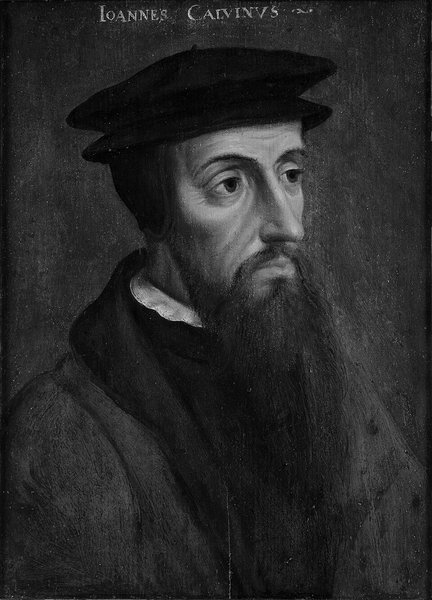
God Will Have All Men to Be Saved
Calvin reads Paul as speaking of “all sorts of men, and of all people”: the wall between Jew and Gentile is down, and the gospel is offered to every nation and condition. He defends election against those who abuse the text, yet presses his hearers to pray for all and to draw in those who seem “afar off.” The Mystery of Godliness
“God was manifest in the flesh.” Calvin marvels that the Lord of glory joined himself to our wretchedness, and grieves that scarcely one in ten could explain it as well as a child. Christ must be true God to save us and true man to be our brother: two natures in one person, as two eyes join in a single gaze.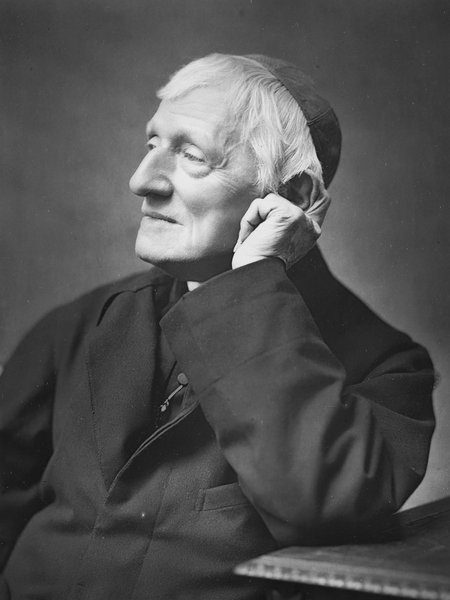
Temporal Advantages
Newman argues from St Paul’s counsel of contentment that wealth, rank, power and even great abilities are not true goods for fallen people. Such things do not bring the happiness they promise, and they endanger the soul by crowding out devotion, breeding love of the world, unbelief and self-confidence, as Hezekiah, David and Solomon show. He ends that such gifts should be used for God’s glory but never sought, since every soul is a candidate for immortality.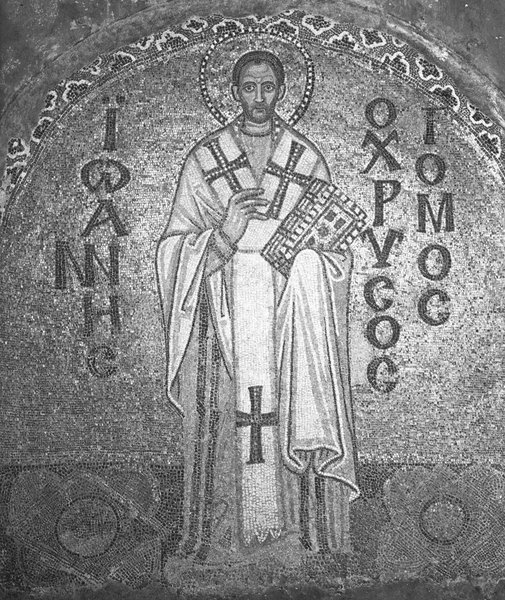
Homily II on the Statues
“The present season is one for tears, and not for words.” After seven days of silence in an emptied, terrified Antioch, Chrysostom mourns the city whose crowds have fled, then turns to Paul’s charge to the rich: wealth is a runaway servant that cannot save them now, while humility, almsgiving and trust in God can.Questions and Answers
What is the First Letter to Timothy?
A letter in the New Testament from the apostle Paul to Timothy, his trusted co-worker, whom he had left in Ephesus to stop false teachers and set the church in order (1:3). With 2 Timothy and Titus it is one of the three Pastoral Letters, so called because they concern the care of churches and their leaders. It covers sound teaching, prayer and worship, the qualities of overseers and deacons, the care of widows and elders, and the dangers of wealth.
Who wrote 1 Timothy, and when?
The letter names Paul as its author, and the church received it as his from the second century. On that view it was written in the early or middle 60s AD, between an imprisonment in Rome that Paul was released from, as Eusebius records, and a second one. Since the nineteenth century many scholars have argued that the Pastoral Letters were written after Paul’s death by a follower, because of their vocabulary, church order and travels that are hard to fit into Acts; many others continue to defend Paul’s authorship.
Who was Timothy?
A believer from Lystra, in what is now central Turkey, son of a Jewish mother and a Greek father (Acts 16:1), whose faith first lived in his grandmother Lois and his mother Eunice (2 Timothy 1:5). Paul took him as a companion on his second journey, sent him to churches in Thessalonica, Corinth and Philippi, and named him as co-sender of six letters. Paul calls him “my true son in the faith” (1:2). Tradition remembers him as the first bishop of Ephesus.
What does 1 Timothy 2:12 mean about women teaching?
The verse reads, “I do not allow a woman to teach or to exercise authority over a man; she is to remain quiet.” Christians understand it differently. Many churches take it as a lasting rule reserving the office of teaching and governing the church to men, grounded in the reasons Paul gives from Genesis (2:13–14). Others read it as Paul’s answer to a particular problem in Ephesus, where false teachers had influenced some women, noting that the rare Greek verb may mean to domineer and that women such as Priscilla and Phoebe taught and served in Paul’s churches. All agree that the passage begins by saying that a woman should learn.
Does the Bible say money is the root of all evil?
Not quite. 1 Timothy 6:10 says, “the love of money is a root of all kinds of evil.” It is the love of money, not money itself, and the Greek has no article before “root”: every kind of evil can grow from it. The same chapter calls godliness with contentment great gain, and tells the rich not to trust in wealth but to be generous, so that they may “take hold of the life that is truly life” (6:19).
Which translation of the Bible is this?
The Open Word Bible, a new translation made directly from the Greek and dedicated to the public domain, printed here at its Balanced level, which aims to be accurate and to read naturally aloud. The reasoning behind each of its sentences, with the Greek beside it, is published at openwordbible.org. The introduction and conclusion were written for this edition.
More like this

Taking books where there’s no signal? See Ochorus for missionaries or chaplains
About this text
- Source
- Scripture from the Open Word Bible (https://openwordbible.org), English, Balanced level, commit 64b913d623d6: dedicated to the public domain under CC0 1.0. The introduction and conclusion are by Ochorus. openwordbible.org
- Last updated
- November 13, 2026
- Rights
- Terms of Use
Cite this book
Copy a citation in the style you need.
- MLA
- Open Word Bible. The First Letter to Timothy. Ochorus, https://ochorus.com/books/1-timothy/.
- Chicago
- Open Word Bible. The First Letter to Timothy. Ochorus. https://ochorus.com/books/1-timothy/.
- Chicago footnote
- Open Word Bible, The First Letter to Timothy (Ochorus), https://ochorus.com/books/1-timothy/.
- BibTeX
- @book{openwordbiblefirst, author = {{Open Word Bible}}, title = {{The First Letter to Timothy}}, publisher = {Ochorus}, url = {https://ochorus.com/books/1-timothy/} }