Book
1 Kings
Melakhim Alef, “Kings”
Part of The Bible·Next in the series: 2 Kings
24 chapters · 2 hr 16 min read · Accessible
Free to read · No account needed
Listen to the whole book 2 hr 55 min listenAbout this book
Solomon’s glory, the kingdom divided, and Elijah’s stand against Baal.
- Author
- Author unknown
- Date
- Completed in the exile, 6th century BC
Elijah stepped up before all the people and said, “How long will you go on hobbling between two choices? If the LORD is God, follow him. If it is Baal, follow Baal.” But the people said nothing in reply.The first half of the book of Kings, which opens with King David too old to keep warm and closes with Ahab’s son bowing to Baal. Solomon asks for a heart that listens and is given wisdom beyond all the kings of the earth; he builds the temple, the cloud of glory fills it, and he prays, “will God really live on earth?” Then his heart turns, the kingdom tears in two, and Jeroboam sets up golden calves. And into the darkness of Ahab and Jezebel walks Elijah: ravens by the brook, the widow’s jar of flour, fire on Mount Carmel, and a faint sound, thin as silence, on the mountain of God. In the Open Word Bible, a new translation from the Hebrew given freely to the public domain, with an introduction to the book’s shape and meaning and a conclusion on where to read next.
King David was now old, well on in years. They covered him with clothes, but he could not keep warm. So his officials said to him, “Let a young virgin be found for my lord the king, to wait on the king and look after
Contents
Sermons on this book
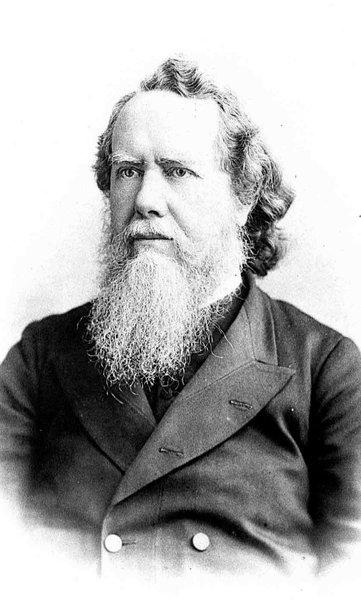
Coming to the King
The Queen of Sheba came to Solomon with hard questions and went home with more than she asked. Hudson Taylor reads her journey as a pattern for coming to Christ, the greater than Solomon — the distance, the hard questions, the open communing, and the royal bounty given to everyone who comes.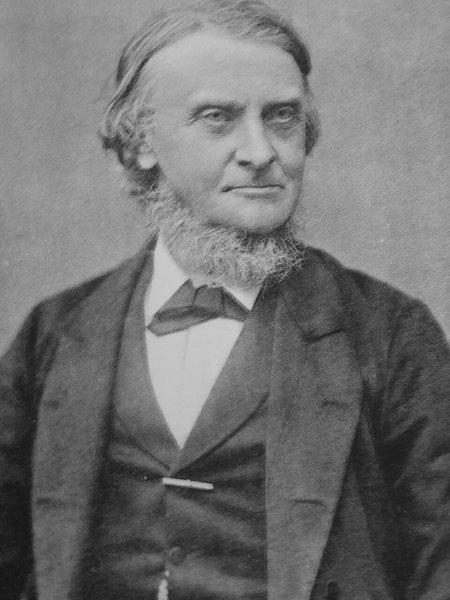
Elijah's Weakness, and Its Cure
Maclaren follows Elijah from Carmel's triumph to the juniper tree, where the overstrained prophet prays petulantly for death. God answers with food and rest, then meets him at Horeb, not in wind, earthquake or fire but in a still small voice that teaches the might of gentleness. Finally God sends him back to work, names his successor, and reveals seven thousand faithful, reminding him that "God has more servants than we know of."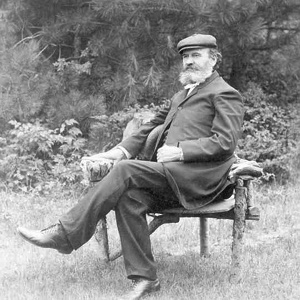
The Power of Stillness
From Elijah's 'still small voice,' Simpson argues that God is met in quietness rather than tumult: the sweetest blessing Christ brings is the Sabbath-rest of the soul. Practical counsel follows — stilled prayer, restrained speech, a hushed spirit under pressure and provocation — so that the life itself comes to speak with the sound of gentle stillness.Questions and Answers
What is the book of 1 Kings?
The first half of the book of Kings in the Old Testament, which tells the history of Israel’s kings from the death of David, around 970 BC, to the middle of the ninth century BC. In Hebrew Kings is one book, called Melakhim, “Kings”; the ancient Greek translation divided it in two. Its twenty-two chapters fall into three parts: the reign of Solomon and the building of the temple (1–11), the division of the kingdom into Israel in the north and Judah in the south (12–16), and the ministry of the prophet Elijah in the days of King Ahab (17–22).
Who wrote 1 and 2 Kings, and when?
The book does not name its author. Jewish tradition, recorded in the Talmud, credited Kings to the prophet Jeremiah. Many scholars see it as the closing part of a history running from Deuteronomy through Kings, shaped by Deuteronomy’s teaching and given its final form during the exile in Babylon, since 2 Kings ends with an event of about 561 BC. The writer names older sources he drew on, such as “the Book of the Acts of Solomon” and the histories of the kings of Israel and of Judah, which are now lost.
Why did Israel split into two kingdoms?
1 Kings gives two reasons, one human and one divine. When Solomon’s son Rehoboam refused to lighten the heavy labour his father had laid on the people, the northern tribes rejected him and made Jeroboam their king (chapter 12). But the book traces the break back to Solomon’s own heart: in old age his foreign wives turned him to other gods, and the LORD told him the kingdom would be torn from his son, leaving one tribe for the sake of David and Jerusalem (11:4–13). From then on there were two kingdoms: Israel in the north and Judah, ruled by David’s line, in the south.
Who was Elijah?
A prophet, “Elijah the Tishbite”, from Gilead east of the Jordan, who opposed King Ahab and Queen Jezebel when they made the worship of Baal the religion of the court in the ninth century BC. His name means “My God is the LORD”. In 1 Kings he announces a drought, is fed by ravens and by a widow at Zarephath, raises her son, calls down fire on Mount Carmel, flees to Horeb, and confronts Ahab over the murder of Naboth. In 2 Kings he is taken up to heaven in a whirlwind. The New Testament sees his spirit in John the Baptist, shows him with Jesus at the transfiguration, and holds him up as an example of prayer (James 5:17–18).
What is the “still small voice” in 1 Kings 19?
The words older English Bibles use for the way God came to Elijah at Horeb, after a wind, an earthquake and a fire in which the LORD was not present (19:11–12). The Hebrew means something like “a sound of thin silence”, and this translation renders it “a faint sound, thin as silence”. The scene comes just after Elijah’s triumph on Carmel, when he has fled for his life and asked to die. God answers his despair with food, rest, quiet, a new task and the news that seven thousand in Israel have stayed faithful.
Which translation of the Bible is this?
The Open Word Bible, a new translation made directly from the Hebrew and dedicated to the public domain, printed here at its Balanced level, which aims to be accurate and to read naturally aloud. “LORD” in capitals stands for God’s personal name. The reasoning behind each of its sentences, with the Hebrew beside it, is published at openwordbible.org. The introduction and conclusion were written for this edition.
More like this

Taking books where there’s no signal? See Ochorus for missionaries or chaplains
About this text
- Source
- Scripture from the Open Word Bible (https://openwordbible.org), English, Balanced level, commit 64b913d623d6: dedicated to the public domain under CC0 1.0. The introduction and conclusion are by Ochorus. openwordbible.org
- Last updated
- November 13, 2026
- Rights
- Terms of Use
Cite this book
Copy a citation in the style you need.
- MLA
- Open Word Bible. 1 Kings. Ochorus, https://ochorus.com/books/1-kings/.
- Chicago
- Open Word Bible. 1 Kings. Ochorus. https://ochorus.com/books/1-kings/.
- Chicago footnote
- Open Word Bible, 1 Kings (Ochorus), https://ochorus.com/books/1-kings/.
- BibTeX
- @book{openwordbiblekings, author = {{Open Word Bible}}, title = {{1 Kings}}, publisher = {Ochorus}, url = {https://ochorus.com/books/1-kings/} }