New to A. B. Simpson? Start with
The Fourfold Gospel
All works · 36 hr 11 min read
Biography
- 1843 Born
- 1865 Hamilton
- 1881 Healed
- 1887 Alliance
- 1919 Died
Once it was the blessing, now it is the Lord; Once it was the feeling, now it is His Word; Once His gift I wanted, now the Giver own; Once I sought for healing, now Himself alone.
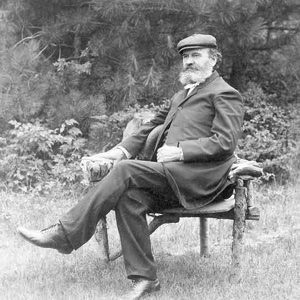
Albert Benjamin Simpson had, by his mid-thirties, everything a minister of his era could want: a large salary, a fashionable New York pulpit, and a reputation as one of the ablest preachers on the continent. He laid it all down — the salary, the pulpit, and eventually his denomination’s security — to preach Jesus to the immigrants and working poor no one else wanted in their pews. Out of that surrender came a worldwide missionary movement, the first Bible college in North America, more than a hundred books, and a simple message he never tired of repeating: not the blessing, not the healing, not even the deeper life, but Christ Himself.
A Boy on Prince Edward Island
Simpson was born on 15 December 1843 at Bayview, Prince Edward Island, Canada, into a devout Scottish Presbyterian home where the Sabbath was kept strictly and the catechism learned early. The family soon moved to a farm in western Ontario. As a teenager, studying too hard for the ministry and haunted by a sense that he did not yet know the God he meant to serve, Albert broke down in body and soul. Light came through an old Puritan book, Walter Marshall’s Gospel Mystery of Sanctification, which told him that the first good news of the gospel is that a sinner may come to Christ just as he is. He came — at about fifteen years of age — and never afterwards doubted that Christ had received him.
The Young Presbyterian
He earned his own way to Knox College, Toronto, teaching school and winning scholarships, and while still a student wrote out a solemn covenant of self-dedication — pages long, signed and dated — giving himself to God for whatever service, suffering, or sacrifice might be asked. The document, found among his papers, reads like a prophecy of the life that followed. In 1865, only twenty-one, he was called to Knox Church, Hamilton — one of the largest congregations in Canada — where in eight years some seven hundred and fifty members were added. In 1873 he accepted the pulpit of Chestnut Street Presbyterian Church in Louisville, Kentucky. There, in a city still wounded and divided by the Civil War, he persuaded rival congregations into united evangelistic campaigns and learned to preach for a verdict. And there a deeper crisis found him: outwardly successful and inwardly exhausted by his own striving, he read of the higher Christian life and yielded himself wholly to Christ — discovering, as he later put it, that sanctification is not an attainment to be struggled toward but an indwelling Person to be received.
New York and the Neglected Masses
In 1879 Simpson came to Thirteenth Street Presbyterian Church in New York City. He was soon burdened beyond bearing by the crowds outside his church’s doors — Italian immigrants, dock workers, the unchurched poor — who could never feel at home among rented pews and formal society. When it became plain that his congregation did not share the burden, he resigned, in November 1881, with no salary, no society behind him, and a wife and six children to feed. Margaret Simpson later confessed she thought the decision madness; she came to share the work with her whole heart. Beginning with a handful of followers in a rented hall, he formed an independent Gospel Tabernacle where every seat was free and every class of person welcome.
Healed and Wholly His
Behind that resignation lay another transaction. Simpson had been sickly for years — a heart condition so serious that physicians gave him little hope of continued labour. In the summer of 1881, at Old Orchard Beach in Maine, he heard the scriptures opened on Christ’s ministry to the body, and alone among the pines he made a solemn covenant: he took the Lord Jesus as his healer, promised to use whatever strength was given for God alone, and asked never to be released from the bargain. The chronic trouble lifted; the man whom doctors had written off carried one of the heaviest workloads in American church history for nearly forty more years. From this grew his best-known formulation, the Fourfold Gospel: Jesus Christ our Saviour, Sanctifier, Healer, and Coming King.
The Alliance
Simpson could never see a need without founding something to meet it. In 1883 he opened the Missionary Training Institute — the first Bible college in North America, later settled at Nyack on the Hudson — to prepare ordinary, consecrated men and women for the fields no one else would fill: not scholars only, but clerks and carpenters and widows who had heard the call of God. The same year he sent his first missionary party toward the Congo. In 1887, at Old Orchard, he formed two societies, one for the deeper spiritual life at home and one for the evangelization of the world, which united in 1897 as the Christian and Missionary Alliance. He meant it as a fellowship across the churches, not a new denomination; it became, in time, both a denomination and a missionary force on every continent, from China and India to South America and the Congo basin. The unreached world lay on him like a private grief. His missionary hymn mourns the “hundred thousand souls a day” passing into eternity without the gospel, and answers with Christ’s own commission: all power is given unto Me — go.
Pen and Hymnbook
Out of the same tireless heart flowed the writing: weekly editorials in the magazine he founded (today’s Alliance Life), devotional classics such as Days of Heaven Upon Earth, A Larger Christian Life, and The Fourfold Gospel, Christ-centred expositions spanning the whole Bible, and hymns still sung wherever the deeper life is prized. The best window into the man is the testimony he gave at Bethshan, London, in 1885, published ever since as Himself — the story of how he stopped seeking experiences and found everything in the Person of Jesus. He set it to verse:
Once it was the blessing, now it is the Lord;
— A. B. Simpson, “Himself”
Once it was the feeling, now it is His Word;
Once His gift I wanted, now the Giver own;
Once I sought for healing, now Himself alone.
Rest at Nyack
Simpson preached, travelled, wrote, and administered at full stretch into his seventies, and when his strength finally failed he grieved most that he could no longer carry the missionary burden in prayer as before. He died at Nyack, New York, on 29 October 1919, and was buried on the hillside campus of the institute he founded. The societies he began now number their churches in the thousands and their missionaries around the globe; but his truest monument is smaller and nearer: the reader who, somewhere in his pages, stops chasing the blessing and finds the Blesser — Himself.
Books by A. B. Simpson (5)

Sermons by A. B. Simpson (33)
Books about A. B. Simpson (1)

Articles about A. B. Simpson (4)
Questions and Answers
Where did A. B. Simpson come from?
Albert Benjamin Simpson was born on 15 December 1843 at Bayview, Prince Edward Island, Canada, into a devout Scottish Presbyterian home where the Sabbath was kept strictly and the catechism learned early; the family later moved to a farm in western Ontario. As a teenager, studying too hard for the ministry and haunted by a sense that he did not yet know the God he meant to serve, he broke down in body and soul — and light came through an old Puritan book, Walter Marshall's "The Gospel Mystery of Sanctification," which told him a sinner may come to Christ just as he is.
What was his early ministry as a Presbyterian?
He earned his own way through Knox College, Toronto, and while still a student wrote out a solemn covenant of self-dedication, giving himself to God for whatever service, suffering or sacrifice might be asked. In 1865, only twenty-one, he was called to Knox Church, Hamilton — one of the largest congregations in Canada — where in eight years some seven hundred and fifty members were added. In 1873 he moved to Chestnut Street Presbyterian Church in Louisville, Kentucky, where he persuaded rival congregations into united evangelistic campaigns and learned to preach for a verdict.
Why did he leave his fashionable New York pulpit?
In 1879 he came to Thirteenth Street Presbyterian Church in New York City, and was soon burdened beyond bearing by the crowds outside his doors — Italian immigrants, dock workers, the unchurched poor — who could never feel at home among rented pews and formal society. When it became plain that his congregation did not share the burden, he resigned in November 1881 with no salary and no society behind him, a wife and six children to feed. Margaret Simpson thought the decision madness; she came to share the work with her whole heart.
What was his experience of healing?
Simpson had been sickly for years, with a heart condition so serious that physicians gave him little hope of continued labour. In the summer of 1881, at Old Orchard Beach in Maine, he heard the scriptures opened on Christ's ministry to the body, and alone among the pines made a solemn covenant: he took the Lord Jesus as his healer, promised to use whatever strength was given for God alone, and asked never to be released from the bargain. The chronic trouble lifted, and the man doctors had written off carried one of the heaviest workloads in American church history for nearly forty more years.
What was the Fourfold Gospel?
It was Simpson's best-known formulation, presenting Jesus Christ as Saviour, Sanctifier, Healer and Coming King — four facets of one Person rather than four separate blessings. At his Gospel Tabernacle, Friday afternoons were given to a meeting for healing, but those who came looking for a wonder-worker were gently redirected: Simpson would pray with the sick only after pointing them past the gift to the Giver, and the meetings were, before anything else, hours of worship and waiting on God. The blessing was never allowed to eclipse the Blesser.
What did the Christian and Missionary Alliance grow out of?
In 1887, at Old Orchard, Simpson formed two societies — one for the deeper spiritual life at home and one for the evangelization of the world — which united in 1897 as the Christian and Missionary Alliance. He meant it as a fellowship across the churches, not a new denomination, but it became in time both a denomination and a missionary force on every continent, from China and India to South America and the Congo basin. The unreached world lay on him like a private grief; his missionary hymn mourns the "hundred thousand souls a day" passing into eternity without the gospel.
What did he found to train missionaries?
In 1883 he opened the Missionary Training Institute — the first Bible college in North America, later settled at Nyack on the Hudson — to prepare ordinary, consecrated men and women for the fields no one else would fill: not scholars only, but clerks and carpenters and widows who had heard the call of God. That same year he sent his first missionary party toward the Congo. He could never see a need without founding something to meet it, and the institute became the seedbed for a movement that now numbers its churches in the thousands.
What is the meaning of his hymn "Himself"?
The best window into Simpson is the testimony he gave at Bethshan, London, in 1885, published ever since as "Himself" — the story of how he stopped seeking experiences and found everything in the Person of Jesus. He set it to verse: "Once it was the blessing, now it is the Lord; / Once it was the feeling, now it is His Word; / Once His gift I wanted, now the Giver own; / Once I sought for healing, now Himself alone." It distils his whole message: not the blessing, not the healing, not even the deeper life, but Christ Himself.
How did he sustain his enormous output?
Those who lived with Simpson said the engine of it all was the early morning, hours kept jealously for the Bible and unhurried communion with God. He wrote that the secret of the deeper life was "a little sanctuary within," carried through the busiest day, where the soul steals away to Christ between duties. Out of that hidden life flowed weekly editorials, devotional classics such as "Days of Heaven Upon Earth" and "A Larger Christian Life," Christ-centred expositions spanning the whole Bible, and hymns still sung wherever the deeper life is prized.
How did he die, and what did he leave?
Simpson preached, travelled, wrote and administered at full stretch into his seventies, and when his strength finally failed he grieved most that he could no longer carry the missionary burden in prayer as before. He died at Nyack, New York, on 29 October 1919, and was buried on the hillside campus of the institute he founded. The societies he began now number their churches in the thousands and their missionaries around the globe, but his truest monument is the reader who, somewhere in his pages, stops chasing the blessing and finds the Blesser — Himself.