
- 7 chapters
- 2 hr 58 min read
- Accessible Reading difficulty
Free to read·No account needed
The Scriptural Foundation
Taking books where there’s no signal? See Ochorus for missionaries or chaplains
About this book
A. B. Simpson sets out the scriptural foundation for divine healing, answers popular objections, and gives practical directions to those who would trust Christ as Healer. The book closes with testimony, including Simpson’s own account of the healing that transformed his life and ministry.
Man has a two-fold nature. He is both a material and a spiritual being. And both natures have been equally affected by the fall. His body is exposed to disease; his soul is corrupted by
Contents
Questions and Answers
What is The Gospel of Healing about?
It is A. B. Simpson's careful statement of the scriptural foundation for divine healing. He sets out the biblical basis for trusting Christ as Healer, answers popular objections, and gives practical direction to those who would seek healing by faith. The book closes with testimony, including Simpson's own account of the healing that changed the course of his life and ministry.
Who was A. B. Simpson?
Albert Benjamin Simpson was a Canadian-born preacher of the later nineteenth century, founder of the Christian and Missionary Alliance and a leading voice for the deeper Christian life. Divine healing was one of the four folds of his 'fourfold gospel' — Christ as Saviour, Sanctifier, Healer, and Coming King — and this book is his fullest treatment of that theme.
What does Simpson teach about divine healing?
That healing of the body is part of the gospel provision — that Christ, who bore our sicknesses as well as our sins, still heals in answer to faith. Simpson roots healing in Christ's atoning work and in the promises of Scripture, presenting it not as a novelty but as a neglected part of the whole gospel, to be received by faith and by trusting Christ himself as Healer.
What personal experience lies behind the book?
Simpson's own healing. He had been broken in health, and came to a settled conviction from Scripture that Christ was his Healer; trusting him, he experienced a restoration that transformed his life and enabled his tireless later ministry. That firsthand experience gives the book its earnestness — he writes not as a theorist but as one who had proved the truth he teaches.
What objections does Simpson answer?
The common ones: that the age of miracles has passed, that sickness may be God's will for the believer, that healing belongs only to the atonement's spiritual benefits, and that trusting God for healing means despising medicine or presuming on God. Simpson takes these up in turn, seeking to answer them from Scripture and to guide readers into a sober, faith-filled trust in Christ as Healer.
Is the book reckless about medicine or presumption?
Simpson writes soberly rather than sensationally, tying healing to faith in Christ and submission to God's will, not to mere claiming or the despising of all means. He gives practical direction meant to guard against presumption, urging that healing be sought in dependence on Christ and in a right spiritual condition, as part of a whole life of trust.
Who should read this book?
Anyone wanting to understand the biblical case for divine healing as Simpson and the deeper-life movement taught it, and any believer weighing what it means to trust Christ as Healer. It remains a foundational text for that tradition, valued both for its scriptural argument and for the personal testimony of healing that stands behind it.
Where should a reader begin?
At the beginning, with Simpson's scriptural foundation for healing, before the answers to objections and the practical directions, ending with the testimonies. The book is ordered as an argument leading to application, so it rewards being read in sequence, letting the biblical case be laid before the practical counsel and the accounts of healing.
Read in your language
More like this


Public domain. Source text from the original edition.
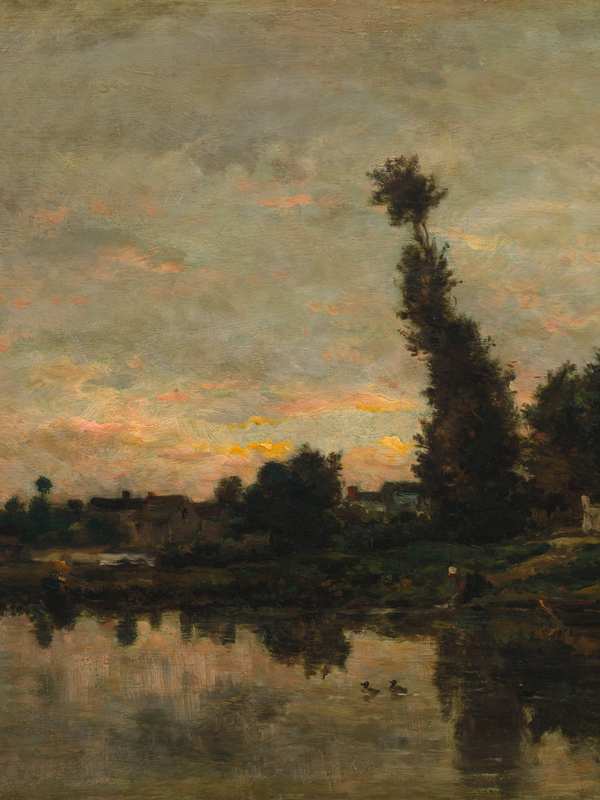
Charles François Daubigny, “Sunset on the River Oise” (1866). The Cleveland Museum of Art, CC0.
Cite this book
Copy a citation in the style you need.
- MLA
- Simpson, A. B. The Gospel of Healing. 1888. Ochorus, https://ochorus.com/books/the-gospel-of-healing/.
- Chicago
- Simpson, A. B. The Gospel of Healing. 1888. Reprint, Ochorus. https://ochorus.com/books/the-gospel-of-healing/.
- Chicago footnote
- A. B. Simpson, The Gospel of Healing (1888; repr., Ochorus), https://ochorus.com/books/the-gospel-of-healing/.
- BibTeX
- @book{simpson1888gospel, author = {Simpson, A. B.}, title = {{The Gospel of Healing}}, year = {1888}, publisher = {Ochorus}, url = {https://ochorus.com/books/the-gospel-of-healing/} }