New to George Müller? Start with
Answers to Prayer
All works · 16 hr 30 min read
Biography
- 1805 Born
- 1836 Orphan houses
- 1875 World tours
- 1898 Died
The only way to learn strong faith is to endure great trials. I have learned my faith by standing firm amid severe testings.
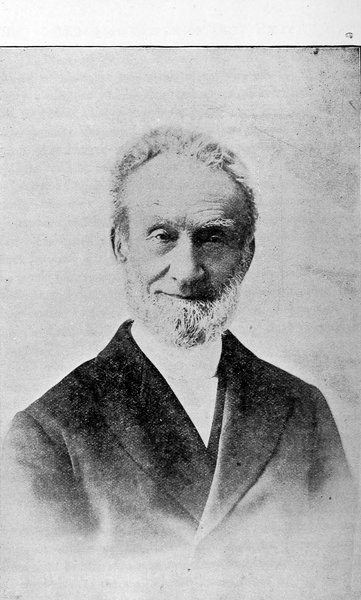
George Müller has been remembered, in the hundred and more years since his death, chiefly as the man who fed thousands of orphans without ever once asking a human being for money. But the more remarkable thing is why he did it. He wanted to leave behind him a visible answer to a question that unsettles every anxious heart: does God still hear prayer? He staked his whole life, and the lives of ten thousand children, on the belief that He does — and he kept the ledgers to prove it.
He was born on 27 September 1805 at Kroppenstedt, near Halberstadt, in the Kingdom of Prussia, the son of a tax collector. It would be pleasant to say he was a devout child. He was not. By his own unflinching account he was a liar and a thief almost as soon as he could talk, stealing even from the government money his father was charged to collect. He drank, he gambled, he squandered whatever he could lay hands on, and he was clever enough to hide most of it. At sixteen, run out of money at an inn, he was arrested for fraud and spent several weeks in prison at Wolfenbüttel before his father paid to have him released — and then whipped him, and sent him back to his studies.
The Prayer Meeting at Halle
Destined by his father for the comfortable living of a Lutheran clergyman, Müller entered the University of Halle to read divinity with no more religion in him than ambition and appetite. Then, one Saturday evening in mid-November of 1825, a friend named Beta mentioned that he was going to a small meeting in a private house where people read the Bible, sang, and prayed. Müller, curious and restless, asked to come along. What he found in that plain room undid him. A man knelt down and simply prayed. "I had never seen any one on his knees," Müller later wrote, and he had never himself knelt to pray. He went home that night a changed man, though he could scarcely have explained how. He was twenty years old, and from that evening the whole current of his life reversed.
The change was not instant perfection but a settled new direction. He began to read the Scriptures with hunger, gave up his old companions, and felt a growing pull toward missionary work. In 1828 he was accepted by the London Society for Promoting Christianity Amongst the Jews, and in March 1829 he sailed for England. Within two years he had parted from the society — not in bitterness, but because he could not in conscience keep to rules that seemed to him to bind the freedom of the Spirit. In 1830 he became the minister of a small chapel at Teignmouth in Devon, at a salary of fifty-five pounds a year.
Learning to Live by Faith
At Teignmouth, Müller made a decision that shaped everything after. He gave up his fixed salary altogether. It troubled him that a rented pew system made the gospel a transaction and left the poor ashamed; and more deeply, he wanted to depend on God directly rather than on any arrangement of men. He resolved never again to ask a fellow creature for money, nor even to let his needs be known, but to tell them only to God in prayer and wait. That same year, on 7 October 1830, he married Mary Groves, sister of the missionary Anthony Norris Groves — a woman of quiet strength who would share every privation of the venture without complaint for nearly forty years.
In 1832 the Müllers moved to Bristol, where he would remain the rest of his life, preaching at Bethesda Chapel. Two years later he founded the Scriptural Knowledge Institution for Home and Abroad — to aid schools, circulate Bibles, and support missionaries, all on the same principle of prayer and faith rather than appeals and debt. He would not go into debt for God's work; if the money was not there, he took it that God was not yet calling him to spend. It was a hard school, and he never pretended otherwise.
The only way to learn strong faith is to endure great trials. I have learned my faith by standing firm amid severe testings.
— George Müller
The Orphans of Ashley Down
The orphan work grew out of a burden and an argument. Müller had watched the fatherless children of Bristol beg and starve, and he had grown weary of hearing Christians say, in effect, that they would trust God more if only they had proof He could be trusted. So he decided to become the proof. If a poor man, asking no one but God, could house and feed and clothe and educate orphan children year after year, then the doubting believer might take heart, and the scoffer might be silenced. He was always clear that the children's welfare, dear as it was, was not the first object.
...that it may be seen that God is faithful still, and hears prayer still.
— George Müller
The first orphan house opened in a rented dwelling on Wilson Street in April 1836, taking in a few girls. It filled, and another opened, and another. In time Müller built five great houses on Ashley Down, on the northern edge of Bristol, plain and sturdy and clean, where at their fullest some two thousand children lived at once. Over the course of his life he cared for 10,024 orphans. Not once did he issue an appeal or send round a collecting plate. When money and food ran low — and they often did, sometimes to the last shilling and the last loaf — he prayed, and he waited, and he recorded in his journals, with the precision of an accountant, how the need was met. The published narratives of these dealings ran to volumes and were read across the world.
Bread in the Morning
Of the countless recorded answers, one has been told and retold because it gathers up the whole spirit of the place. On a morning when there was no food in the houses and no money to buy any, the children were dressed and seated at the long tables before empty plates. Müller stood and gave thanks to God for the breakfast they were about to receive, as certain of it as if it lay before them.
Such things were not, to Müller, occasional marvels but the ordinary texture of a life lived on prayer. Gifts arrived to the day and often to the exact sum needed; strangers were moved to give without knowing the need existed. He was scrupulously honest that this was no magic and no ease. There were seasons of real want, mornings of genuine dread, prayers that seemed to go unanswered for a long time. He simply refused to stop believing, or to reach for any hand but God's.
Sorrow and Steadfastness
Faith did not exempt him from grief. On 6 February 1870 Mary, his companion in every trial, died of rheumatic fever after nearly forty years of marriage. Fourteen hundred of the orphans followed her coffin. Müller, broken-hearted, insisted on preaching her funeral sermon himself, taking his text from Psalm 119, "Thou art good, and doest good." He would not let his sorrow accuse his God. "God himself has done it," he said of her death; "we are satisfied with him." A son had died in infancy years before; his beloved daughter Lydia, born in 1832, who had grown up among the orphans and married his faithful helper and successor James Wright, would die before him too, in 1890. In 1871 he married again, to Susannah Grace Sanger, who would become his fellow-traveller in the great work of his old age.
The Long Journeys
Most men would have counted the orphan houses labour enough for one life. Müller, past seventy and with the work in Wright's trusted hands, set out to preach. From 1875 to 1892 he travelled on missionary journeys that carried him, by his own reckoning, some two hundred thousand miles across forty-two countries — through Europe, America, India, China, Japan, Australia — preaching to audiences that sometimes numbered thousands, addressing millions in all. He spoke the same message everywhere, in the plain, unhurried way that was his habit: that God is real, that He keeps His word, that prayer is answered, and that a man may safely trust Him with everything.
The Last Morning
He kept working almost to the end. On the morning of 10 March 1898, in his room at the orphanage on Ashley Down, in the ninety-third year of his life, George Müller was found dead beside his bed. He had led evening devotions and retired as usual; in the night, quietly, he had gone to the God he had trusted so long. Bristol mourned him as it had mourned few men. Shops closed, flags flew at half-mast, and tens of thousands lined the streets as his body was carried to the grave, many of them men and women who had once been fed at those long tables as orphaned children.
He died, as he had lived, a poor man; the millions that had passed through his hands had all gone to the work, and he had kept almost nothing for himself. What he left instead was the thing he had set out to leave: a record, honest and enormous and impossible to explain away, of a God who hears. His own words remain the best summary of the ledger he kept for sixty years — a promise held onto until it came true, that it may be seen that God is faithful still, and hears prayer still.
Books by George Müller (4)



Books about George Müller (1)

Also appears in


Articles about George Müller (4)
Questions and Answers
Was George Müller always a devout man?
Far from it. Born on 27 September 1805 near Halberstadt in the Kingdom of Prussia, the son of a tax collector, he was by his own unflinching account a liar and a thief from boyhood, stealing even from the government money in his father's charge, and given to drinking and gambling. At sixteen he was arrested for running up debts he could not pay and spent several weeks in prison at Wolfenbüttel before his father secured his release.
How was he converted?
One Saturday evening in November 1825, while studying divinity at the University of Halle, a friend named Beta invited him to a small gathering in a private house where people read the Bible, sang, and prayed. When a man simply knelt down to pray, Müller was undone; “I had never seen any one on his knees,” he later wrote, never having knelt to pray himself. He went home that night a changed man, and from that evening the whole current of his life reversed.
What brought him to England, and why did he give up his salary?
In 1828 he was accepted by the London Society for Promoting Christianity Amongst the Jews and sailed for England in March 1829, though within two years he parted from the society over rules he felt bound the freedom of the Spirit. In 1830 he became minister of a small chapel at Teignmouth in Devon on fifty-five pounds a year, then gave up even that fixed salary, troubled that a rented-pew system made the gospel a transaction and left the poor ashamed. He wished to depend on God directly rather than on any arrangement of men.
Is it true he never asked anyone but God for money?
Yes — it was the settled principle of his whole life. He resolved never to ask a fellow creature for money, nor even to let his needs be known, but to tell them to God alone in prayer and to wait for the answer. He also refused to go into debt for God's work, reasoning that if the money was not there, God was not yet calling him to spend it.
What were the Ashley Down orphanages?
The orphan work grew out of the Scriptural Knowledge Institution for Home and Abroad, which Müller had founded in Bristol in 1834 to aid schools, circulate Bibles, and support missionaries on the same principle of prayer rather than appeals. He opened his first orphan house on Wilson Street in April 1836, and in time built five great houses on Ashley Down where as many as two thousand children lived at once. Over his lifetime he cared for 10,024 orphans, and never once issued an appeal or passed a collecting plate.
Did the orphans really once eat a breakfast that came in answer to prayer?
On a morning when there was no food in the houses and no money to buy any, Müller had the children seated at the long tables and gave thanks to God for the breakfast they were about to receive. As the thanksgiving ended a baker knocked at the door: unable to sleep, sure the orphans would need bread, he had risen early to bake for them. Moments later a milkman whose cart had broken down in the street outside begged them to take all his milk rather than let it spoil, and the children who had bowed before empty plates ate a full breakfast of fresh bread and milk.
How did he prepare himself before praying for the day's many needs?
He found he could not pray well from an anxious, empty heart, so each morning he settled into the Scriptures and would not rise until his soul was happy in the Lord. “The first thing to be concerned about,” he wrote, “was not how much I might serve the Lord, how I might glorify the Lord; but how I might get my soul into a happy state, and how my inner man might be nourished.” Only then did he turn to prayer for the thousand needs of the day.
What do we know of his family, and how did he meet grief?
On 7 October 1830 he married Mary Groves, sister of the missionary Anthony Norris Groves, who shared every privation of the work without complaint for nearly forty years until she died of rheumatic fever on 6 February 1870; fourteen hundred of the orphans followed her coffin. Broken-hearted, Müller preached her funeral sermon himself from Psalm 119, “Thou art good, and doest good,” saying, “God himself has done it; we are satisfied with him.” His daughter Lydia, born in 1832, grew up among the orphans and married his faithful helper and successor James Wright, and in 1871 he married again, to Susannah Grace Sanger.
What did he do in his old age?
With the orphan houses in trusted hands, Müller — past seventy — set out to preach. From 1875 to 1892 he travelled by his own reckoning some two hundred thousand miles across forty-two countries, through Europe, America, India, China, Japan, and Australia, addressing audiences that sometimes numbered thousands. He carried the same plain message everywhere: that God is real, keeps His word, and answers prayer.
What did George Müller write, and how is he remembered?
His great work is the multi-volume “A Narrative of Some of the Lord's Dealings with George Müller,” in which he set down year by year, with an accountant's care, the needs of the work and the answers that met them; a condensed edition appeared as “The Life of Trust,” and a selection of the recorded provisions as “Answers to Prayer.” He worked almost to the end, and on the morning of 10 March 1898, in his room on Ashley Down and in the ninety-third year of his life, he was found dead beside his bed. He died a poor man, having kept almost nothing for himself, and left instead the thing he had set out to leave: an honest and enormous record that God still hears prayer.