New to John Owen? Start with
The Mortification of Sin in Believers
All works · 15 hr 26 min read
Biography
- 1616 Born
- 1642 Conversion
- 1651 Christ Church
- 1656 Mortification
- 1662 Ejected
- 1683 Died
Be killing sin, or it will be killing you.
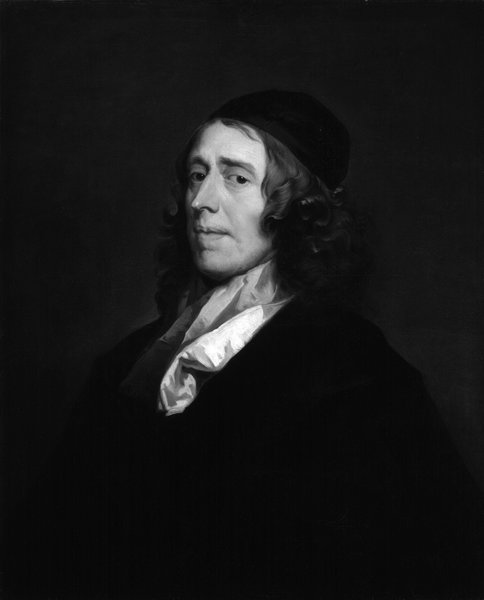
John Owen was the most formidable theological mind English Puritanism produced, and one of the most searching physicians of the soul who has ever written in the language. He sat at the very centre of national power — chaplain to Oliver Cromwell, Dean of Christ Church, Vice-Chancellor of the University of Oxford — and then watched it all be taken away, spending his last twenty years as a hunted Nonconformist barred from the universities he had once governed. Out of both the height and the loss came the same preoccupation: an almost unbearably exact understanding of how sin works on a person, and how grace works deeper still. It is why his little book on killing sin has outlived nearly everything else his century wrote on the subject.
Be killing sin, or it will be killing you.
— John Owen, The Mortification of Sin
A Puritan boyhood
He was born in 1616 at Stadhampton, a village in Oxfordshire, the second son of Henry Owen, a Puritan minister who conformed to the established Church only as far as his conscience would let him. The exact day of John’s birth was never recorded — a small reminder that greatness announces itself late. He went up to Queen’s College, Oxford, at about twelve, took his degree at sixteen, and read with the ferocious discipline that marked him for life; he is said to have allowed himself only four hours of sleep a night, a regimen he later regretted as a theft from his own health. He earned his master’s degree in 1635 and began further study, but by 1637 he could not in conscience submit to Archbishop Laud’s new church statutes, and he left the university rather than bend. It cost him his prospects. He became a private chaplain and tutor instead, and waited.
The assurance he could not find
For all his learning, Owen spent his young manhood under a long and crushing spiritual darkness. He believed the gospel; he could not feel that it was his. For months he could scarcely pray, and doubted whether he was converted at all. The turn came, as it so often does, sideways. Around 1642 he went to hear the celebrated London preacher Edmund Calamy at St Mary’s, Aldermanbury. Calamy did not appear. In his place an unknown country minister — a man Owen never afterwards managed to identify — stood up and preached on a single question of Christ to His frightened disciples: “Why are ye fearful, O ye of little faith?” Under that plain sermon, from a preacher whose name is lost to history, the assurance Owen had begged God for finally came. The bondage broke. He had gone looking for a famous voice and been met by God through a nobody.
Chaplain to Cromwell
Now his pen made him known. A Display of Arminianism (1642) won him the living of Fordham in Essex, and then the vicarage of Coggeshall, where his study of the New Testament persuaded him toward a Congregational understanding of the church. He preached before the Long Parliament, and in 1649 — the day after the execution of Charles I — he preached before it again, and there met the man who would carry him to the centre of the nation. Oliver Cromwell recruited Owen as an army chaplain and took him to Ireland and then Scotland. In 1651 Cromwell made him Dean of Christ Church, Oxford, and the following year Vice-Chancellor of the whole university, a post he held until 1657, receiving his Doctor of Divinity in 1653. For a season the boy who had walked out of Oxford on principle now ran it — reforming, protecting scholars of every party, and preaching still.
The anatomist of sin
The Oxford years produced the books for which he is still read. In 1647 came The Death of Death in the Death of Christ, his massive defence of the particular, purposeful love of God in the cross. But it was the shorter, sharper works that lodged in the conscience of the church. Of the Mortification of Sin in Believers (1656), an exposition of a single verse of Romans, remains the classic Christian handbook on the daily, deliberate war against indwelling sin — and its most quoted sentence is a whole spirituality in nine words:
Do you mortify; do you make it your daily work; be always at it whilst you live; cease not a day from this work; be killing sin, or it will be killing you.
— John Owen, The Mortification of Sin (1656)
If Mortification shows Owen’s severity, its companion shows his sweetness. Of Communion with God (1657) argues that the believer enjoys a real, distinct, experienced fellowship with each Person of the Trinity — with the Father in His love, the Son in His grace, the Spirit in His comfort. It is the warm centre of everything Owen was. “So much as we see of the love of God,” he wrote, “so much shall we delight in him, and no more.” The man the world remembers as a hammer against sin was, in his own study, chiefly occupied with the enjoyment of God.
Ejected
Then the tide went out. At the Restoration in 1660 Owen lost the deanery, and the Act of Uniformity in 1662 drove him and some two thousand other ministers out of the Church of England altogether. For the rest of his life he was a Nonconformist — preaching to gathered congregations that met at risk, writing tirelessly for toleration, refused the pulpits and the university he had led. He became the acknowledged leader and defender of Independency, and though offers came, including the invitation to lead a church in Boston, he stayed to shepherd the persecuted flock at home.
One friendship from these years has passed into legend. Owen prized the preaching of John Bunyan, the imprisoned Bedford tinker, and is credibly said to have used his standing at court to help win Bunyan’s release. When Charles II expressed surprise that so learned a doctor would cross London to hear an unschooled mender of pots, Owen is reported to have answered that he would gladly give all his learning for the tinker’s power in the pulpit. The exact words come down to us only through later tradition — but the humility in them is entirely his.
A house of sorrows
The private cost of Owen’s public life was staggering. He married Mary Rooke around 1644, and by her he had — so his biographers report — some eleven children. All but one died young; the single daughter who reached adulthood came home after an unhappy marriage and soon died of consumption. Mary herself died in 1675. The man who wrote most exactingly about grief bearing believers up had buried nearly his whole family. He remarried a widow, Dorothy D’Oyley, who brought him some comfort and ease in his final years, but the sorrows were never far, and they give his writing on suffering and assurance the weight of a thing paid for.
The long looked-for day
Owen died on 24 August 1683 at Ealing, near London. Two days before, dictating a farewell letter to his old friend Charles Fleetwood, he set down words that gather his whole life into a sentence:
I am going to Him whom my soul hath loved, or rather who hath loved me with an everlasting love, which is the whole ground of all my consolation.
— John Owen, letter to Charles Fleetwood, 22 August 1683
“I am leaving the ship of the church in a storm,” he added; “but whilst the great Pilot is in it, the loss of a poor under-rower will be inconsiderable.” On his last morning, the minister William Payne came to tell him that his final book, Meditations on the Glory of Christ, had gone to the press. Owen answered, “I am glad to hear that that performance is put to the press; but, O brother Payne, the long looked-for day is come at last, in which I shall see that glory in another manner than I have ever done yet, or was capable of doing in this world.” That evening — the anniversary week of the ejection that had cost him everything — he died. They buried him at Bunhill Fields among the dissenters he had loved.
He left a mountain of writing that has outlasted the empire he served: the Hebrews commentary in four volumes, the great works on the Spirit and on justification, and above all the two small books on killing sin and enjoying God that still do their work in any reader honest enough to sit under them. Owen never made the truth easy. He believed the human heart too devious and the glory of Christ too great for shortcuts. But to those willing to follow his hard, exact sentences, he offered the thing he had himself been given under an unknown preacher’s voice — the settled, unbreakable assurance of being loved by God with an everlasting love.
Books by John Owen (3)


Books about John Owen (1)
Articles about John Owen (4)
Questions and Answers
Who was John Owen?
John Owen (1616–1683) was the foremost theologian of English Puritanism — chaplain to Oliver Cromwell, Dean of Christ Church and Vice-Chancellor of Oxford, and after 1662 a dissenting minister barred from the universities he had led. He is famous for the density of his prose and for an unusually exact understanding of how sin actually works on a person, which is why his little book on killing sin has outlived nearly everything else his century wrote on the subject.
What was his youth like?
He was born in 1616 at Stadhampton in Oxfordshire, the son of a Puritan minister, went up to Queen's College, Oxford, at about twelve, and took his degree at sixteen, reading with a ferocious discipline that allowed him only four hours of sleep a night — a regimen he later regretted as a theft from his own health. By 1637 he could not in conscience submit to Archbishop Laud's new church statutes, and he left the university rather than bend, at the cost of his prospects.
How did he find assurance?
For all his learning, Owen spent his young manhood under a long and crushing darkness: he believed the gospel but could not feel it was his, and doubted whether he was converted at all. Around 1642 he went to hear the celebrated Edmund Calamy, who did not appear; in his place an unknown country minister preached on "Why are ye fearful, O ye of little faith?" — and under that plain sermon, from a preacher whose name Owen could never afterward identify, the assurance he had begged for finally came.
How did he rise under Cromwell?
His pen made him known; he preached before the Long Parliament, and the day after the execution of Charles I preached before it again, where he met Cromwell. Cromwell took him as an army chaplain to Ireland and Scotland, made him Dean of Christ Church, Oxford, in 1651 and Vice-Chancellor of the whole university the following year — so that the boy who had walked out of Oxford on principle now ran it, reforming and protecting scholars of every party.
What is The Mortification of Sin?
Published in 1656 as an exposition of a single verse of Romans, it remains the classic Christian handbook on the daily, deliberate war against indwelling sin, and its most quoted sentence is a whole spirituality in a breath: "Do you mortify; do you make it your daily work; be always at it whilst you live; cease not a day from this work; be killing sin, or it will be killing you."
What is Of Communion with God?
If The Mortification of Sin shows Owen's severity, its 1657 companion shows his sweetness. It argues that the believer enjoys a real, distinct, experienced fellowship with each Person of the Trinity — with the Father in his love, the Son in his grace, the Spirit in his comfort. "So much as we see of the love of God," he wrote, "so much shall we delight in him, and no more." The man remembered as a hammer against sin was chiefly occupied, in his own study, with the enjoyment of God.
What happened when he was ejected?
At the Restoration in 1660 Owen lost the deanery, and the Act of Uniformity of 1662 drove him and some two thousand other ministers out of the Church of England altogether. For the rest of his life he was a Nonconformist, preaching to gathered congregations that met at risk and writing tirelessly for toleration, refused the pulpits and the university he had led. He became the acknowledged leader and defender of Independency, and though offers came, including one from Boston, he stayed to shepherd the persecuted flock at home.
What was his friendship with Bunyan?
Owen prized the preaching of John Bunyan, the imprisoned Bedford tinker, and is credibly said to have used his standing at court to help win Bunyan's release. When Charles II expressed surprise that so learned a doctor would cross London to hear an unschooled mender of pots, Owen is reported to have answered that he would gladly give all his learning for the tinker's power in the pulpit — the exact words come down only through later tradition, but the humility in them is entirely his.
What did his private life cost him?
It was staggering. He married Mary Rooke and by her had, his biographers report, some eleven children — all but one dying young, and the single daughter who reached adulthood came home after an unhappy marriage and soon died of consumption. Mary herself died in 1675. The man who wrote most exactingly about grief bearing believers up had buried nearly his whole family, and the sorrow gives his writing on suffering and assurance the weight of a thing paid for.
How did he die?
Owen died on 24 August 1683 at Ealing. Two days before, dictating a farewell to his old friend Charles Fleetwood, he wrote, "I am going to Him whom my soul hath loved, or rather who hath loved me with an everlasting love, which is the whole ground of all my consolation." Told on his last morning that his book Meditations on the Glory of Christ had gone to press, he answered, "the long looked-for day is come at last." He was buried at Bunhill Fields among the dissenters he had loved.