Book
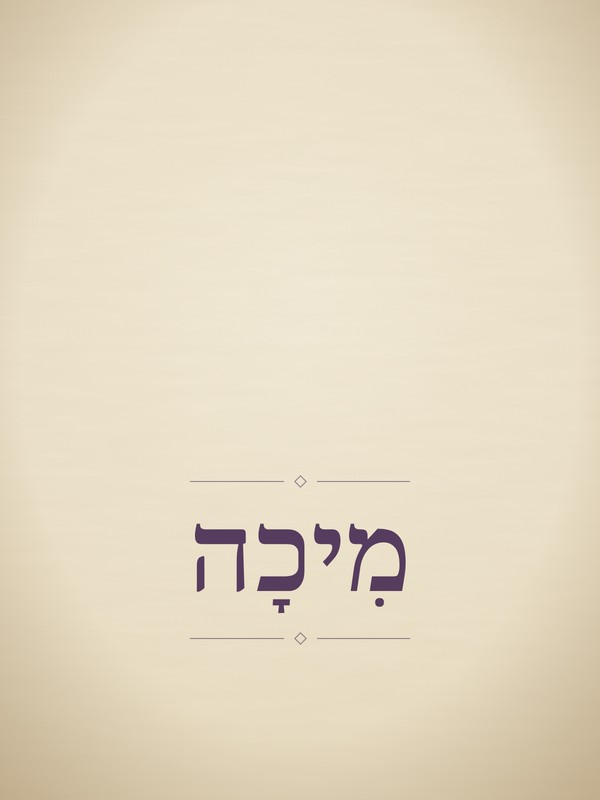
Micah
Mikhah, “Who is like the LORD?”
Part of The Bible·Next in the series: Nahum
9 chapters · 30 min read · Accessible
Free to read · No account needed
Listen to the whole book 39 min listenAbout this book
Judgment and hope for Judah, and a ruler to come from Bethlehem.
- Author
- Micah of Moresheth
- Date
- 8th century BC
He has told you, mortal, what is good. And what does the LORD ask of you except to do justice, to love loyalty, and to walk humbly with your God?The words of a countryman from Moresheth who spoke for the farmers and villagers of Judah in the days of Isaiah, when Assyria swept through the land. Micah denounces those who covet fields and seize them, rulers who devour the people, and prophets who cry “Peace!” for pay; he warns that Zion will be plowed as a field; and he sees the nations streaming to the mountain of the LORD, swords hammered into plow blades, everyone under their own vine and fig tree. From little Bethlehem a ruler will come, and he will be our peace. Then the great question, “what does the LORD ask of you?”, and the hymn that ends the book: “Who is a God like you?” Set out line by line as the poetry it is, in the Open Word Bible, a new translation from the Hebrew given freely to the public domain, with an introduction to the book’s shape and meaning and a conclusion on where to read next.
The LORD’s word came to Micah of Moresheth during the reigns of Jotham, Ahaz, and Hezekiah over Judah. It is what he saw concerning Samaria and Jerusalem.Listen, all you peoples;pay attention, earth and everything in it!Let the Lord GOD be a witness against you,the Lord from his holy temple.See, the LORD is coming out from his dwelling;he will come down and tread on the heights…
Contents
Sermons on this book
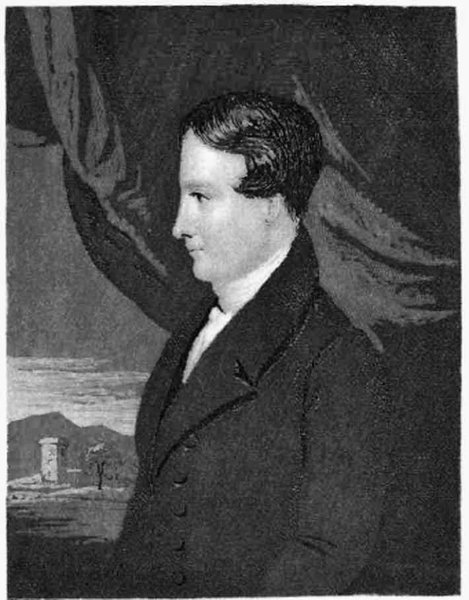
The Good Way of Coming Before the Lord
“Wherewith shall I come before the Lord?” M'Cheyne calls it the piercing question of every awakened soul, and answers it as only he could — not with rams and rivers of oil, not with the fruit of the body, but by the good way God himself has showed: coming in Christ, with a broken heart, to do justly, love mercy, and walk humbly with our God. Ends with his own closing verse.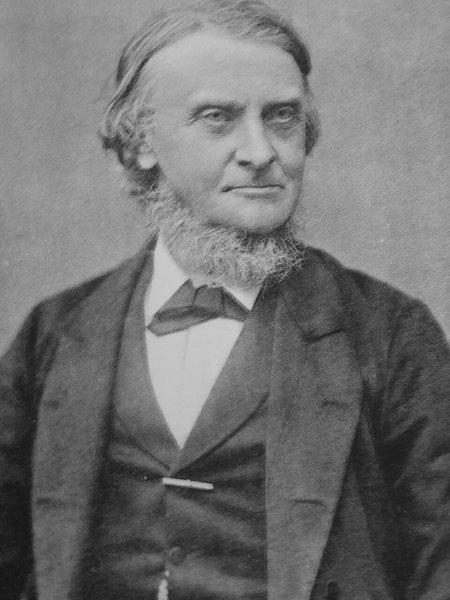
God's Requirements and God's Gift
Maclaren takes Micah's "What doth the Lord require of thee" and warns against treating it as the whole of religion. He shows how deep God's requirements of justice, mercy and humble walking with God really are, and how all of us fall short of them, which leads to guilt, a darkened view of God and despair. He ends with God's gift in Christ, who forgives and gives the power to obey.Questions and Answers
What is the book of Micah?
The sixth of the twelve shorter prophetic books of the Old Testament. Its seven chapters fall into three movements, each opening with a call to listen (1:2, 3:1, 6:1) and each moving from judgment to hope: against Samaria and Jerusalem and the land-grabbers of Judah (1–2); against corrupt rulers and prophets, with visions of the nations coming to Zion and a ruler from Bethlehem (3–5); and God’s case against his people, ending with a hymn to the God who forgives (6–7).
Who was Micah, and when did he prophesy?
Micah of Moresheth, a small town in the low hills of south-west Judah, who prophesied in the reigns of Jotham, Ahaz and Hezekiah (1:1), roughly 740–700 BC. He was a younger contemporary of Isaiah, and his years of ministry saw the fall of Samaria in 722 BC and the Assyrian invasion of Judah in 701 BC. A century later the elders of Judah quoted his warning that “Zion will be plowed as a field” in defence of Jeremiah, and recalled that King Hezekiah had listened to it (Jeremiah 26:18–19). His name is a shortened form of Micaiah, which means “Who is like the LORD?”
What does Micah 6:8 mean?
It answers the question of what a person can bring to God. The people ask whether God wants burnt offerings, thousands of rams, rivers of oil, even their firstborn; Micah replies, “He has told you, mortal, what is good. And what does the LORD ask of you except to do justice, to love loyalty, and to walk humbly with your God?” To do justice is to treat others rightly, especially the weak; to love loyalty (Hebrew hesed, often translated “mercy”) is to cherish faithful, covenant love; and to walk humbly with God is to live every day in his company and under his direction.
Does Micah say the Messiah would be born in Bethlehem?
Micah 5:2 promises that from Bethlehem Ephrathah, the small town of David’s family, “one will come out for me to be ruler over Israel, one whose origins are from of old, from ancient days.” By the time of Jesus it was understood as a prophecy of the Messiah: when Herod asked where the Christ would be born, the chief priests and scribes answered “In Bethlehem in Judea” and quoted this verse (Matthew 2:5–6). Christians read it as fulfilled in the birth of Jesus, and many hear in “from of old, from ancient days” a hint of his eternal origin.
Why are Micah 4:1–3 and Isaiah 2:2–4 almost the same?
Both prophets give, nearly word for word, the vision of the mountain of the LORD raised above all others, with the nations streaming to it to learn his ways and hammering their swords into plow blades. Micah and Isaiah were contemporaries, and scholars differ on whether one prophet took the oracle from the other or both drew on an older prophecy or temple song. Micah adds a line of his own: “Everyone will sit under their own vine and under their own fig tree, with no one to frighten them” (4:4).
Which translation of the Bible is this?
The Open Word Bible, a new translation made directly from the Hebrew and dedicated to the public domain, printed here at its Balanced level, which aims to be accurate and to read naturally aloud. The reasoning behind each of its sentences, with the Hebrew beside it, is published at openwordbible.org. The introduction and conclusion were written for this edition.
More like this

Taking books where there’s no signal? See Ochorus for missionaries or chaplains
About this text
- Source
- Scripture from the Open Word Bible (https://openwordbible.org), English, Balanced level, commit 64b913d623d6: dedicated to the public domain under CC0 1.0. The introduction and conclusion are by Ochorus. openwordbible.org
- Last updated
- November 13, 2026
- Rights
- Terms of Use
Cite this book
Copy a citation in the style you need.
- MLA
- Open Word Bible. Micah. Ochorus, https://ochorus.com/books/micah/.
- Chicago
- Open Word Bible. Micah. Ochorus. https://ochorus.com/books/micah/.
- Chicago footnote
- Open Word Bible, Micah (Ochorus), https://ochorus.com/books/micah/.
- BibTeX
- @book{openwordbiblemicah, author = {{Open Word Bible}}, title = {{Micah}}, publisher = {Ochorus}, url = {https://ochorus.com/books/micah/} }