Book
The Letter to the Hebrews
Pros Hebraious, “To the Hebrews”
Part of The Bible·Next in the series: The Letter of James
15 chapters · 1 hr read · Accessible
Free to read · No account needed
Listen to the whole book 1 hr 17 min listenAbout this book
Jesus the Son is greater: the high priest of a better covenant.
- Author
- Author unknown
- Date
- Probably before AD 70
We have, then, a great high priest who has gone through the heavens: Jesus the Son of God. So let us keep a firm grip on the confession we make.A sermon sent as a letter, to believers who had once stood firm under persecution and were now tired and drifting, and the fullest portrait anywhere in the Bible of Jesus as priest: “Long ago God spoke to the ancestors through the prophets … But at the end of these days he has spoken to us through the Son.” The Son is the radiance of God’s glory, higher than the angels, faithful over God’s house as Moses was faithful in it; a high priest of the order of Melchizedek, who has passed through the heavens and entered the true sanctuary once for all with his own blood, and lives forever to plead for those who come to God through him. Then the great roll call of faith, from Abel to the prophets; the race run with eyes on Jesus; Mount Zion in place of Sinai; and a call to go out to him outside the camp. Its author is unknown, and its warnings are among the most searching in Scripture. In the Open Word Bible, a new translation from the Greek given freely to the public domain, with an introduction to the letter’s shape and meaning and a conclusion on where to read next.
Long ago God spoke to the ancestors through the prophets, in many separate portions and by many different means. But at the end of these days he has spoken to us through the Son, whom he appointed heir of all things and through whom he also made the ages.
Contents
Read alongside
Commentaries and expositions of this book in the library.

Sermons on this book

So Great Salvation
How shall we escape if we neglect so great salvation? Lloyd-Jones presses the peril not of openly rejecting the gospel but of merely drifting past it, and sets out the greatness of what is neglected.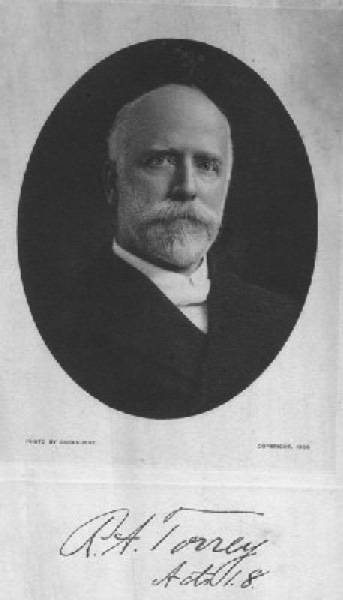
The Day of Golden Opportunity
“Today” is the Holy Spirit's word. Torrey urges the hearer to seize the golden opportunity of the present moment, before the door of grace closes.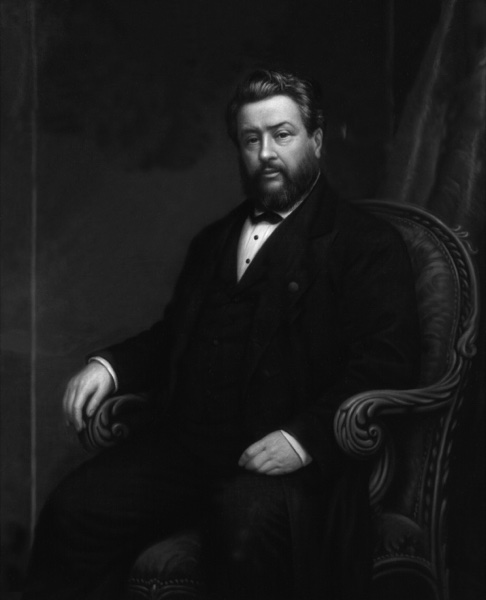
Heavenly Rest
The rest that remains for God’s people is begun on earth but completed only in heaven. Spurgeon sets it against the worldling’s hollow best and against the believer’s toil, doubts, sickness, persecution, sin and bereavement here, then measures it against the rest of church fellowship, faith and communion as the fountain against the stream. He extols it as perfect, seasonable, eternal and certain, closing with the believer’s astonished joy at finding himself in heaven. Salvation to the Uttermost
Salvation, Spurgeon insists, is taught nowhere but in Scripture, so the pulpit should preach nothing else. From Hebrews 7:25 he shows who are saved, those who come to God wholeheartedly, through Christ alone and for salvation only, then how far Christ’s power reaches, to the uttermost of guilt, of rejection, of despair and of a saint’s trials. He grounds that power in Christ’s death and living intercession, and ends with a warning about stifling conviction and a plea to come. Faith
Without faith it is impossible to please God — so Spurgeon sets out to say plainly what faith is, and finds it made of three things: knowledge, belief, and trust, the last of which is its living heart. To the trembling seeker who fears his faith too small he answers that it is not the greatness of faith but the greatness of its object that saves, and that a feeble hand may still lay hold of a mighty Christ.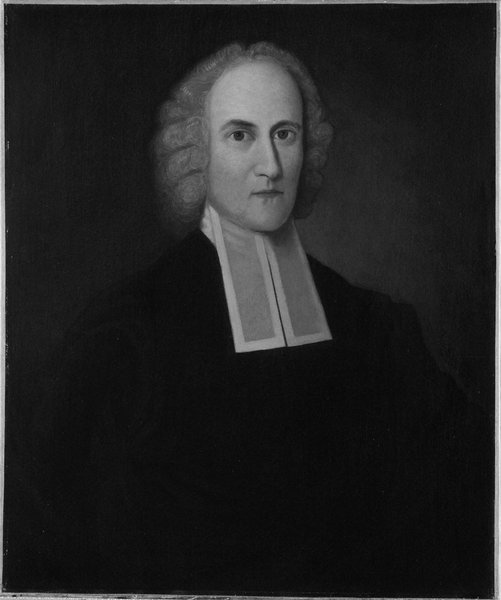
The Christian Pilgrim
The patriarchs “confessed that they were strangers and pilgrims on the earth,” and Edwards bids us live the same way. Like a traveller who rests at an inn but never settles there, we should hold the world’s comforts loosely and climb toward heaven, where God is the sun and earthly joys are “but scattered beams.” He ends by urging Christians to travel in company.Questions and Answers
What is the Letter to the Hebrews?
The nineteenth book of the New Testament, written to Christians, very likely Jewish believers in Jesus, who had been through persecution and were tempted to drift away or turn back. Its author calls it a “message of encouragement” (13:22), and it reads like a sermon. It shows from the Old Testament that Jesus, God’s Son, is greater than the angels, than Moses and than the priests of Aaron’s line, that his single sacrifice has done what the old sacrifices could not, and that his people should therefore draw near to God, hold on to their hope and run with endurance.
Who wrote Hebrews, and when?
No one knows. The letter names no author, and the early church already disagreed: Christians in the East counted it among Paul’s letters, though Clement of Alexandria and Origen saw that its style was not Paul’s, and Origen concluded that only God knows who wrote it. Tertullian named Barnabas; Luther suggested Apollos; others have proposed Luke, Silas or Priscilla. It was written before about AD 96, when Clement of Rome echoes it, and many scholars date it before AD 70, since it speaks of the priests’ service as still going on and never mentions the temple’s destruction.
Who was Melchizedek, and why does Hebrews compare Jesus to him?
Melchizedek was the king of Salem and “priest of God Most High” who blessed Abraham and received a tenth from him in Genesis 14:18–20. Psalm 110:4 says of David’s Lord, “You are a priest forever, of the order of Melchizedek.” Hebrews uses the two passages to show how Jesus, who came from the tribe of Judah and not Levi, can be a priest, and why his priesthood is greater: it rests on an oath of God and on “the power of a life that cannot be destroyed”, and it never passes to another (7:16, 24).
What does Hebrews 6:4–6 mean about falling away?
The passage warns that for those who have shared in God’s gifts and then fall away, it is impossible to be brought back to repentance. Christians read it in more than one way. Many in the Reformed tradition hold that it describes people who tasted God’s gifts without true saving faith, or that the warning is one of the means by which God keeps his people; in the Arminian and Wesleyan traditions it shows that genuine believers can turn away for good. All agree that the author means it seriously, and that he goes straight on to say he is confident of better things for his readers (6:9).
What is the “cloud of witnesses” in Hebrews?
The men and women of faith listed in chapter 11, from Abel, Enoch and Noah to Abraham and Sarah, Moses, Rahab, the judges, David and the prophets, who trusted God’s promises without yet receiving them. In 12:1–2 the author pictures them all around believers like the crowd in a stadium, and urges his readers to throw off every burden and run their own race with endurance, keeping their eyes on Jesus, who leads the way in faith and brings it to perfection.
Which translation of the Bible is this?
The Open Word Bible, a new translation made directly from the Greek and dedicated to the public domain, printed here at its Balanced level, which aims to be accurate and to read naturally aloud. The reasoning behind each of its sentences, with the Greek beside it, is published at openwordbible.org. The introduction and conclusion were written for this edition.
More like this

Taking books where there’s no signal? See Ochorus for missionaries or chaplains
About this text
- Source
- Scripture from the Open Word Bible (https://openwordbible.org), English, Balanced level, commit 64b913d623d6: dedicated to the public domain under CC0 1.0. The introduction and conclusion are by Ochorus. openwordbible.org
- Last updated
- November 13, 2026
- Rights
- Terms of Use
Cite this book
Copy a citation in the style you need.
- MLA
- Open Word Bible. The Letter to the Hebrews. Ochorus, https://ochorus.com/books/hebrews/.
- Chicago
- Open Word Bible. The Letter to the Hebrews. Ochorus. https://ochorus.com/books/hebrews/.
- Chicago footnote
- Open Word Bible, The Letter to the Hebrews (Ochorus), https://ochorus.com/books/hebrews/.
- BibTeX
- @book{openwordbibleletter, author = {{Open Word Bible}}, title = {{The Letter to the Hebrews}}, publisher = {Ochorus}, url = {https://ochorus.com/books/hebrews/} }