Book
Ezra
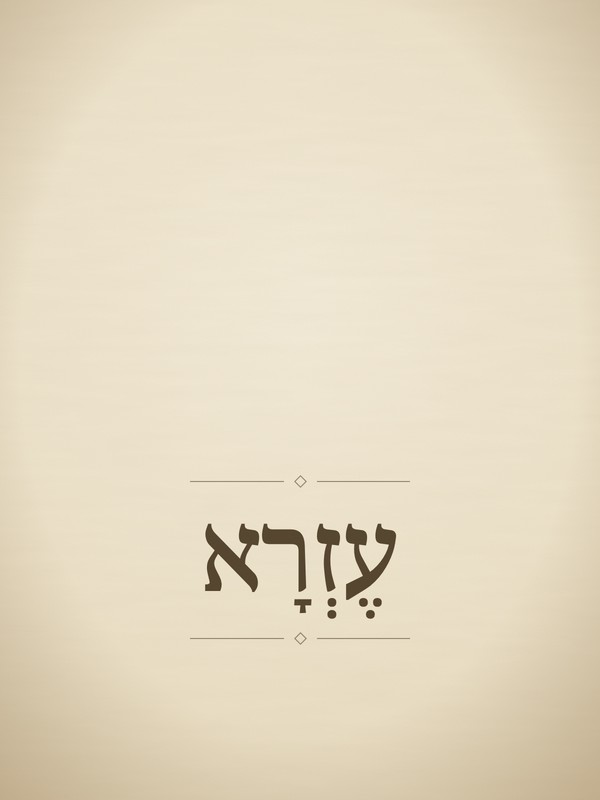
Ezra, “Help”
Part of The Bible·Next in the series: Nehemiah
12 chapters · 56 min read · Moderate
Free to read · No account needed
Listen to the whole book 1 hr 12 min listenAbout this book
The exiles return to rebuild the temple and to live by God’s law.
- Author
- Traditionally Ezra
- Date
- 5th century BC
For Ezra had set his heart to study the law of the LORD, to practice it, and to teach its statutes and rulings in Israel.The book of the return from exile, which begins with a pagan emperor whose spirit the LORD stirred: “let them go up to Jerusalem in Judah and build the house of the LORD.” Families counted home by name; an altar on its old foundations; the old men weeping and the young shouting for joy as the foundation is laid; years of opposition, two prophets, a search through the Persian archives and a temple finished at last. Then, two generations later, Ezra the scribe, who had set his heart to study the law of the LORD, to practise it and to teach it, fasting by a canal before a dangerous journey and praying a great prayer of confession for his people. In the Open Word Bible, a new translation from the Hebrew and Aramaic given freely to the public domain, with an introduction to the book’s shape and meaning and a conclusion on where to read next.
In the first year of Cyrus king of Persia, so that the word of the LORD spoken by Jeremiah would be fulfilled, the LORD stirred the spirit of Cyrus king of Persia, and he sent a proclamation throughout his whole kingdom and also put it in writing: This is what Cyrus king of Persia says: The LORD, the God of heaven, has given me all…
Contents
Sermons on this book
Questions and Answers
What is the book of Ezra about?
The return of the Jews from exile in Babylon and the rebuilding of their life in Judah. Chapters 1–6 tell how Cyrus king of Persia allowed the exiles to go home in 538 BC, how they rebuilt the altar and laid the temple’s foundation, and how, after years of opposition, they finished the temple in the sixth year of Darius, 516 or 515 BC. Chapters 7–10 jump forward some sixty years to Ezra, a priest and scribe sent by King Artaxerxes to teach God’s law in Judah, and to the crisis over marriages with the surrounding peoples that ends the book.
Who wrote the book of Ezra, and when?
The book does not name its author. Jewish tradition held that Ezra wrote it, and parts of chapters 7–9 are told in his own voice, in the first person. Many scholars think a later editor, writing perhaps around 400 BC or somewhat after, gathered Ezra’s memoir, the official Persian letters and the lists of families into the book we have, possibly the same circle that produced Chronicles, whose closing verses Ezra’s opening verses repeat. Others think Ezra himself remains the most likely author.
Are Ezra and Nehemiah one book?
In the Hebrew Bible they were counted as a single book, Ezra–Nehemiah, and they tell one continuous story: the rebuilding of the temple, of the people under God’s law, and of the walls of Jerusalem. The division into two books came later, in the Christian church, and passed into printed Hebrew Bibles only in the Middle Ages. Ezra appears in both, most memorably in Nehemiah 8, reading the law aloud to the assembled people.
Why is part of Ezra written in Aramaic?
Two sections, Ezra 4:8–6:18 and 7:12–26, are written in Aramaic, the common language of government in the Persian empire, which the Jews of the exile also spoke. These sections are built around official letters: the complaints sent to the Persian kings, the reply of Darius, Cyrus’s memorandum found in the archive at Ecbatana, and the letter Artaxerxes gave Ezra. The rest of the book is in Hebrew.
Why did Ezra make the people send away their foreign wives?
In Ezra 9–10 the leaders report that many of the people, including priests and Levites, have married women from the surrounding peoples, against the law’s warning that such marriages would turn Israel’s heart to other gods, as had happened to Solomon. For a small community just returned from an exile caused by idolatry, Ezra saw a threat to its very survival as the people of God, and the people agreed to dissolve the marriages. Christians read the episode in different ways: some as a costly act of faithfulness in an emergency, others as something the book records without holding it up as a pattern. The concern is worship rather than race, since outsiders who turned to the LORD shared the Passover (6:21), and in the New Testament Paul tells believers married to unbelievers not to seek a divorce (1 Corinthians 7:12–14).
Which translation of the Bible is this?
The Open Word Bible, a new translation made directly from the Hebrew and Aramaic and dedicated to the public domain, printed here at its Balanced level, which aims to be accurate and to read naturally aloud. The reasoning behind each of its sentences, with the original beside it, is published at openwordbible.org. The introduction and conclusion were written for this edition.
More like this



Taking books where there’s no signal? See Ochorus for missionaries or chaplains
About this text
- Source
- Scripture from the Open Word Bible (https://openwordbible.org), English, Balanced level, commit 64b913d623d6: dedicated to the public domain under CC0 1.0. The introduction and conclusion are by Ochorus. openwordbible.org
- Last updated
- November 13, 2026
- Rights
- Terms of Use
Cite this book
Copy a citation in the style you need.
- MLA
- Open Word Bible. Ezra. Ochorus, https://ochorus.com/books/ezra/.
- Chicago
- Open Word Bible. Ezra. Ochorus. https://ochorus.com/books/ezra/.
- Chicago footnote
- Open Word Bible, Ezra (Ochorus), https://ochorus.com/books/ezra/.
- BibTeX
- @book{openwordbibleezra, author = {{Open Word Bible}}, title = {{Ezra}}, publisher = {Ochorus}, url = {https://ochorus.com/books/ezra/} }