
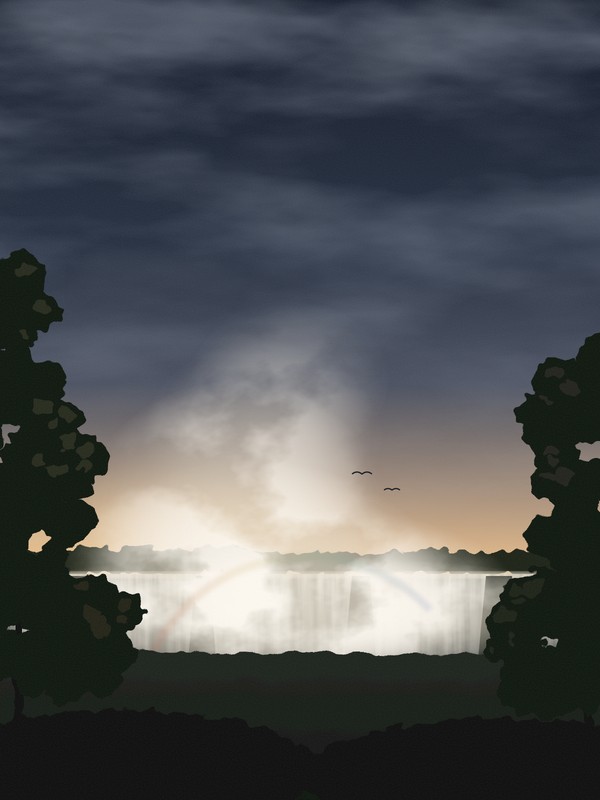
Book
Portraits of Courage – David Livingstone
A Blantyre Mill Boy, the Open Sore of the World, and the Hands That Carried Him Home
Book 10 of 11 in Portraits of Courage·Next in the series: Portraits of Courage – C. T. Studd
- 29 chapters
- 4 hr 1 min read
- Moderate Reading difficulty
Free to read·No account needed
Preface
Taking books where there’s no signal? See Ochorus for missionaries or chaplains
Grow with the story


About this book
A Christian biography of David Livingstone (1813–1873), the Scottish mill boy who became a doctor, a missionary to the Batswana, the first European known to cross Africa from coast to coast, and the most persistent voice of his age against the East African slave trade. Built on his own books and journals and checked against modern scholarship, it tells the real man behind the legend: brave and stubborn, devout and often unjust, loving and costly to those who loved him, and carried home at last by the African companions who would not leave him. All Scripture from the public-domain ASV (1901).
“The lines are fallen unto me in pleasant places; Yea, I have a goodly heritage.” — Psalm 16:6, ASV David Livingstone was born on 19 March 1813 at Blantyre Works, a cotton-spinning village on the south bank of the River Clyde, about eight miles south-east of Glasgow.
Contents
- 1 Preface 7 min
- 2 Introduction: The Saint, the Explorer, and the Record 8 min
- 3 Shuttle Row 9 min
- 4 The Piecer 8 min
- 5 Colour Blindness Cured 9 min
- 6 Slow of Speech 9 min
- 7 Another Man’s Foundation 8 min
- 8 The Lion at Mabotsa 8 min
- 9 Sechele 10 min
- 10 Across the Thirstland 8 min
- 11 Kolobeng Plundered 9 min
- 12 Twenty-Seven Men 9 min
- 13 The Word of a Gentleman 10 min
- 14 “I Never Made a Sacrifice” 9 min
- 15 Kebrabasa 9 min
- 16 Graves at Linyanti 8 min
- 17 Magomero 8 min
- 18 Shupanga 8 min
- 19 Recalled 8 min
- 20 The Sentence of Death 9 min
- 21 Nyangwe 8 min
- 22 “I Presume” 9 min
- 23 Chitambo’s Village 9 min
- 24 Faithful Hands 8 min
- 25 A Grain of Wheat 9 min
- 26 Appendix a: Lessons from the Life of David Livingstone 7 min
- 27 Appendix B: Chapter-by-Chapter Study and Reflection Guide 7 min
- 28 Appendix C: Chronology of the Life and Times of David Livingstone 6 min
- 29 Appendix D: Notes on Sources and Method 8 min
Questions and Answers
What is this biography of David Livingstone about?
It is a Christian biography of David Livingstone (1813–1873). It follows him from a one-room home at the Blantyre cotton mill, through his years with the Bakwena and their chief Sechele, his crossing of Africa from Luanda to Quelimane, the failed Zambezi Expedition and the death of his wife Mary, to his last journey, the massacre at Nyangwe, his meeting with Stanley, and his death at Chitambo’s village in 1873. It draws mainly on his own books and journals.
Who was David Livingstone?
He was a Scottish doctor and missionary who went to southern Africa for the London Missionary Society in 1841. He worked among the Batswana, crossed the continent between 1853 and 1856, led a British government expedition on the Zambezi from 1858 to 1864, and spent his last seven years searching for the sources of the Nile and exposing the slave trade. He died in what is now Zambia in 1873 and is buried in Westminster Abbey.
Did Livingstone really make only one convert?
Sechele, chief of the Bakwena, is the only African he is known to have baptised, in October 1848, and Livingstone suspended him from communion a few months later. But the book shows that Sechele kept his faith, taught and led his people in it for the rest of his life, and that the missions founded after Livingstone’s death in the lands he explored grew into large African-led churches.
How does the book treat Livingstone’s family?
Honestly. It tells how Mary Livingstone, herself a missionary’s daughter raised in Africa, crossed the Kalahari pregnant, spent four years wandering through English lodgings with their children, and died of fever on the Zambezi in 1862. It also tells the story of their son Robert, who died in a Confederate prison camp in 1864. The book honours Livingstone’s grief and does not hide what his calling cost them.
How does the book handle colonialism and empire?
It does not separate him from it. Livingstone called for “commerce and Christianity” to open Africa and believed British influence was a Christian influence. He also opposed the seizure of African land and labour by Boers and Portuguese and wanted Africans to trade freely and govern themselves. After his death his name was used to justify British rule in what became Malawi and Zambia. The book tells both sides and draws lessons from them.
Who were Susi, Chuma and Jacob Wainwright?
They were among the African companions who stayed with Livingstone to the end. Susi joined him on the Zambezi; Chuma was a boy freed from a slave caravan in 1861; Jacob Wainwright had been freed from a slave ship and educated in India. After Livingstone’s death they and their companions buried his heart at Chitambo’s village and carried his body about a thousand miles to the coast. The book treats them as people who made their own choices, not as a backdrop.
Did Stanley really say “Dr. Livingstone, I presume?”
The words come from Stanley alone. The pages of his diary for those days are missing, his own versions differ in detail, and even the date of the meeting at Ujiji in late 1871 is uncertain. The book gives the greeting as Stanley reported it and explains why it should be held with some caution. It also corrects other popular claims, such as the Abbey inscription’s statement that the “open sore of the world” sentence was written with his last breath.
How is Scripture used in the book?
Each chapter opens with a passage from the American Standard Version (1901) that carries its theme, from Psalm 16’s “goodly heritage” to Jesus’s saying about the grain of wheat that dies and bears much fruit, and further passages are woven through the story. Where Livingstone himself quotes the Bible, as in his famous journal entry on Matthew 28:20, his King James wording is kept. Appendices give lessons from his life, a study guide, a chronology and a note on sources.
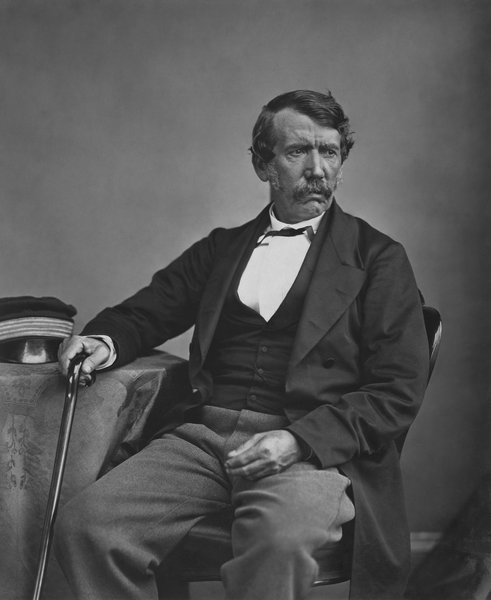
People in this book
More like this
Cite this book
Copy a citation in the style you need.
- MLA
- Ochorus Originals. Portraits of Courage – David Livingstone. 2026. Ochorus, https://ochorus.com/books/david-livingstone-a-life/.
- Chicago
- Ochorus Originals. Portraits of Courage – David Livingstone. 2026. Reprint, Ochorus. https://ochorus.com/books/david-livingstone-a-life/.
- Chicago footnote
- Ochorus Originals, Portraits of Courage – David Livingstone (2026; repr., Ochorus), https://ochorus.com/books/david-livingstone-a-life/.
- BibTeX
- @book{ochorusoriginals2026portraits, author = {{Ochorus Originals}}, title = {{Portraits of Courage – David Livingstone}}, year = {2026}, publisher = {Ochorus}, url = {https://ochorus.com/books/david-livingstone-a-life/} }