

Book
David Livingstone (For Teens)
- 13 chapters
- 46 min read
- Accessible Reading difficulty
Free to read·No account needed
Six in the Morning
Taking books where there’s no signal? See Ochorus for missionaries or chaplains
Grow with the story

About this book
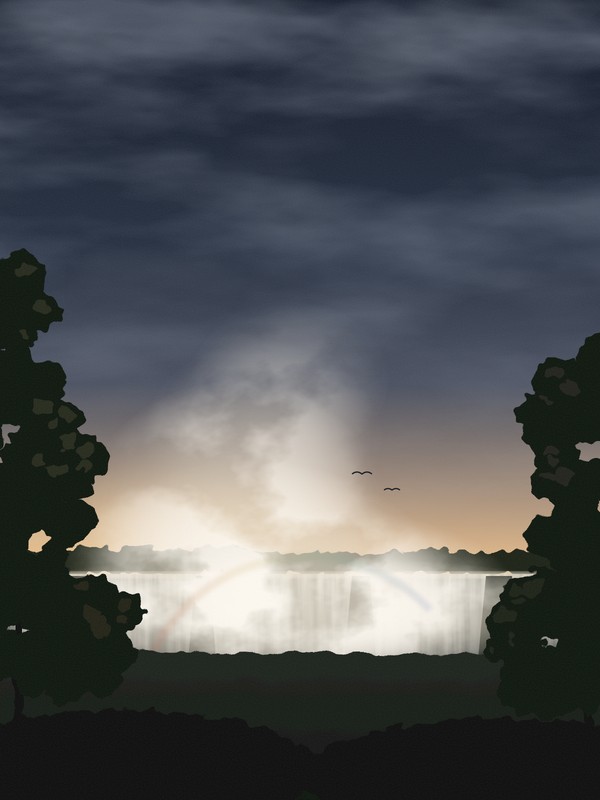
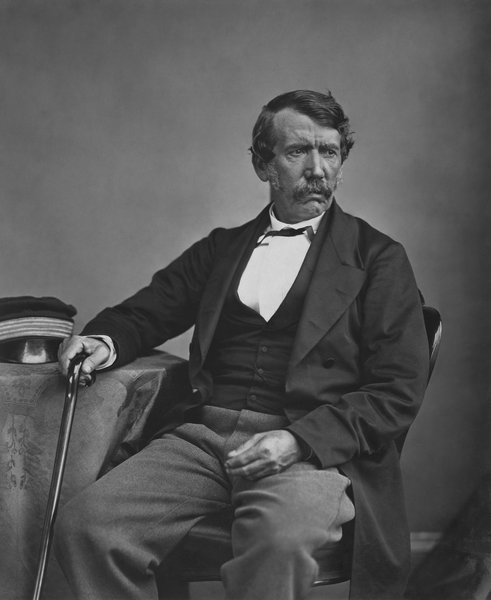
At ten, David Livingstone was working fourteen-hour days in a Scottish cotton mill, reading a book propped on the spinning machine. He became a doctor and a missionary, was mauled by a lion and saved by an African teacher whose gun misfired, walked across Africa with men who could have abandoned him, and spent his last years among slave traders he could neither stop nor escape. This teen edition tells his story straight: the one known convert, the river that failed, the wife who died beside him, the son he barely knew, and the friends who carried him a thousand miles home.
David Livingstone was born on 19 March 1813 at Blantyre Works, a cotton-mill village on the River Clyde, about eight miles from Glasgow in Scotland. The Livingstones lived in Shuttle Row, a tenement built for the workers, and they had one room. In it the parents cooked, ate, slept, read and prayed, and raised their children. David was the second of seven.
Contents
- 1 Six in the Morning 4 min
- 2 Slow of Speech 3 min
- 3 The Lion at Mabotsa 3 min
- 4 Sechele 3 min
- 5 Without Water 3 min
- 6 Kolobeng Plundered 4 min
- 7 Twenty-Seven Men 4 min
- 8 The Word of a Gentleman 3 min
- 9 “I Never Made a Sacrifice” 4 min
- 10 Shupanga 4 min
- 11 The Sentence of Death 4 min
- 12 How Long? 4 min
- 13 Faithful Hands 4 min
Questions and Answers
Who was David Livingstone?
A Scottish mill boy, born in 1813 at Blantyre, who became a doctor and went to southern Africa for the London Missionary Society in 1841. He worked among the Batswana, crossed Africa from the Atlantic to the Indian Ocean between 1853 and 1856, led a failed government expedition on the Zambezi, and spent his last years searching for the source of the Nile and exposing the East African slave trade. He died at Chitambo’s village, in what is now Zambia, in 1873.
Is the book honest about the hard parts?
Yes. It names his one known convert, the river plan that failed at Kebrabasa, his quarrels and unfairness to colleagues, the years his wife Mary spent alone in Britain, her death on the Zambezi, his son Robert’s death in an American prison camp, the slave traders he depended on, and the way his name was later used to justify colonial rule.
What did he mean by “I never made a sacrifice”?
In a speech at Cambridge in 1857 he said that serving God in Africa was “emphatically no sacrifice” but a privilege, a small part of a great debt owed to God. The book honours that, and also points out that much of the cost of his calling was paid by others, especially his wife and children.
Did Livingstone really make only one convert?
Sechele, chief of the Bakwena, is the only African he is known to have baptised, in 1848, and Livingstone suspended him a few months later. But Sechele kept his faith and led his people in it for the rest of his life, and the missions founded after Livingstone’s death in the lands he explored grew into large African-led churches.
How did he treat the African people he lived among?
He learned Setswana by living among the Bakwena, wrote that Africans were in no way inferior to Europeans, and kept his promise to bring twenty-seven men home from Luanda. But he saw little good in African religion and customs, used the prejudiced language of his time, and gave too little credit to the Africans, like Mebalwe, Sechele, Susi and Chuma, who saved and shaped his life.
Where do the stories come from?
From the full-length biography of David Livingstone, which draws on his own books and journals, his first biographer’s printing of his letters, and Stanley’s account, checked against modern historians. Uncertain stories, like Stanley’s famous greeting and the exact date of his death, are marked as uncertain. A separate edition for younger children tells the same story more simply.
What can a teenager today take from his story?
That God can use a poor, hard-working kid who is bad at public speaking; that keeping your word matters even when it costs you; that your choices have a cost for the people closest to you; and that faithfulness can bear fruit long after you are gone.
Who carried his body to the coast?
His African companions, led by Susi and Chuma, with Jacob Wainwright, Matthew Wellington, Carus Farrar, Majwara, Halima, Farijala and many others. They buried his heart under a tree at Chitambo’s village and carried his body about a thousand miles to the coast. Only Jacob Wainwright went to England for the funeral.
Read in your language
People in this book
More like this


Cite this book
Copy a citation in the style you need.
- MLA
- Ochorus Originals. David Livingstone (For Teens). Ochorus, https://ochorus.com/books/david-livingstone-a-life-teens/.
- Chicago
- Ochorus Originals. David Livingstone (For Teens). Ochorus. https://ochorus.com/books/david-livingstone-a-life-teens/.
- Chicago footnote
- Ochorus Originals, David Livingstone (For Teens) (Ochorus), https://ochorus.com/books/david-livingstone-a-life-teens/.
- BibTeX
- @book{ochorusoriginalsdavid, author = {{Ochorus Originals}}, title = {{David Livingstone (For Teens)}}, publisher = {Ochorus}, url = {https://ochorus.com/books/david-livingstone-a-life-teens/} }