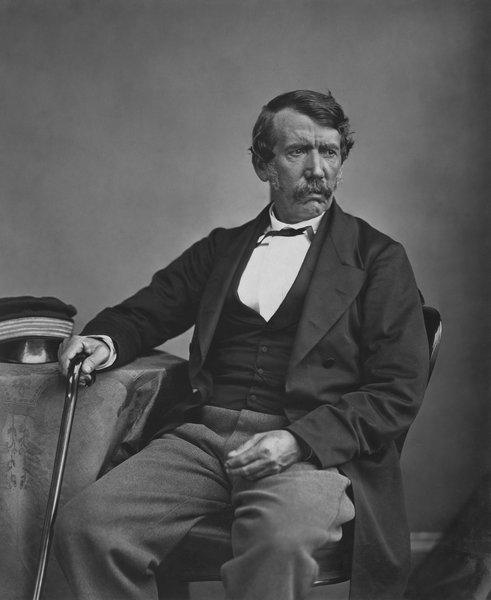
Biography
- 1813 Born
- 1841 To Africa
- 1855 Victoria Falls
- 1862 Wife died
- 1873 Died
I go back to Africa to try to make an open path for commerce and Christianity; do you carry out the work which I have begun?
There is a difficulty at the centre of David Livingstone’s life, and it is better to set it down at the start than to smuggle it in later. He is remembered as the greatest missionary Africa ever received — his name on schools and hospitals and a town, his body in Westminster Abbey, his face on a stained-glass shorthand for Christian heroism. And in more than thirty years on that continent, the record shows him bringing exactly one African to baptism: a chief named Sechele, in 1848, who afterwards lapsed. One convert. It is an astonishing figure for a man of his reputation, and any honest account has to begin there, because the gap between the legend and the ledger is where the real man is found.
He was the explorer who overshadowed the missionary. He knew it himself. And yet he is worth remembering — not in spite of the failure but partly because of it, and because of what he did with his fame once he had it: he spent it, to the last coin, denouncing the slave trade he called the open sore of the world.
A boy on the spinning jenny
He was born on 19 March 1813 in Blantyre, near Glasgow, the second of seven children in a single room above a cotton mill. It was not poverty of the romantic kind. From the age of ten he worked the mill as a “piecer,” tying broken threads from six in the morning until eight at night, and went to school afterwards, and studied late into the night when a grown man would have slept. The picture most often repeated of him — a book propped open on the spinning frame so he could snatch a line of Latin between passes of the machine — belongs to that tradition of the self-taught poor boy, and whether or not it happened exactly so, it tells the truth about him. He was relentless. He would be relentless all his life, at everything, including the things that did not work.
Out of that mill he made himself a doctor and a minister. He studied medicine and theology in Glasgow, was accepted by the London Missionary Society, and was ordained in November 1840. He sailed for Africa the following month and reached the Cape in 1841. In 1845 he married Mary Moffat, the daughter of the missionary Robert Moffat — a woman who would pay a heavy price for the marriage, as the wives of restless men often do.
Christianity, commerce, and the road forward
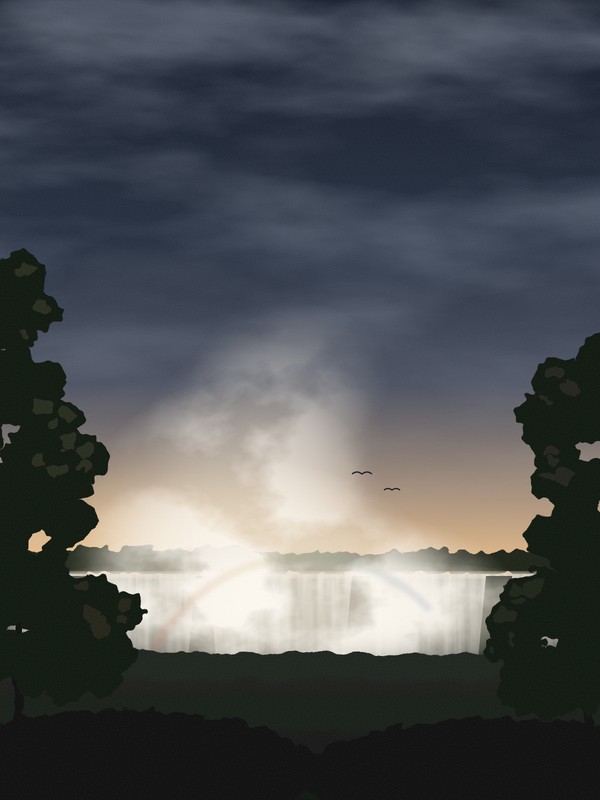
His first stations were at Mabotsa, Chonuane, and Kolobeng. It was near Mabotsa, early on, that a lion mauled him and left his left arm crippled for the rest of his life — an injury that, by a grim providence, would one day help identify his body. But the settled work of a mission station could not hold him. Something in him always looked north, to the interior no European had mapped, and he began the long journeys that made him famous: the crossing of the continent, and in 1855 the great falls of the Zambezi that the people who lived there called Mosi-oa-Tunya, “the smoke that thunders.” He renamed them for his queen. That renaming is, in miniature, the whole tangle of his life — genuine wonder and imperial reflex in the same gesture.
He had a theory, and he believed it with all his force. He thought that Christianity, commerce, and civilization, brought together, could open the interior and starve out the Arab-Swahili slave trade that was bleeding East Africa. Legitimate trade would make the trade in human beings unprofitable; the Gospel would follow the roads that trade opened. Modern readers see more clearly than he did how tightly that programme was wound around the machinery of empire, and it is only honest to say so — the paths he opened were walked by others with colder motives. But it would be a lie to reduce his anti-slavery conviction to a cover story. He had seen the slave routes with his own eyes, the chained lines and the bodies left in them, and what he wrote about them was not policy. It was grief.
I go back to Africa to try to make an open path for commerce and Christianity; do you carry out the work which I have begun?
— David Livingstone, Cambridge, December 1857
That appeal, made to the young men of Cambridge, helped bring the Universities’ Mission to Central Africa into being. It is characteristic of him: the greatest fruit of his missionary life may be less the souls he counted than the labourers he sent — a call passed to others to carry out the work he had begun and largely not finished.
The cost, and the failures
The Zambezi expedition of 1858 to 1864 is generally judged a failure. The river he had staked so much on turned out to be unnavigable, blocked by rapids he had not known were there; the expedition was expensive, quarrelsome, and returned little of what it had promised. And it took from him the person who had followed him longest. Mary Livingstone died of malaria on the Zambezi on 27 April 1862. He had dragged his family across a continent in his wake, and his children had grown up largely without him, and now the wife who had borne all of it was buried in African ground far from home.
Here is a life to set beside the legend. One convert, and that one lapsed. A river expedition that failed. A wife dead of fever in the work. Children who barely knew their father. If we are to call this man great, we had better be clear-eyed about what greatness cost and what it did not achieve, or we make his faith into something no ordinary believer could recognise. He was not a man crowned with success. He was a man who kept going forward through failure after failure because he had decided, early and once, which direction his life would face.
…in readiness to go anywhere, provided it be forward.
— David Livingstone, in a letter to the London Missionary Society
The polished version carved on memorials — “I am prepared to go anywhere, provided it be forward” — is a tidying of his actual words, but the direction is exactly right. Forward was the only setting he had.
Lost, and found
His last expedition, begun in 1866, was a search for the source of the Nile, and it swallowed him. For years he was out of contact, feared dead, wandering sick and destitute through country no letter could reach. He ran out of medicine and supplies and, at times, out of everything but the men who stayed with him. In November 1871 the journalist Henry Morton Stanley, sent by an American newspaper to find him or confirm his death, reached the lakeside town of Ujiji and came upon the one worn-out white man in that place.
The greeting Stanley reported — four words that have outlived almost everything else about either man — comes to us through Stanley’s account alone, and it is fair to hold it as the words he recorded rather than a thing independently confirmed:
Dr Livingstone, I presume?
— the greeting as Henry Morton Stanley recorded it, Ujiji, November 1871
Stanley brought supplies, and companionship, and pressed him to come home. He would not. The sick old man turned back inland to keep looking for a river’s source he would never find. Forward, again — even when forward was plainly the wrong medical decision. It is hard to know whether to call that faith or obstinacy. In him the two were never fully separable.
The open sore of the world
If one thing redeems the tangle of his ambitions, it is what he never stopped saying about slavery. He had watched it, close, for decades, and it never became abstract to him. On his last journeys, still ill, still failing, he kept writing against it, and the phrase he reached for was a wound that would not close.
It reads like a policy note and it is really a prayer — a dying man’s petition, offered in solitude, for anyone of any nation who would help end the traffic in human beings. Those words are carved on his memorial in Westminster Abbey, and of all the sentences he left, they are the ones most worth keeping. This was the true burden of his heart, clearer at the end than any map he ever drew.
The last morning
He died on 1 May 1873 at the village of Chief Chitambo, near the Bangweulu swamps in what is now Zambia, worn out by dysentery and malaria. The scene that has been handed down — that his attendants found him in the early morning kneeling at his bedside as if in prayer, his head resting on his hands — comes from the report of the two African men who were with him to the end, Susi and Chuma, and it reached the wider world shaped by Victorian editors who knew a good ending when they saw one. It should be held as their treasured testimony and the church’s cherished tradition, not as a thing any of us can prove.
What is not in doubt is what those two men did next, and it may be the plainest sermon in the whole story. Susi and Chuma buried his heart under a tree in the African soil he had given his life to, and then carried his body roughly a thousand miles to the coast — a journey of some nine months — so that it could be sent home. His crippled arm, the lion’s old work, confirmed that the body was his. He was interred in Westminster Abbey. The one convert of record was a chief who fell away; but two African friends carried him a thousand miles, and that is its own kind of testimony to the man they had followed.
Why he is worth remembering
Livingstone left a motto often attributed to him — “Fear God and work hard” — and it is honest to say that the working hard is easier to document than the fruit. He converted almost no one. His grand programme was entangled with an empire that did not share his heart. His great expedition failed and his wife died in it and his children grew up without him. If we wanted a tidy hero we would have to choose someone else.
But he is the better witness precisely because he is not tidy. His life says that faithfulness is not the same as success, that a man may pour himself out and see almost nothing he hoped for, and be, all the same, not wasted. His deepest work was not the souls he failed to number but the conscience he stirred — the young men he sent, the trade he shamed, the wound he named and would not let the comfortable forget. He went forward when going forward cost him everything and gained him, in his own accounting, very little. And at the end, if the tradition his friends handed down is true, a man who had never learned to be still was found kneeling.
Fear God and work hard.
— a motto long attributed to David Livingstone
Books about David Livingstone (3)


Also appears in
Questions and Answers
How did a poor mill boy from Blantyre become a doctor and a missionary?
David Livingstone was born in 1813 into a single room above a Blantyre cotton mill, and from the age of ten he worked the spinning machines as a “piecer,” tying broken threads from six in the morning until eight at night. He went to school afterwards and studied late into the night, teaching himself with a relentlessness that never left him, and out of that mill he made himself both a physician and a minister. He trained in medicine and theology in Glasgow, was accepted by the London Missionary Society, and was ordained in November 1840 before sailing for Africa the following month.
Is it true that a lion mauled him and left his arm crippled for life?
Yes. Early in his mission work, near Mabotsa, a lion sprang on him and shattered his left arm, which was never sound again. He later described the strange calm of the moment: “The shock produced a stupor similar to that which seems to be felt by a mouse after the first grip of the cat. It caused a sort of dreaminess, in which there is no sense of pain nor feeling of terror.” By a grim providence, that old wound would one day help confirm that the body carried home from Africa was truly his.
What is he best known for as an explorer, and did he really name Victoria Falls?
Livingstone became famous for journeys no European had made before, crossing the continent and reaching the enormous falls of the Zambezi in 1855. The people who lived there called them Mosi-oa-Tunya, “the smoke that thunders”; he renamed them Victoria Falls for his queen. That single gesture holds the whole tangle of his life, genuine wonder and imperial reflex at once, and an honest reader has to hold both together.
Why did he believe that commerce and Christianity together could end slavery?
Livingstone was convinced that legitimate trade, civilization, and the Gospel, brought into the interior together, could make the Arab-Swahili slave trade unprofitable and so starve it out. Modern readers see more clearly than he did how tightly that programme was wound around the machinery of empire, and the roads he opened were later walked by men with colder motives. But his hatred of slavery was no cover story: he had seen the chained lines and the bodies left in them with his own eyes, and what he wrote of them was not policy but grief.
What did he mean by calling the slave trade “the open sore of the world”?
It was the phrase he reached for again and again on his last journeys, sick and failing, unable to let the traffic in human beings become an abstraction. In solitude he wrote, “may Heaven’s rich blessing come down on every one — American, English, or Turk — who will help to heal this open sore of the world.” It reads like a policy note and is really a dying man’s prayer, and those words are carved on his memorial in Westminster Abbey.
What did his life in Africa cost his wife and children?
In 1845 he married Mary Moffat, daughter of the missionary Robert Moffat, and she paid a heavy price for following a restless man. He dragged his family across a continent in his wake, and his children grew up largely without him; Mary died of malaria on the Zambezi in April 1862 and was buried in African ground far from home. Any account that leaves out that cost turns his faith into something no ordinary believer could recognise.
How many people did Livingstone actually convert?
For all his fame as the great missionary to Africa, the record shows him bringing exactly one African to baptism: a chief named Sechele, in 1848, who afterwards lapsed. It is an astonishing figure for a man of his reputation, and it is where the honest reader meets the real man rather than the legend. He knew the explorer in him had overshadowed the missionary, yet he kept going forward through failure after failure, having decided early which direction his life would face.
Did Stanley really greet him with “Dr Livingstone, I presume?”
After years out of contact, feared dead in country no letter could reach, Livingstone was found at the lakeside town of Ujiji in November 1871 by the journalist Henry Morton Stanley. The famous four-word greeting comes to us through Stanley’s own account alone, so it is fairest held as the words he recorded rather than a thing independently confirmed. Stanley brought supplies and pressed him to come home, but the sick old man turned back inland to keep searching for a river’s source he would never find.
How did he die, and why is his heart buried in Africa while his body lies in Britain?
Livingstone died on 1 May 1873 at the village of Chief Chitambo, near the Bangweulu swamps in what is now Zambia, worn out by dysentery and malaria. His attendants remembered finding him at daybreak kneeling at his bedside as if in prayer, a report handed down through the two African men who stayed with him to the end, Susi and Chuma. They buried his heart beneath a tree in the African soil he had given his life to, then carried his body roughly a thousand miles to the coast over some nine months so it could be sent home, where he was interred in Westminster Abbey.