Biography
I gave in, and admitted that God was God, and knelt and prayed: perhaps, that night, the most dejected and reluctant convert in all England.
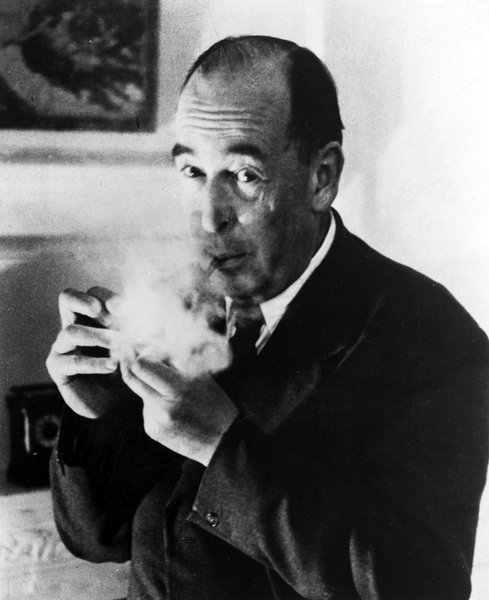
C. S. Lewis spent the first half of his life arguing against God, and the second half explaining Him to more people than almost any writer of his century. He was not a pastor or an evangelist, and he never thought of himself as a theologian. He was an Oxford don who lectured on medieval allegory and Renaissance poetry, smoked a pipe, walked enormous distances, and answered every letter he received. Yet a wartime radio talk, a short book of letters from a senior devil, and seven stories for children carried the Christian faith into homes, barracks and nurseries across the world — and they are still doing it. Few lives show more plainly how God can take a reluctant, clever, wounded man and make him a servant of joy.
A Belfast boyhood, and a prayer that seemed to fail
Clive Staples Lewis was born on 29 November 1898 in Belfast, the younger son of Albert Lewis, a solicitor, and Flora Hamilton Lewis, a clergyman's daughter who had taken a degree in mathematics at a time when few women did. He had one brother, Warren, three years older, who would be his closest companion for the rest of his life. As a small boy he announced that his name was now "Jacksie," after a beloved dog; the family shortened it to Jack, and Jack he remained to everyone who knew him.
The house was full of books, and the two brothers filled the wet Ulster afternoons by inventing whole imaginary countries of their own. But the happy childhood ended abruptly. In 1908, when Jack was nine, his mother was found to have cancer. He prayed, with all a child's earnestness, that she would be made well. She died that August. Within weeks his grieving father sent both boys away to a grim boarding school in England, and something in Jack closed.
By his mid-teens he had abandoned the faith of his childhood altogether. He was sent at last to a private tutor in Surrey, William Kirkpatrick — "the Great Knock" — a fierce, logical old atheist who taught him to argue, to read Greek and Latin as living languages, and to accept nothing he could not defend. Lewis thrived on it. In the same years, though, something else was stirring. On a railway bookstall in 1916 he bought a copy of George MacDonald's Phantastes, and found in it a holiness he had no name for. He would later say that the book had baptised his imagination long before anything touched the rest of him.
The trenches, and a promise kept
Lewis won a scholarship to University College, Oxford, but the war came first. Commissioned into the Somerset Light Infantry, he reached the front line in France on his nineteenth birthday. On 15 April 1918, near Arras, a British shell fell short and burst beside him. He was wounded in the leg, hand and chest; the sergeant standing next to him, Harry Ayres, was killed. Lewis was invalided home and carried fragments of that shell in his body for the rest of his life.
Before going to France he had made a pact with a friend from training, Paddy Moore: if either of them did not come back, the survivor would look after the other's family. Paddy was killed. Lewis kept his word. For more than thirty years he shared a home with Paddy's mother, Janie Moore, and her daughter Maureen, supporting them through lean years as a young lecturer and nursing Mrs Moore patiently through her long final illness until her death in 1951. It was not always an easy household, and he rarely spoke of it, but it was a promise kept at real cost.
The most reluctant convert
Back at Oxford he took three first-class degrees — in classics, philosophy and English — and in 1925 was elected a Fellow of Magdalen College, where he would teach for nearly thirty years. He was, by every outward sign, a settled and slightly combative unbeliever. But his own reading kept betraying him. The writers he loved most — MacDonald, Chesterton, the old poets — seemed to know something he did not. His sharpest friends turned out to be Christians. And all his life he had been ambushed by sudden, piercing moments of longing for something no earthly thing could satisfy, a longing he called Joy.
Slowly, against his will, he was cornered. One evening in the summer term of 1929, alone in his rooms at Magdalen, he stopped resisting.
I gave in, and admitted that God was God, and knelt and prayed: perhaps, that night, the most dejected and reluctant convert in all England.
— C. S. Lewis, Surprised by Joy
That was belief in God, not yet in Christ. The second step came two years later. On the night of 19 September 1931 he walked for hours along Addison's Walk by the Cherwell with two friends, J. R. R. Tolkien and Hugo Dyson. Lewis had always been moved by the old myths of a dying and rising god; Tolkien and Dyson pressed on him that the story of Christ is that same myth — but this time it really happened, in history, at a particular place and under a particular governor. Nine days later, riding in the sidecar of his brother's motorcycle on the way to Whipsnade Zoo, he found that he believed Jesus Christ was the Son of God. He could not remember deciding; when they set out he did not believe, and when they arrived he did.
A layman's ministry
The convert set to work with the tools he had. Lewis joined his parish church, Holy Trinity at Headington Quarry, near the house called the Kilns which he shared with Warren and the Moores, and he took Communion faithfully. His first Christian book, an allegory of his own journey, appeared in 1933. With Tolkien and a circle of friends — the "Inklings" — he met weekly to read aloud what they were writing; The Lord of the Rings and much of Lewis's own fiction were first heard in those rooms.
The war made him famous. In 1940 The Problem of Pain faced honestly the question every grieving person asks. The next year a series of imaginary letters from an experienced devil, Screwtape, to his junior nephew began appearing in a church weekly; as a book in 1942 it became a bestseller, and it is still read by people who would never open a book of theology. In 1941 the BBC asked him to speak on the radio, and for three years his plain, reasonable, faintly gruff voice explained the Christian faith to a nation at war. He travelled to RAF stations to talk to airmen who might be dead within the week. Those broadcasts, gathered and revised, became Mere Christianity — an account of the faith held in common by Christians of every tradition, which has led countless readers out of unbelief.
I believe in Christianity as I believe that the sun has risen: not only because I see it, but because by it I see everything else.
— C. S. Lewis, "Is Theology Poetry?" (1944)
Fame cost him. Some colleagues at Oxford thought it unbecoming that a scholar should write popular religion, and he was passed over for chairs he had earned. He accepted it without bitterness. He gave away most of the royalties from his religious books, quietly, through a charitable trust, and he answered by hand the flood of letters from strangers — the anxious, the bereaved, children, the doubting — often several hours a day, for the rest of his life.
Narnia, and a new chair
In 1950, in his fifties, he published a story for children about four evacuees who step through a wardrobe into a frozen land and meet a great lion. Six more Chronicles of Narnia followed over six years. Lewis insisted that they were not allegories, but he did not hide who Aslan is: the stories are his attempt to let children meet the goodness, the terror and the joy of Christ before they have learned to be bored by religious words. They have been read by tens of millions of children ever since.
In 1954 Cambridge created a new chair of Medieval and Renaissance Literature for him at Magdalene College. He took it gladly, spending the week in Cambridge and the weekends at the Kilns. He continued writing serious scholarship alongside the books for which he is loved, and published his own spiritual autobiography, Surprised by Joy, in 1955. He thought he would remain a bachelor. He was wrong.
Joy
Among his many correspondents was Joy Davidman, an American poet of Jewish birth and a former Communist, who had come to Christ partly through his books. They met in 1952, and over the next few years a friendship of minds became something more. In April 1956 Lewis married her quietly in an Oxford register office — at the time he called it a formality, to allow her and her two sons to remain in England. That autumn she was found to have cancer throughout her bones, and he discovered that he loved her.
She was not expected to live long. On 21 March 1957, at her hospital bedside, they were married with the blessing of the Church by Peter Bide, a priest and former pupil of Lewis's. At Lewis's request Bide also laid hands on her and prayed for her healing.
The cancer returned in 1959, and Joy died on 13 July 1960. Lewis's grief was savage. He wrote it down in a notebook, raw and unguarded, and published it under a pseudonym as A Grief Observed. It is one of the most honest books ever written by a Christian: it does not hide the doubt, the anger, the sense of a door slammed in his face. But it also records, slowly and without false comfort, the return of trust — not answers, but the presence of the One he had been shouting at. Many who have lost someone have found that book the only one they could bear to read.
Home
Lewis cared for Joy's sons, David and Douglas, and wrote on, but his own health was failing. In the summer of 1963 his heart and kidneys gave out; at one point he fell into a coma and received the last rites, then woke again, and spoke afterwards, half in jest, of being almost sorry to have been sent back. He resigned his Cambridge chair and spent the autumn quietly at the Kilns with Warren, reading and answering letters. On 22 November 1963, a week before his sixty-fifth birthday, he died at home in the late afternoon. The news was all but lost: the same day President Kennedy was shot in Dallas. He was buried in the churchyard of Holy Trinity, Headington Quarry, where he had worshipped for thirty years.
Aim at Heaven and you will get earth "thrown in": aim at earth and you will get neither.
— C. S. Lewis, Mere Christianity
Half a century later he was given a memorial stone in Poets' Corner in Westminster Abbey. His books have never gone out of print, and Christians of almost every tradition count him as a friend; evangelical readers often differ with him on particular points, and he would have been the first to say that he was a layman, not an authority. What he gave the church was not a system but a voice: clear, humble, reasonable and glad, convinced that the longing at the heart of every human life was meant to lead home to God. His own books are still in copyright, so you will not find them here yet — but the older writers who led him there are on these shelves: George MacDonald, whose Unspoken Sermons he treasured; G. K. Chesterton, whose The Everlasting Man helped bring him back to faith; Athanasius, whose On the Incarnation he loved; Augustine; Thomas à Kempis; John Bunyan; and William Law.
Books about C. S. Lewis (4)


Articles about C. S. Lewis (2)
Questions and Answers
Who was C. S. Lewis?
C. S. Lewis (1898–1963) was an Oxford and Cambridge scholar of medieval and Renaissance literature who spent the first half of his life arguing against God and the second half explaining Him to more people than almost any writer of his century. He was a layman, not a pastor or a theologian, yet his wartime radio talks, The Screwtape Letters and the seven Chronicles of Narnia carried the Christian faith into homes, barracks and nurseries across the world.
Where did he grow up, and why did he lose his faith?
Clive Staples Lewis was born on 29 November 1898 in Belfast, the younger son of Albert Lewis, a solicitor, and Flora Hamilton Lewis, a clergyman's daughter. In 1908, when he was nine, his mother died of cancer although he had prayed earnestly for her healing, and he was soon sent away to a grim boarding school in England. He later judged that he had treated God then as a magician who was expected to perform, and by his mid-teens he had abandoned the faith of his childhood altogether.
Why was he called Jack?
As a small boy he announced that his name was now "Jacksie," after a beloved family dog. The family shortened it to Jack, and Jack he remained to everyone who knew him for the rest of his life, including his brother Warren, three years older, who was his closest companion from childhood to the end.
What happened to him in the First World War?
Commissioned into the Somerset Light Infantry, Lewis reached the front line in France on his nineteenth birthday. On 15 April 1918, near Arras, a British shell fell short and burst beside him, wounding him in the leg, hand and chest and killing Sergeant Harry Ayres beside him. Before going out he had promised his friend Paddy Moore that each would care for the other's family if he died; Paddy was killed, and Lewis kept that promise to Mrs Janie Moore for more than thirty years.
How did C. S. Lewis become a Christian?
It came in two steps. In the summer term of 1929, alone in his rooms at Magdalen College, Oxford, he gave in, admitted that God was God, and knelt and prayed, calling himself perhaps the most dejected and reluctant convert in all England. Then on the night of 19 September 1931 Tolkien and Hugo Dyson persuaded him on Addison's Walk that the story of Christ is the true myth that really happened. Nine days later, riding to Whipsnade Zoo in his brother's motorcycle sidecar, he found he believed Jesus Christ was the Son of God.
What was his prayer life like?
From October 1940 Lewis went almost every week to Father Walter Adams, an elderly Anglican priest of the Cowley Fathers in Oxford, for confession and spiritual direction, until Father Adams died in 1952. Under that guidance he kept a disciplined life of prayer, morning and evening, praying through the Psalms and holding before God by name the long list of people who had asked for his prayers. He took Communion faithfully at his parish church, Holy Trinity, Headington Quarry.
What are his best-known Christian books?
The Problem of Pain (1940) faced the question of suffering. The Screwtape Letters (1942), imaginary letters from a senior devil to his nephew, became a bestseller. His BBC radio talks of 1941 to 1944 became Mere Christianity, an account of the faith Christians of every tradition hold in common. The seven Chronicles of Narnia began in 1950, and Surprised by Joy (1955) told the story of his conversion. A Grief Observed records his mourning for his wife.
Who was Joy Davidman?
Joy Davidman was an American poet of Jewish birth and a former Communist who had come to Christ partly through his books. They met in 1952, married quietly in an Oxford register office in April 1956, and that autumn she was found to have cancer in her bones. On 21 March 1957 the priest Peter Bide married them with the Church's blessing at her hospital bedside and, at Lewis's request, laid hands on her and prayed for her healing. She died on 13 July 1960.
Was Joy Davidman healed?
Against every expectation she did not die in 1957. Over the following months her disease receded, her bones began to rebuild and she walked again, and Lewis brought her home to the Kilns. At the same time he developed a painful loss of calcium in his own bones and wondered whether God had let him bear something in her place. They were given three happy years, including a visit to Greece in the spring of 1960, before the cancer returned in 1959 and took her the following summer.
When and where did C. S. Lewis die?
He died at home at the Kilns, near Oxford, on 22 November 1963, a week before his sixty-fifth birthday; the news was all but lost because President Kennedy was shot in Dallas the same day. He was buried in the churchyard of Holy Trinity, Headington Quarry, where he had worshipped for thirty years, and half a century later he was given a memorial stone in Poets' Corner in Westminster Abbey.