
New to George MacDonald? Start with
Unspoken Sermons
All works · 33 hr 41 min read
Biography
Nothing is inexorable but love.
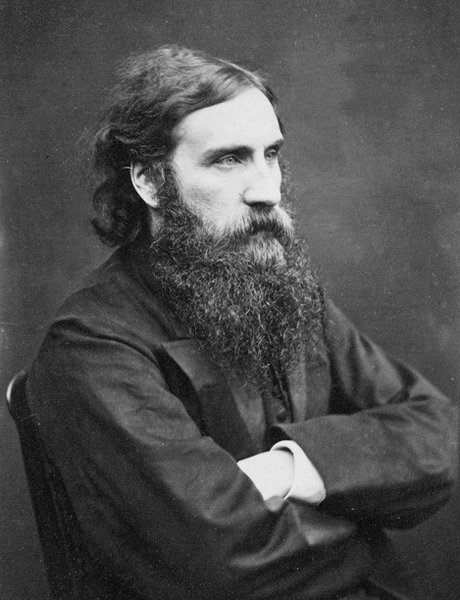
George MacDonald lost the only pulpit he ever held before he was thirty, and spent the next half-century preaching anyway — in novels, in fairy tales, in poems, and in three volumes of sermons he called “unspoken,” because no congregation ever heard them. He lived most of those years poor and often ill, buried several of his children, and was distrusted by many in the churches he had grown up in. Yet the one conviction that runs through everything he wrote never wavered: that God is a Father, wholly good, whose love will not rest until his children are made like his Son.
A boy from Huntly
He was born on 10 December 1824 in Huntly, a small town in Aberdeenshire in the north-east of Scotland, into a family of farmers and weavers. His mother died when he was eight, and he was raised by his father, also named George, a man whose patience and goodness the son never forgot. Many readers have seen that father behind the wise, gentle fathers who fill MacDonald’s books, and behind the way he would later speak of God.
The religion of his boyhood was the stern Calvinism of the Scottish Congregational chapel, and the young MacDonald struggled with it. He could not make himself believe that God had chosen some for glory and passed the rest by, and he could not stop wanting God all the same. He studied at King’s College, Aberdeen, then went south to London to train for the ministry at Highbury College, a Congregational seminary.
Arundel, and the loss of a pulpit
In 1850 he was called as minister of Trinity Congregational Church in Arundel, Sussex, and in 1851 he married Louisa Powell. Their marriage would last more than fifty years, and they would have eleven children — six sons and five daughters.
Arundel did not go well. Within two years some of the leading men of the congregation had charged their young minister with heresy: he had suggested that the heathen who never heard the gospel might yet have an opportunity beyond death, and he was said to be tainted with German theology. Rather than dismiss him, they cut his salary of £150 a year, hoping he would leave. MacDonald answered that this was bad news, but he supposed he must try to live on less — and for a time he did, helped by gifts from his poorest parishioners, who did not share their deacons’ views. In May 1853 he resigned. He never held a pastorate again.
Poverty, sickness and the pen
The family moved to Manchester, where MacDonald preached to small groups and taught, until his lungs failed him. He suffered all his life from the tuberculosis that would take several of his children, and there were seasons when he could do nothing but lie still. Lady Byron, who became his patron in 1856, made possible a winter in the dry air of Algiers, which restored him for a time.
Shut out of the pulpit, he turned to writing. Within and Without, a long dramatic poem, appeared in 1855. In 1858 came Phantastes, “a faerie romance for men and women,” in which a young man named Anodos wanders through a dreamlike Fairy Land, meets his own shadow, and learns at last that it is better to love than to be loved. It sold poorly. To support his family MacDonald began writing novels of Scottish life — David Elginbrod (1863), Alec Forbes of Howglen, Robert Falconer and many more — full of crofters, schoolmasters and ministers, and of characters who find their way out of a hard religion into the love of God. They made his name, and for the rest of his life he wrote steadily, more than fifty books in all.
He also wrote for children, and it is for these books that many people know him best: At the Back of the North Wind (1871), about a poor London cab-driver’s boy and the mysterious lady who carries him through the night, and The Princess and the Goblin (1872), with its great-great-grandmother spinning in the attic and her thread that leads a child safely home through the dark. Fairy tales such as “The Light Princess” and “The Golden Key” followed. MacDonald did not think he was writing only for children. “I do not write for children,” he said in his essay “The Fantastic Imagination,” “but for the childlike, whether of five, or fifty, or seventy-five.” The same thought runs all through “The Child in the Midst,” the sermon that opens his Unspoken Sermons.
Among the friends of the family was a young Oxford mathematician, Charles Dodgson. He brought the MacDonalds the manuscript of a story he had written for a little girl named Alice, and Louisa read it aloud to the children to see whether it was worth publishing. Their small son Greville declared he wished there were sixty thousand copies of it. Dodgson took the hint, and Alice’s Adventures in Wonderland appeared in 1865 under the name of Lewis Carroll.
The unspoken sermons
All the while MacDonald went on preaching wherever he was asked, and writing sermons no congregation heard. The first series of Unspoken Sermons appeared in 1867, the second in 1885, the third in 1889. They are not easy reading — he called them “ears of corn, gathered and rubbed in my hands upon broken Sabbaths” — but they are where he speaks most directly. Again and again he returns to the same few things: that God is our Father and we are truly his children; that obedience, not opinion, is the way to know him; and that God’s love is not soft but fierce, a fire that will burn away everything in us that is not good.
Nothing is inexorable but love.
— George MacDonald, “The Consuming Fire”
He had a horror of any teaching that seemed to make God less good than the best of men, and he said so without hedging. He taught that every punishment God sends is meant to heal; and that a soul shut out in the outer darkness is still pursued there by a love that will not let it go “till he has paid the uttermost farthing.” He hoped — and in the end taught — that God’s love would finally win every one of his children home.
It should be said plainly that on this point, and on others, many Christian readers part company with him. MacDonald was a Christian universalist, though not a careless one. In his sermon “Righteousness” he rejected the doctrine of the atonement as it was commonly preached in his day — that God punished the innocent Christ in place of the guilty — calling the idea of laying the pain upon the righteous “in the name of justice” simply monstrous. Evangelicals who hold to penal substitution and to the finality of judgement will find much here to argue with, and they are not wrong to argue. But even those who disagree with him most have often found that he sends them back to the Gospels with fresh eyes, and few writers make the goodness of God feel so near.
The hardest, gladdest thing in the world is, to cry Father! from a full heart.
— George MacDonald, “Abba, Father!”
America, and the house called Courage
In 1872 the Boston Lyceum Bureau invited MacDonald to lecture in the United States, and from the autumn of that year into 1873 he travelled from city to city, speaking on Burns, Shakespeare and other poets to large audiences. He made many friends there. In 1877 Queen Victoria granted him a Civil List pension of £100 a year, which eased the long strain on the family purse.
Sorrow came too. Their daughter Mary Josephine died of tuberculosis in 1878, and their son Maurice the following year. Grace died in 1884, and Lilia, the eldest — who had nursed so many of the sick in the family — in 1891. In 1880, in the years of those first losses, MacDonald privately printed A Book of Strife in the Form of the Diary of an Old Soul: a seven-line prayer for every day of the year, with a blank page beside each one for the reader to add prayers of his own.
For the sake of the family’s lungs they had begun to winter on the Italian Riviera, and around Christmas 1880 they moved into a large house at Bordighera that friends had helped them to build. They called it Casa Coraggio, the House of Courage. It became a gathering place for the English community there, with readings and music; the second series of the Unspoken Sermons is dated from it.
The long silence
MacDonald’s last major book, Lilith (1895), is a strange, dark dream of death and resurrection, in which even the most rebellious soul is at last brought to lie down and sleep in hope. After it he wrote little. By 1898 a stroke had taken his speech, and he spent his last years almost entirely silent, cared for by his family. Louisa died in January 1902. MacDonald lived on three more years, and died on 18 September 1905 at Ashtead, in Surrey. His body was cremated, and his ashes were buried in the English cemetery at Bordighera, beside Louisa and their daughters Lilia and Grace.
Obedience is the opener of eyes.
— George MacDonald, “The Way”
The master of C. S. Lewis
MacDonald’s reputation faded after his death, and it might have faded further but for one reader. In 1916 a seventeen-year-old named Clive Staples Lewis, waiting for a train at Leatherhead station, bought a cheap copy of Phantastes from the bookstall. He was then an atheist, and remained one for years. But he later wrote that the book had worked on his imagination long before the rest of him followed, and that it carried a quality he could only afterwards name as holiness.
C. S. Lewis came to regard MacDonald as his master. In 1946 he published an anthology of 365 short readings from MacDonald, drawn mostly from these Unspoken Sermons, because he wanted to spread MacDonald’s religious teaching rather than revive his literary fame. In The Great Divorce he made MacDonald himself the narrator’s guide through the outskirts of heaven. Through Lewis, and through the writers who learned from them both, MacDonald’s Fairy Land has reached millions who have never heard his name.
What they were reaching for was what MacDonald had spent his life holding out: a God who is light with no darkness at all, who hides nothing that can be revealed, and who is not content to forgive his children until he has made them good. The first series of his sermons ends with a prayer that might stand for the whole of his life’s work — that Christ, “the child, the obedient God,” would come, “that we may be one with thee, and with every man and woman whom thou hast made, in the Father.”
Books by George MacDonald (5)

Books about George MacDonald (1)

Articles about George MacDonald (1)
Questions and Answers
Who was George MacDonald?
George MacDonald (1824–1905) was a Scottish writer, poet and Congregational minister. Born in Huntly, Aberdeenshire, he lost the only pulpit he ever held before he was thirty and spent the next half-century preaching in other ways — in novels of Scottish life, in fairy tales such as At the Back of the North Wind and The Princess and the Goblin, in poems, and in three volumes of Unspoken Sermons. Through all of it ran one conviction: that God is a Father, wholly good, whose love will not rest until his children are made like his Son.
Why did George MacDonald leave his church at Arundel?
In 1850 MacDonald became minister of Trinity Congregational Church in Arundel, Sussex. Within two years some leading men of the congregation charged him with heresy: he had suggested that the heathen might have an opportunity beyond death, and he was said to be tainted with German theology. Instead of dismissing him they cut his salary of £150 a year. He tried to live on less, helped by gifts from his poorest parishioners, but in May 1853 he resigned. He never held a pastorate again.
Why are they called Unspoken Sermons?
Shut out of the pulpit, MacDonald went on writing sermons that no congregation ever heard, which is why he called them unspoken. The first series appeared in 1867, the second in 1885 and the third in 1889. He described them as ears of corn gathered and rubbed in his hands upon broken Sabbaths. In them he returns again and again to a few themes: that God is our Father, that obedience is the way to know him, and that his love is a consuming fire that burns away everything in us that is not good.
What did George MacDonald believe about hell and salvation?
MacDonald was a Christian universalist. He taught that every punishment God sends is meant to heal, that a soul in the outer darkness is still pursued there by God's love until it has paid the uttermost farthing, and he hoped and in the end taught that God's love would finally bring all his children home. In his sermon Justice he also rejected the atonement as commonly preached in his day, that God punished the innocent Christ in place of the guilty. Many evangelical readers disagree with him on these points, yet even they often find he sends them back to the Gospels with fresh eyes.
How did George MacDonald provide for his family in poverty?
After Arundel the family knew real want, with a growing household and a husband often too ill to work from the tuberculosis he suffered all his life. MacDonald trusted God for their daily bread, and the family saw their needs met again and again, often at the last moment. The poor of Arundel brought fruit, potatoes and cabbages; Lady Byron, moved by his poem Within and Without, became his patron in 1856 and made possible a restoring winter in Algiers; and in 1877 Queen Victoria granted him a Civil List pension of £100 a year.
What books did George MacDonald write?
He wrote more than fifty books. Phantastes (1858), a faerie romance for men and women, was followed by novels of Scottish life such as David Elginbrod (1863), Alec Forbes of Howglen and Robert Falconer, which made his name. For children he wrote At the Back of the North Wind (1871) and The Princess and the Goblin (1872), along with fairy tales like The Light Princess and The Golden Key. His other works include the three series of Unspoken Sermons, the prayer-poems of the Diary of an Old Soul (1880) and his last major book, Lilith (1895).
What was George MacDonald's connection to Lewis Carroll?
Charles Dodgson, a young Oxford mathematician, was a friend of the MacDonald family. He brought them the manuscript of a story he had written for a little girl named Alice, and Louisa MacDonald read it aloud to her children to see whether it was worth publishing. Their small son Greville declared he wished there were sixty thousand copies of it. Dodgson took the hint, and Alice's Adventures in Wonderland appeared in 1865 under the name of Lewis Carroll.
What sorrows did George MacDonald face in later life?
Tuberculosis took several of his children. His daughter Mary Josephine died in 1878 and his son Maurice in 1879; Grace died in 1884, and Lilia, the eldest, who had nursed so many of the sick in the family, in 1891. In 1880, in the years of those first losses, he printed the Diary of an Old Soul, a seven-line prayer for every day of the year. By 1898 a stroke had taken his speech, and his wife Louisa died in January 1902.
Where did George MacDonald die and where is he buried?
For the sake of the family's health the MacDonalds settled on the Italian Riviera, moving around Christmas 1880 into Casa Coraggio, the House of Courage, a home at Bordighera that friends had helped them build. MacDonald spent his last years almost entirely silent after a stroke. He died on 18 September 1905 at Ashtead in Surrey. His body was cremated and his ashes were buried in the English cemetery at Bordighera, beside Louisa and their daughters Lilia and Grace.
How did George MacDonald influence C. S. Lewis?
In 1916 a seventeen-year-old C. S. Lewis, then an atheist, bought a copy of Phantastes at Leatherhead station. He later wrote that it had worked on his imagination long before the rest of him followed. Lewis came to regard MacDonald as his master. In 1946 he published an anthology of 365 readings from MacDonald, drawn mostly from the Unspoken Sermons, and in The Great Divorce he made MacDonald the narrator's guide through the outskirts of heaven.