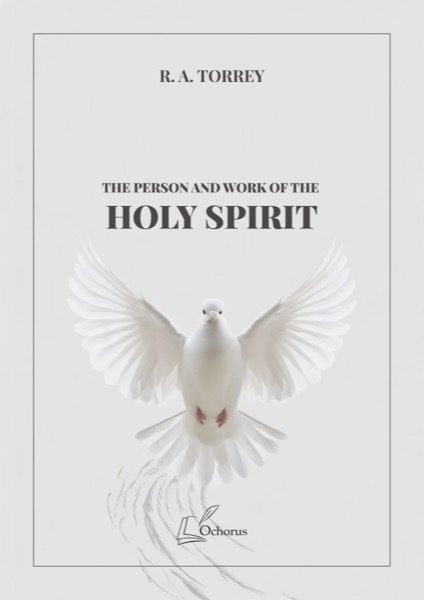
If you have ever prayed “How can I get more of the Holy Spirit?” and sensed the question was somehow the wrong shape, R. A. Torrey wrote this book for you. The Person and Work of the Holy Spirit is his patient, text-by-text attempt to move readers from thinking of the Spirit as a power we hope to lay hold of and use, to knowing Him as a Person who longs to lay hold of and use us. This study guide walks through what the book argues, how it is built, the themes that carry it, and how to read it well today. Ochorus hosts the full text for free, so you can move between this overview and Torrey’s own words as you go.
What the book is, and what Torrey set out to do
Reuben Archer Torrey — Yale-trained, superintendent of what became the Moody Bible Institute, and a preacher who saw revival on several continents — wrote out of a single conviction: that most confusion about the Spirit’s work comes from never having settled who the Spirit is. So he begins not with power or gifts or experience, but with personality and deity. His opening chapters press the reader to a decision.
It is of the highest importance from the practical standpoint that we decide whether the Holy Spirit is merely some mysterious and wonderful power that we in our weakness and ignorance are somehow to get hold of and use, or whether the Holy Spirit is a real Person, infinitely holy, infinitely wise, infinitely mighty and infinitely tender who is to get hold of and use us.
R. A. Torrey
From that foundation Torrey builds outward: the Spirit is a divine Person, distinct from the Father and the Son yet one with them; He is the agent of the new birth; He indwells, satisfies, and sanctifies the believer; and He clothes ordinary Christians with power for service. Torrey’s method throughout is unmistakably his own. He was an exegete before he was an orator, and he argues by piling up Scripture and daring you to check him — Jesus’ words on conviction in John 16:8-11, Paul on regeneration in Titus 3:5, Paul on freedom from sin in Romans 8:2, John the Baptist’s promise in Matthew 3:11. His aim is not to stir feeling first but to establish truth, trusting that settled truth will do its own stirring.
How the book is structured
The book unfolds in twenty-two short chapters that move in a deliberate order — first who the Spirit is, then what He does. It helps to read them as four movements:
- The Person of the Spirit (chapters 1–6). His personality, His deity, His distinction from and subordination to the Father and the Son, what His names reveal, and His work in creation. Here Torrey lays the doctrinal floor everything else stands on.
- His work in the world and in the new birth (chapters 7–9). The Spirit convicting the world “of sin and righteousness and judgment,” bearing witness to Jesus Christ, and regenerating the spiritually dead.
- His work within the believer (chapters 10–19). The indwelling Spirit satisfying the soul, freeing us from the power of indwelling sin, forming Christ in us, bearing the graces of Christlike character, guiding us as sons, teaching, praying and worshipping through us, and even honouring the body as His temple.
- Power for service and the Spirit in Scripture (chapters 20–22). The baptism with the Holy Spirit, and the Spirit’s work in the prophets, the apostles, and in Jesus Christ Himself.
Because each chapter is compact and built around a cluster of texts, the book reads equally well straight through or as a reference you return to one doctrine at a time.
The central themes
The Spirit is a Person to be known, not a force to be used
This is the note struck on the first page and sounded to the last. Torrey argues that if the Spirit is truly a divine Person, then He is owed worship, love, trust, and surrender — and that treating Him as an impersonal energy quietly robs God of His due while making the Christian life a matter of technique. The practical payoff is enormous: our question stops being how to get more of the Spirit and becomes how the Spirit may have more of us.
Regeneration is the Spirit’s doing, not ours
On the new birth Torrey is bracingly clear. Salvation begins when the Spirit convicts us of our real need, and the life we lack He alone can give.
Regeneration is the impartation of life, spiritual life, to those who are spiritually dead through their trespasses and sins.
R. A. Torrey
Drawing on Jesus with Nicodemus in John 3:5, Paul in Ephesians 2:1, and the “living and abiding word” of 1 Peter 1:23, he insists that the written Word is the instrument of the new birth but that only the Spirit gives it life — “It is the Spirit who gives life” (John 6:63).
Sanctification is deliverance, not mere effort
Torrey retells Paul’s account of the divided self in Romans 7:19, where a good and holy law outside the man is defeated by another law inside him, until he cries out for rescue. The answer, Torrey says, comes in the next breath: the law of the Spirit of life sets the believer free from the law of sin and death (Romans 8:2). Holiness, in this book, is less a matter of trying harder and more a matter of yielding to a Person who forms Christ within us.
Power for service
Running through the whole is Torrey’s pastoral burden that so many believers labour without fruit — not because God withholds power, but because they have never asked for it, leaning on their own strength instead. The remedy is the enduement he treats in chapter 20.
Torrey on the baptism with the Spirit
The chapter readers argue about most is “The Baptism with the Holy Spirit,” and it deserves a fair hearing on Torrey’s own terms. He frames the baptism chiefly as an equipping for service rather than as saving grace or a mark of superior holiness.
In the baptism with the Holy Spirit, there is the anointing of power, and the one who receives it is fitted for service.
R. A. Torrey
He makes three claims worth naming plainly. First, it is a definite experience — one “may and ought to know whether one has received it or not.” Second, it is distinct from regeneration in idea, even where the two coincide in time; he points to Cornelius’s household in Acts 10:44, where the Spirit fell as Peter preached, and to believers in Samaria and Ephesus who were born again and only later baptized with the Spirit as a clear experience. Third, it is for everyone, resting the promise on Peter at Pentecost in Acts 2:38-39 and Jesus’ command to wait in Jerusalem “until you are clothed with power from on high” (Luke 24:49).
Peter declares that the baptism with the Holy Spirit is for every child of God in every coming age of the church’s history.
R. A. Torrey
It is only fair to note that Christians read these same texts differently. Many hold that every believer is baptized in the Spirit at conversion (1 Corinthians 12:13) and speak instead of ongoing fillings; others reserve “baptism with the Spirit” for a distinct empowering, as Torrey does. Torrey himself is careful to say the baptism is not a second salvation and not a badge of spiritual rank — it is equipment for work. Reading him well means letting him state his case, comparing it with the texts, and holding the difference charitably. His companion volume Baptism with the Holy Spirit develops the same theme at greater length for those who want to go deeper.
Who should read it
This book rewards several kinds of reader. New believers will find a clear, orderly account of who the Spirit is and what He is doing in them right now. Christians who feel spiritually stalled — earnest but fruitless — will find Torrey’s diagnosis and his summons to ask God for power unusually direct. Preachers, teachers, and small-group leaders get a ready-made framework, chapter by chapter, with the supporting texts already gathered. And thoughtful readers who want doctrine handled honestly will appreciate a writer who states the other side of an argument before answering it. If you prefer warm devotional meditation to close argument, pair it with a gentler companion such as Andrew Murray, whose author page on Ochorus sits alongside Torrey’s other works on prayer and the Spirit.
How to read it today
- Read with the Bible open. Torrey is relentlessly exegetical; his case is only as strong as the texts, so look them up. Watching him reason from John 16, Titus 3, and Romans 8 is half the value of the book.
- Settle the Person before the work. Do not skip to the baptism chapter. The opening chapters on personality and deity are the lens that keeps everything after them from sliding into technique.
- Read a chapter at a time. The chapters are short and self-contained. One a day, with prayer, suits the book better than a marathon.
- Hold the disputed points with an open hand. Where Torrey’s view of the baptism differs from your tradition, note it, test it against Scripture, and stay teachable rather than defensive.
- Turn reading into asking. Torrey’s whole point is that the Spirit is a Person who answers those who ask. Let each chapter end in prayer, not just in notes.
For reflection
Use these questions on your own or with a group as you work through the book.
- Be honest: do you tend to treat the Holy Spirit as a power to be used or as a Person to be known and obeyed? What would change if you took Torrey’s question seriously?
- Torrey says regeneration is life imparted to the spiritually dead. Where in your own story can you see the Spirit giving life you could not manufacture?
- Read Romans 7:19 and Romans 8:2 slowly. Is your pursuit of holiness mostly effort, or mostly yielding to the Spirit’s deliverance? What would trusting “the law of the Spirit of life” look like this week?
- Torrey believed many Christians are fruitless simply because they have never asked God for power. Is there an area of service where you have leaned on your own strength and stopped asking?
- Where your convictions about the baptism with the Spirit differ from Torrey’s, what have you actually seen in Scripture — and how will you hold that difference with fellow Christians who read it another way?
Torrey’s hope for every reader was modest and enormous at once: not that you would master a doctrine, but that you would come to know a Person. Read the full text on Ochorus, Bible open and heart ready to ask, and let the book do what its author meant it to do.