

Book
What the Bible Teaches
A Thorough and Comprehensive Study of What the Bible Has to Say Concerning the Great Doctrines of Which It Treats
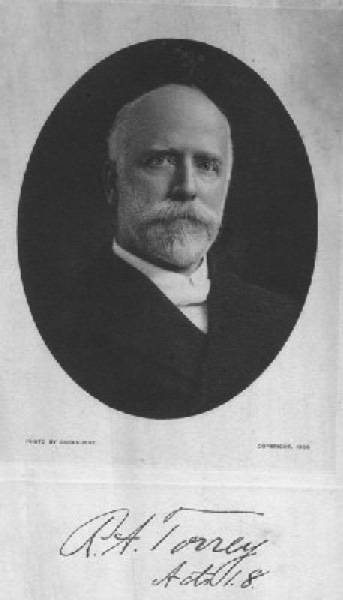
R. A. Torrey · 1856–1928
54 chapters · 16 hr 39 min read · Accessible
Free to read · No account needed
About this book
Torrey's systematic theology, built the way he taught it at the Chicago Bible Institute: gather everything the Bible says on a subject, then state exactly what it teaches. In six books — on God, Jesus Christ, the Holy Spirit, man, angels and the devil — each chapter sets out the Scriptures first and draws from them its propositions, from the attributes of God and the deity of Christ to justification, the new birth, prayer and the coming again of the Lord.
As the aim of this book is to ascertain and state in systematic form what the Bible teaches, the method pursued will be to first give the Scripture statements, and then sum up their contents in a proposition, following the proposition by such comments as may appear necessary.
Contents
Questions and Answers
What is What the Bible Teaches?
R. A. Torrey's systematic study of Bible doctrine, first published in 1898. In six books and fifty-three chapters it takes up what the Bible teaches about God, about Jesus Christ, about the Holy Spirit, about man, about angels and about the Devil — gathering the Scriptures on each subject and stating, as exactly as he can, what they say.
How is each chapter laid out?
The Scripture comes first and the doctrine second. Torrey sets out the passages on a point, then sums up their contents in a numbered proposition, then adds such comment as seems necessary. As he puts it in the Preface, the scripture from which a proposition is deduced is always given before the proposition.
What does Torrey mean by calling the method inductive?
That the conclusions are drawn out of the Bible rather than brought to it. The material the Bible contains is brought together and carefully scrutinized, and only then is what is seen in it stated — exactness first, then clearness, with beauty and impressiveness always yielding to precision.
Which translation of the Bible does the book quote?
The Authorized (King James) Version wherever possible, and the Revised Version where Torrey judged it manifestly more exact; such quotations are marked R.V. No Hebrew or Greek appears on the page, but the work rests on a careful study of the original text.
Who did Torrey write it for?
Its plainest use, he says, is as a classbook in Bible theology, and its contents were tested in classes drawn from as many as thirty-six denominations. He also commends it for family devotions, for private study of the Bible, and for groups of believers with no church near them who want a definite outline to study the Bible together.
How does Torrey suggest the book be studied?
Slowly, Bible in hand. Ponder the Scriptures given first, then put your own understanding of them into your own words before reading Torrey's proposition. Often, he says, the reader will improve on his statement; if not, the reader will understand it better for having done a little thinking first.
What did the study do for Torrey's own faith?
It deepened it. Finding out precisely what the Bible teaches, he believed, is one of the surest ways to judge whether it is of divine origin, for it shows whether one deep philosophy runs through books written by so many different human authors. His conviction that there was one Author behind the many writers, and that the Author was God, grew as he studied.
More like this



About this text
- Source
- Public domain — first published 1898 by Fleming H. Revell Company, New York, Chicago and Toronto. Text from the Internet Archive scans of four copies of the Revell edition, compared word by word. archive.org
- Cover
- Albert Bierstadt, “The Rocky Mountains, Lander's Peak” (1863). The Metropolitan Museum of Art, Open Access.
- Last updated
- October 29, 2026
- Rights
- The text is in the public domain. Terms of Use
Cite this book
Copy a citation in the style you need.
- MLA
- Torrey, R. A. What the Bible Teaches. 1898. Ochorus, https://ochorus.com/books/what-the-bible-teaches/.
- Chicago
- Torrey, R. A. What the Bible Teaches. 1898. Reprint, Ochorus. https://ochorus.com/books/what-the-bible-teaches/.
- Chicago footnote
- R. A. Torrey, What the Bible Teaches (1898; repr., Ochorus), https://ochorus.com/books/what-the-bible-teaches/.
- BibTeX
- @book{torrey1898what, author = {Torrey, R. A.}, title = {{What the Bible Teaches}}, year = {1898}, publisher = {Ochorus}, url = {https://ochorus.com/books/what-the-bible-teaches/} }