Book · 19 chapters · 8 hr 57 min read
The Provincial Letters
Translated by Thomas M'Crie
Blaise Pascal · 1623–1662
Free to read·No account needed
Disputes in the Sorbonne and Proximate Power
About this book
In January 1656 the Sorbonne was about to condemn Antoine Arnauld, Pascal's friend at Port-Royal, and Pascal came to his defence in an anonymous letter “to a provincial,” a friend in the country. Seventeen more followed over the next fourteen months, passed hand to hand through Paris while the police hunted the printers. They begin as a comedy, with a puzzled outsider interviewing theologians who cannot say what their own words mean, and they grow into a fierce and serious attack on a morality that had learned to excuse almost anything. Pascal's charge is that the Jesuit casuists had made the gospel easy by emptying it, and his letters on murder, calumny and the love of God still ask what it costs to be honest before God. They are also the book that fixed modern French prose.
Paris, January 23, 1656. Sir,—We were entirely mistaken. It was only yesterday that I was undeceived. Until that time I had labored under the impression that the disputes in the Sorbonne were vastly important, and deeply affected the interests of religion.
Contents
- 1 Disputes in the Sorbonne and Proximate Power 19 min
- 2 Of Sufficient Grace 22 min
- 3 The Censure on M. Arnauld 16 min
- 4 On Actual Grace and Sins of Ignorance 25 min
- 5 The Jesuits' New System of Morals 27 min
- 6 How the Casuists Elude the Authority of the Gospel 26 min
- 7 The Method of Directing the Intention 30 min
- 8 Corrupt Maxims Concerning Judges and Usurers 29 min
- 9 Devotion Made Easy 28 min
- 10 Palliatives Applied to Penance 30 min
- 11 Ridicule a Fair Weapon Against Absurd Opinions 29 min
- 12 On Alms-Giving and Simony 30 min
- 13 How Easy It Is to Pass from Speculation to Practice 29 min
- 14 The Maxims of the Jesuits on Murder 32 min
- 15 On Calumny 32 min
- 16 Calumnies Against Port-Royal 45 min
- 17 The Author Vindicated from the Charge of Heresy 41 min
- 18 No Heresy in the Church 44 min
- 19 Fragment of a Nineteenth Letter 2 min
Read in your language
More like this
Public domain. Source text from the original edition.
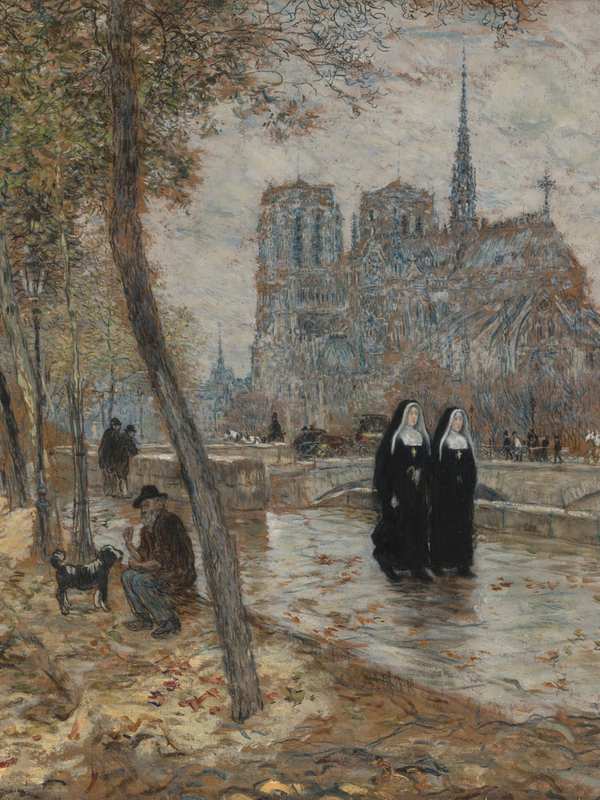
Jean-François Rafaëlli, “Notre Dame de Paris” (c. 1890). The Art Institute of Chicago, CC0.