Book
Joshua
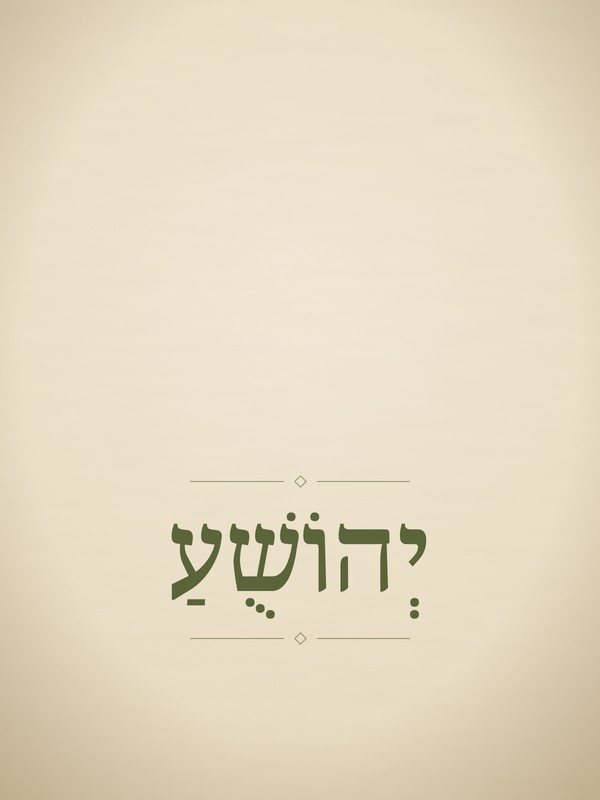
Yehoshua, “The LORD saves”
Part of The Bible·Next in the series: Judges
26 chapters · 1 hr 48 min read · Accessible
Free to read · No account needed
Listen to the whole book 2 hr 19 min listenAbout this book
Israel crosses the Jordan and receives the land God promised.
- Author
- Traditionally Joshua
- Date
- Date uncertain
Have I not given you this command? Be strong and courageous. Do not tremble with fear or lose heart, for the LORD your God is with you wherever you go.The book that carries Israel across the Jordan, named after the man who led them, whose name means “the LORD saves”. It opens at Moses’ death with a charge, “Be strong and courageous”, and closes at Shechem with a choice: “My household and I will serve the LORD.” Between the two: Rahab and the scarlet cord, the river stopped in a single heap and twelve stones set up for children to ask about, the walls of Jericho, Achan’s buried plunder, a sun that stood still at Gibeon, old Caleb asking for the hill country of the giants, the land shared out tribe by tribe, and a God of whom it is said that not one of his good promises failed. In the Open Word Bible, a new translation from the Hebrew given freely to the public domain, with an introduction to the book’s shape and meaning and a conclusion on where to read next.
Joshua got up early in the morning. He and all the Israelites set out from Shittim and came to the Jordan, and they stopped there for the night before crossing over. At the end of three days the officers went throughout the camp.
Contents
Sermons on this book
Questions and Answers
What is the book of Joshua about?
Israel’s entry into the land God had promised to Abraham, under Moses’ successor Joshua. Chapters 1–12 tell of the crossing of the Jordan, the fall of Jericho, the defeat and victory at Ai, the treaty with Gibeon and the campaigns in the south and north; chapters 13–21 tell how the land was divided among the twelve tribes; and chapters 22–24 close with Joshua’s farewell and the covenant renewed at Shechem. Its theme is summed up in 21:45: of all the good promises the LORD had made to Israel, not one failed.
Who wrote the book of Joshua, and when?
The book does not name its author. An old Jewish tradition holds that Joshua wrote most of it, with the account of his death completed by others. Many scholars see it as part of a longer history running from Deuteronomy to Kings that reached its final form centuries later; its repeated phrase “to this day” shows a writer looking back on the events. Christians also differ over when the conquest took place, some dating it to the fifteenth century BC and others to the thirteenth.
Who was Rahab in the Bible?
A Canaanite woman of Jericho, a prostitute, who hid Joshua’s two spies and confessed that “the LORD your God is God in heaven above and on earth below” (2:11). She tied a scarlet cord in her window, and when the city fell her whole household was spared (6:25). The New Testament honours her three times: as a hero of faith in Hebrews 11:31, as an example of faith shown in action in James 2:25, and as an ancestor of Jesus in Matthew 1:5.
How should Christians read the violence in Joshua?
With care, and Christians answer the question in more than one way. Many stress that the Bible presents the conquest as God’s judgement on the long wickedness of the peoples of Canaan (Genesis 15:16; Deuteronomy 9:5); some note that ancient war reports used sweeping language of total victory, while Joshua itself records that many Canaanites remained; others point out that Rahab and the Gibeonites were spared and that the same judgement fell on Israel’s own Achan. Christians today broadly agree, though the book has sometimes been misused to justify violence, that it describes a unique moment in the history of God’s promise and gives no warrant for violence in God’s name today.
What does Joshua mean by “My household and I will serve the LORD”?
It is Joshua’s declaration at the covenant gathering at Shechem near the end of his life (24:15), familiar from older Bibles as “as for me and my house”. Having retold all God had done for Israel, Joshua calls the people to choose between the LORD and the gods their ancestors had served, and states his own choice for his whole family. The people promise to serve the LORD, and Joshua writes the covenant down and sets up a stone as a witness.
Which translation of the Bible is this?
The Open Word Bible, a new translation made directly from the Hebrew and dedicated to the public domain, printed here at its Balanced level, which aims to be accurate and to read naturally aloud. “LORD” in capitals stands for God’s personal name. The reasoning behind each of its sentences, with the Hebrew beside it, is published at openwordbible.org. The introduction and conclusion were written for this edition.
More like this

Taking books where there’s no signal? See Ochorus for missionaries or chaplains
About this text
- Source
- Scripture from the Open Word Bible (https://openwordbible.org), English, Balanced level, commit 64b913d623d6: dedicated to the public domain under CC0 1.0. The introduction and conclusion are by Ochorus. openwordbible.org
- Last updated
- November 13, 2026
- Rights
- Terms of Use
Cite this book
Copy a citation in the style you need.
- MLA
- Open Word Bible. Joshua. Ochorus, https://ochorus.com/books/joshua/.
- Chicago
- Open Word Bible. Joshua. Ochorus. https://ochorus.com/books/joshua/.
- Chicago footnote
- Open Word Bible, Joshua (Ochorus), https://ochorus.com/books/joshua/.
- BibTeX
- @book{openwordbiblejoshua, author = {{Open Word Bible}}, title = {{Joshua}}, publisher = {Ochorus}, url = {https://ochorus.com/books/joshua/} }